RV Fuel Costs Are Rising – Can You Still Afford RV Life in 2026
RV fuel costs are rising, but they don’t have to stop your plans. Learn how to save on gas and travel smarter in your RV.
How Much Does It Cost to Fuel an RV
RV fuel costs are rising, and for many people dreaming about RV life, that can feel discouraging fast, whether you’re already on the road or still dreaming about how to RV full time.
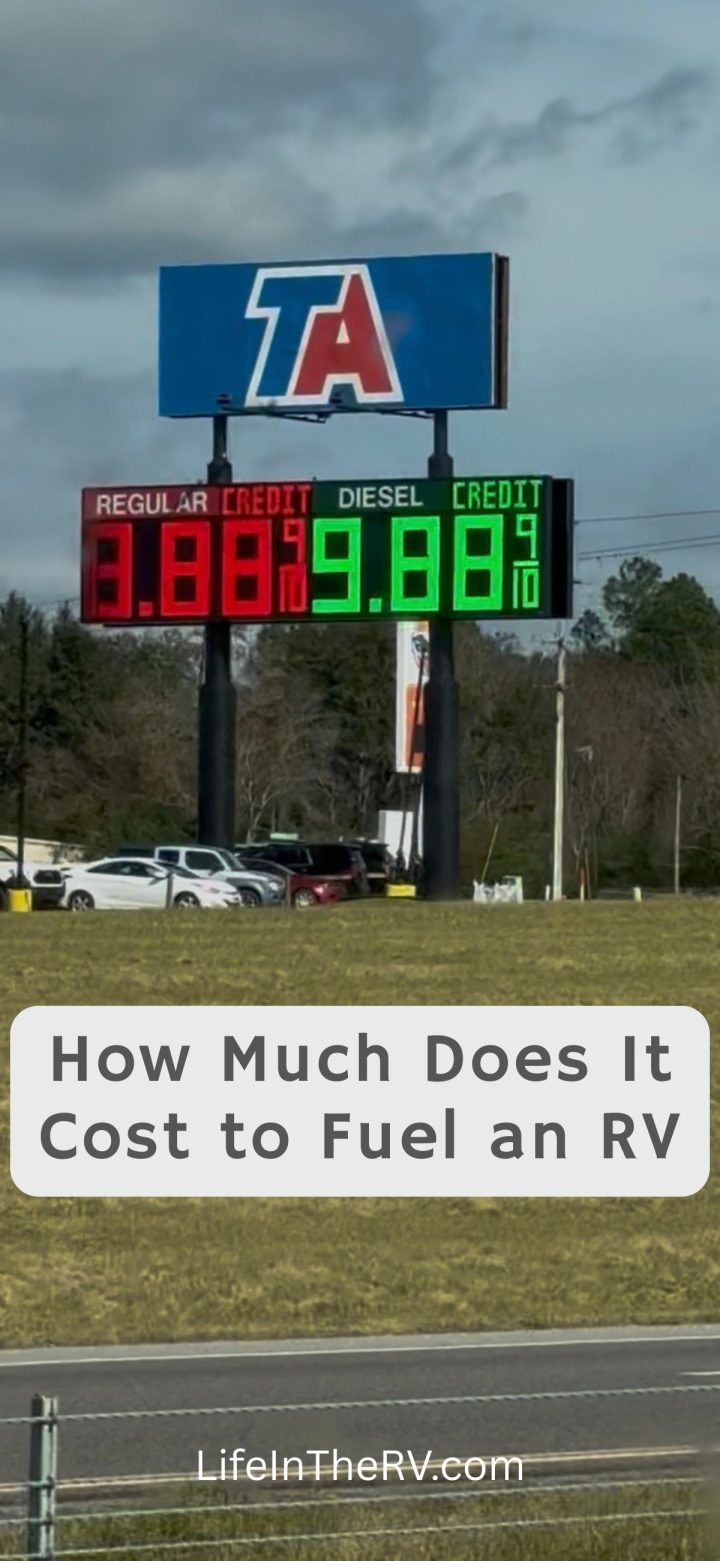
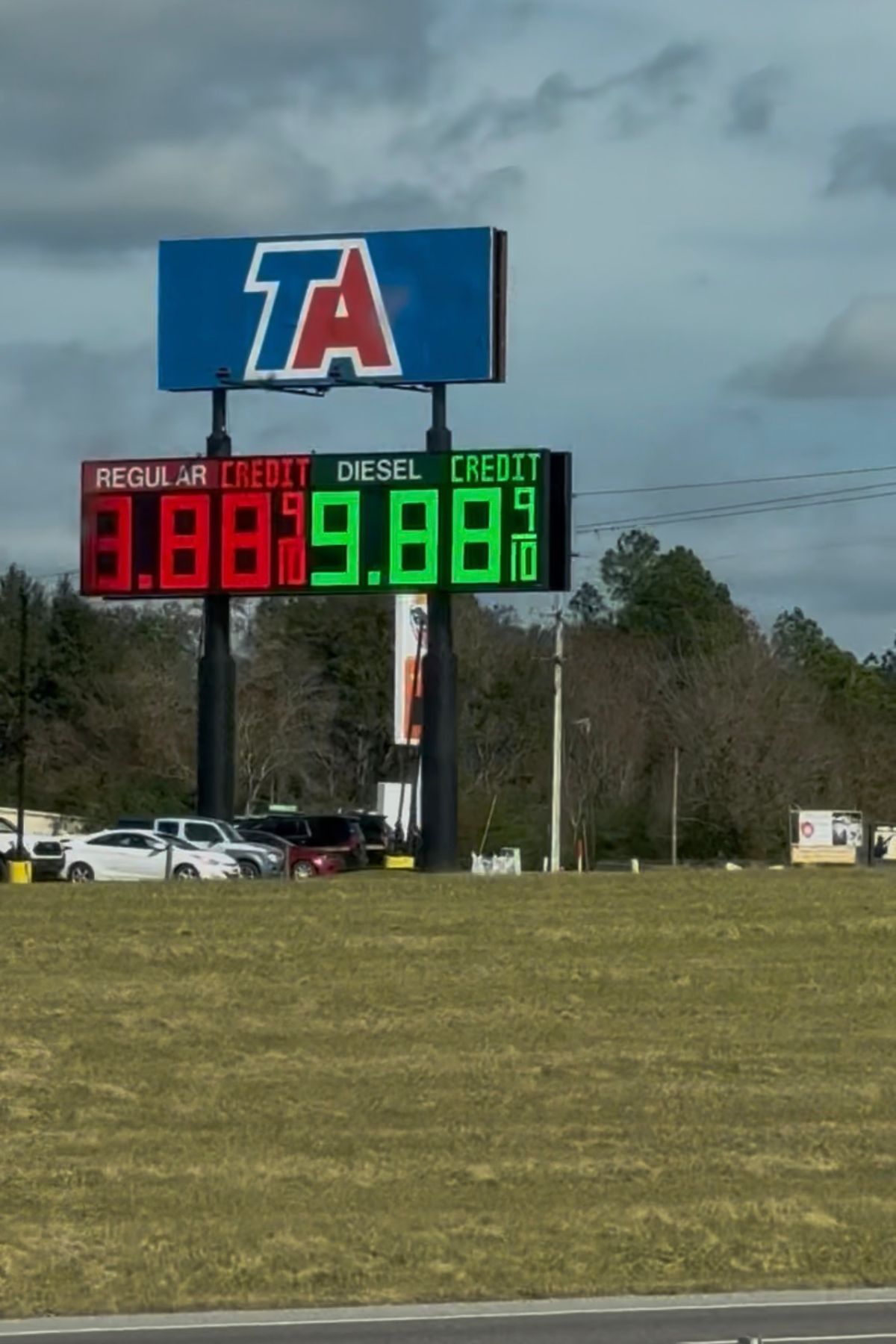
We just filled up and saw $4.50 for regular gas and $5.70 for diesel. Depending on how low our 100-gallon tank is, a fill-up can cost anywhere from $100 to $400.
That number gets people’s attention quickly, and honestly, it’s a fair concern.
But after more than 9 years of full-time RV living, we’ve learned this: fuel prices matter, but they don’t have to control your plans.
RV life isn’t about waiting for perfect conditions. It’s about adjusting your strategy so you can keep moving, keep exploring, and make it work for your budget.
And that’s exactly what we’re doing right now.
Our Quick Answer
Yes, RV fuel is expensive right now. But many RVers lower costs by:
- traveling shorter distances
- staying longer in one place
- stacking fuel discounts
- planning smarter routes
- driving slower
Fuel Cost Estimator
⛽ Stop Overpaying for Gas!
Get our FREE guide to the Top 5 Fuel Apps for RVers and save $$ on every fill-up!
🎯 Get the Guide
What It Really Costs to Move an RV One Day
One of the biggest shifts we’ve made over the years is how we think about fuel altogether. Most people focus on price per gallon, but that number on its own doesn’t really tell the full story.
What actually matters is what it costs you to move your home from one place to another, and that comes down to cost per mile.
Right now, with diesel sitting at $5.70 and our rig getting about 7 miles per gallon, we’re paying roughly $0.81 per mile. When you break it down like that, a 200-mile travel day is around $162 in fuel. That’s not meant to scare you; it’s meant to give you clarity.
Because once you see the numbers this way, you stop making casual driving decisions and start making intentional ones.
That “quick detour” or extra stop becomes something you think through instead of automatically saying yes to, and that alone can save more money than any app ever will.
How We’re Actually Saving Money on Fuel
We’re not doing anything complicated or extreme to save on fuel; we’re just being consistent with small decisions that add up over time. One of the easiest ways we do that is by stacking discounts whenever possible instead of relying on just one method.
Right now, we’re using Walmart+ to get $0.10 off per gallon, and we pair that with another $0.10 cashback through Upside. That gives us $0.20 off per gallon every time we fill up our truck. Upside is for regular unleaded gas.
On a larger tank, that might be $6 to $10 saved in one stop, and when you multiply that across multiple travel days, it starts to make a real difference. No single trick changes everything. Small savings repeated often make the biggest difference.
Why We Never Rely on Just One Fuel App
Another thing we’ve learned is that fuel prices vary more than most people expect, especially when you’re traveling along major routes. Two truck stops right across the street from each other can have noticeably different prices, and if you’re not checking, you’d never know.
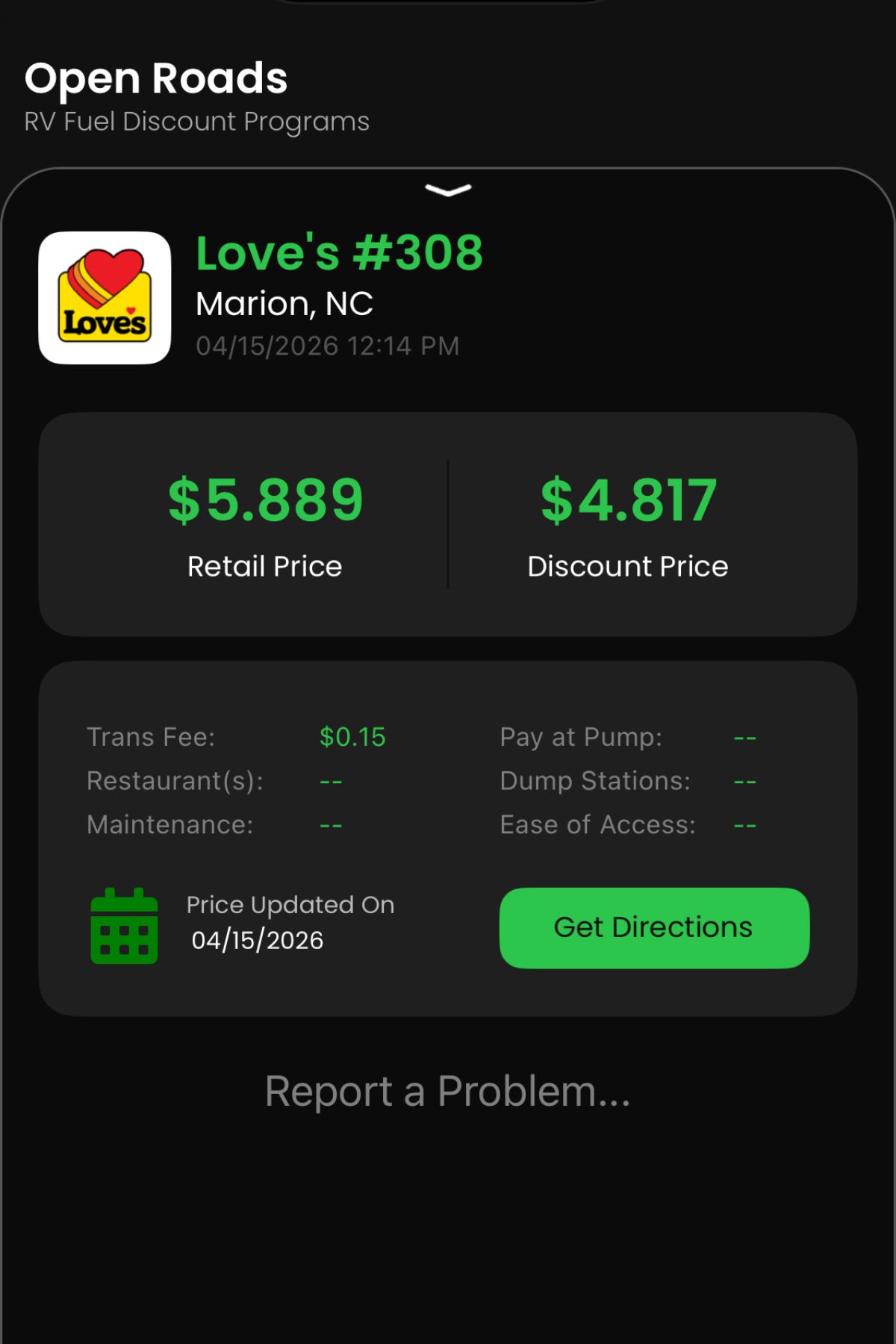
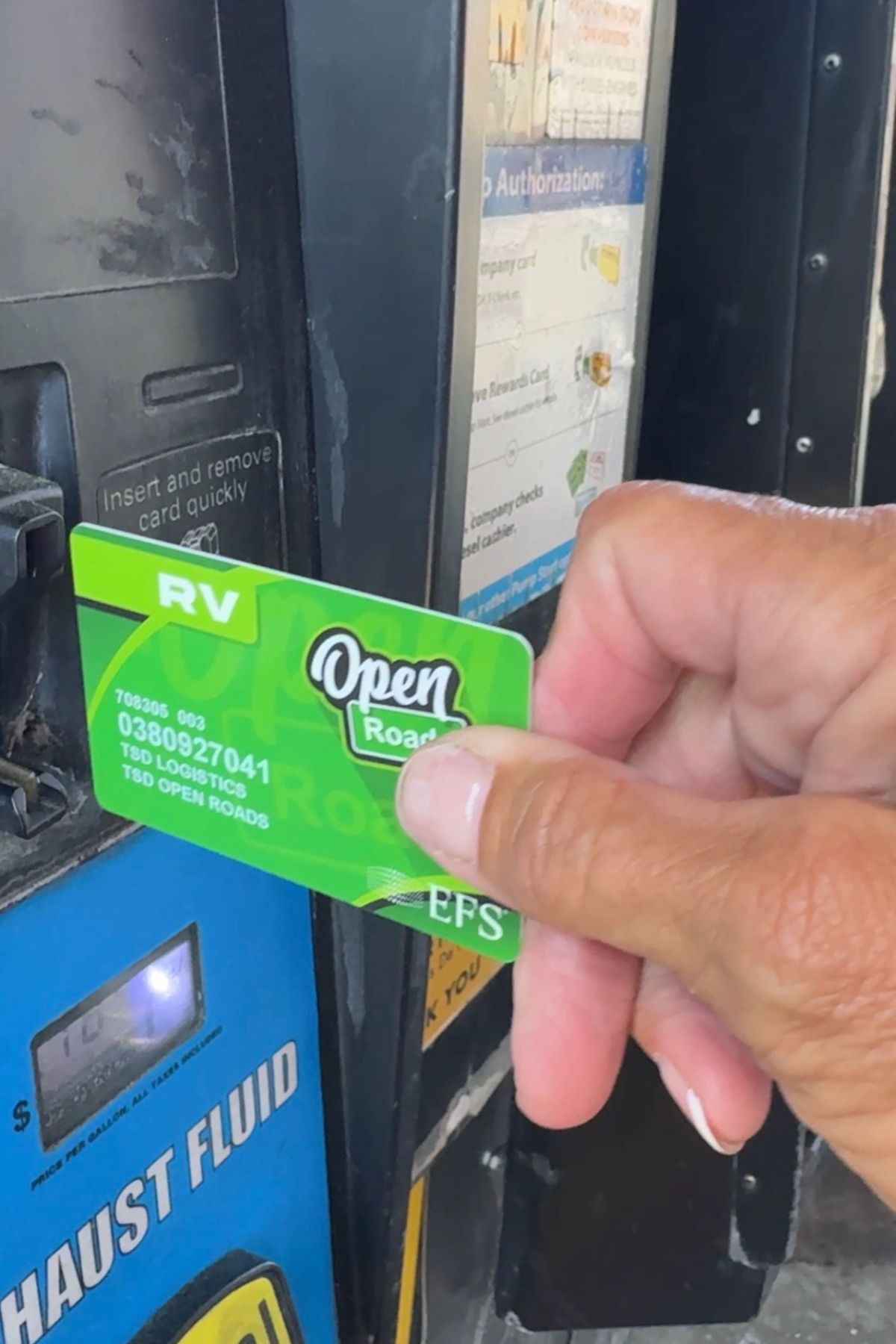
Before we stop, we take a minute to check Open Roads for diesel discounts and Mudflap for truck stop pricing. Each app shows something a little different depending on location, and using them together helps us find the lowest overall price instead of just pulling into the closest option.
It doesn’t take long, but it’s one of those habits that quietly saves money over time.
Being Strategic at Truck Stops (Yes, Even on the Interstate)
Since we’re in a larger rig, fueling at truck stops right off the interstate is just part of the deal. We’re not pulling into small gas stations or trying to squeeze into tight spaces; that’s not realistic for most RVers.
But even within that setup, there’s still room to be strategic. Not all truck stops are priced the same, even if they’re at the same exit or just a few miles apart. We’ve seen differences between brands, between locations, and even along the same stretch of highway.
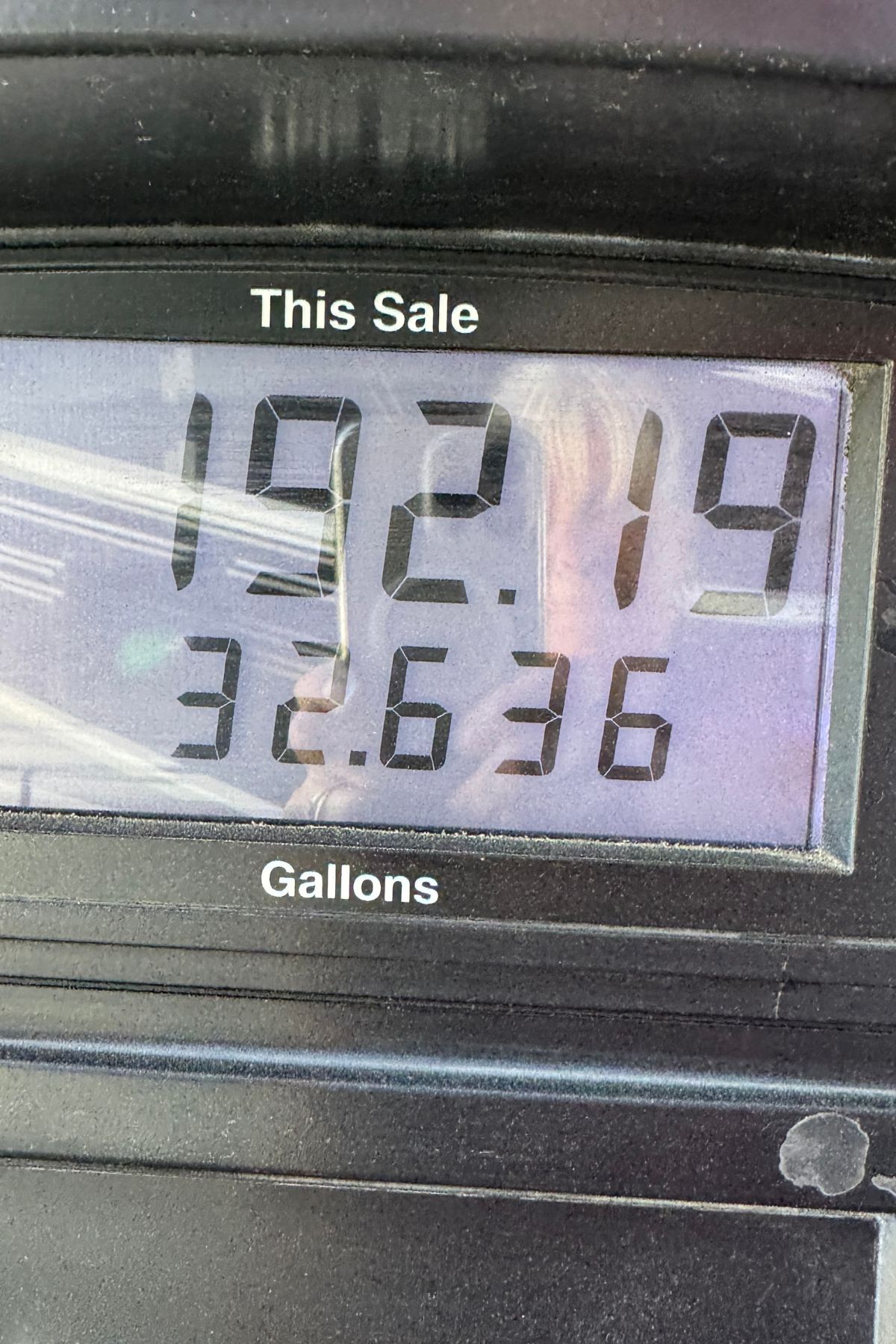
Because of that, we’ve gotten into the habit of looking ahead instead of stopping at the first available option. Sometimes going one more exit makes enough of a price difference to be worth it, especially when you’re filling a larger tank.
I’m actually researching fuel prices right now for when we head out next week. We are in Central Florida, and I’m looking ahead to Georgia to see which is cheaper.
Avoiding Traffic (Because Idling Adds Up Fast)
One of the easiest ways to waste fuel is something most people don’t think about in the moment: sitting in traffic. When your engine is running, and you’re not moving, you’re still burning fuel, and it adds up quicker than you’d expect.
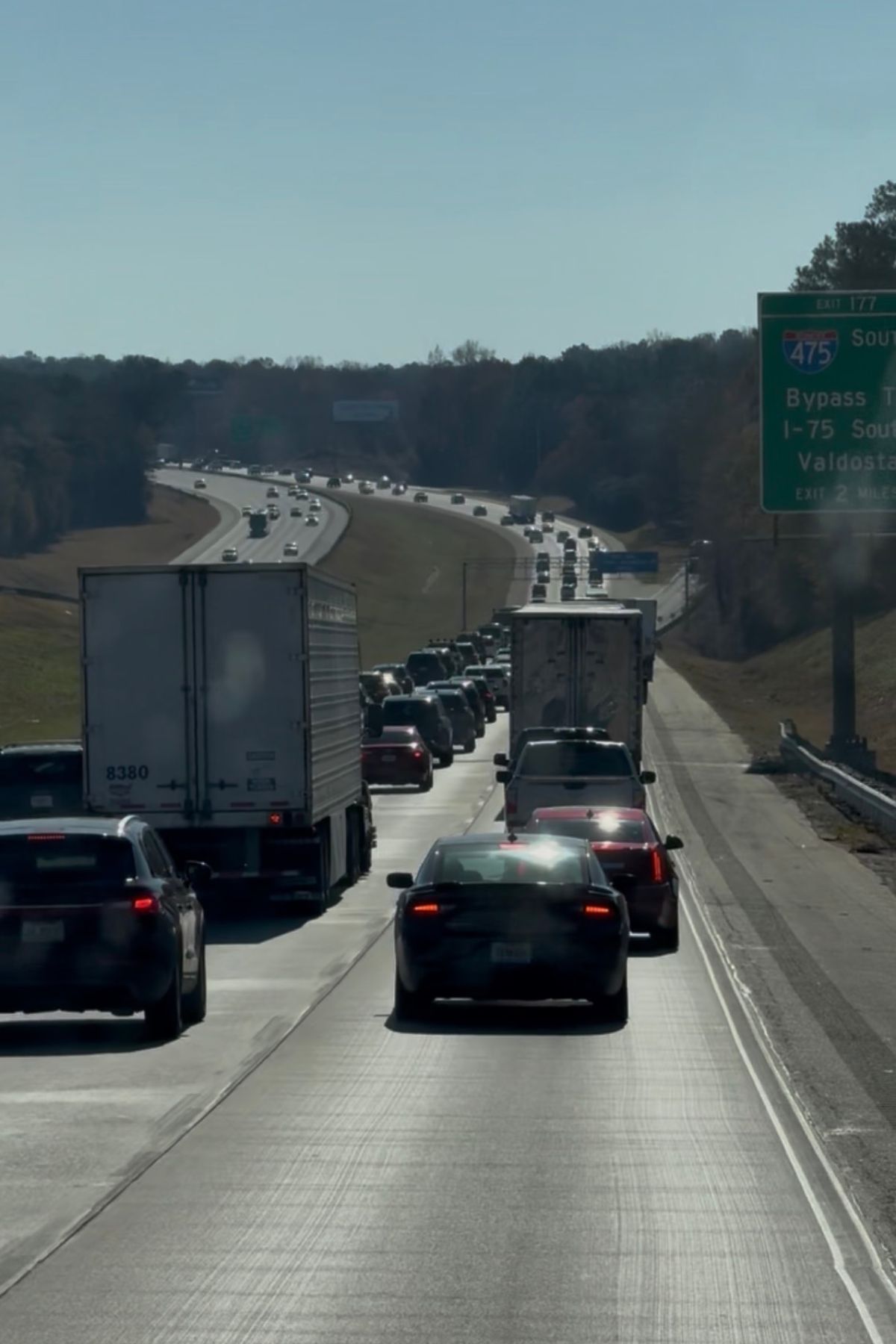
We use Waze to help us avoid backups, reroute around accidents, and stay out of heavy construction zones whenever possible. It’s not perfect, but it helps us keep moving instead of sitting still. Unnecessary idling becomes an easy win.
Planning Routes That Actually Save Fuel
Route planning has also become a bigger part of how we manage fuel costs. The fastest route isn’t always the most efficient one, especially if it takes you through stop-and-go traffic or busy city areas.
We try to choose routes that keep us moving steadily instead of constantly braking and accelerating. Even if the route is slightly longer, steady driving tends to use less fuel than stop-and-go conditions.
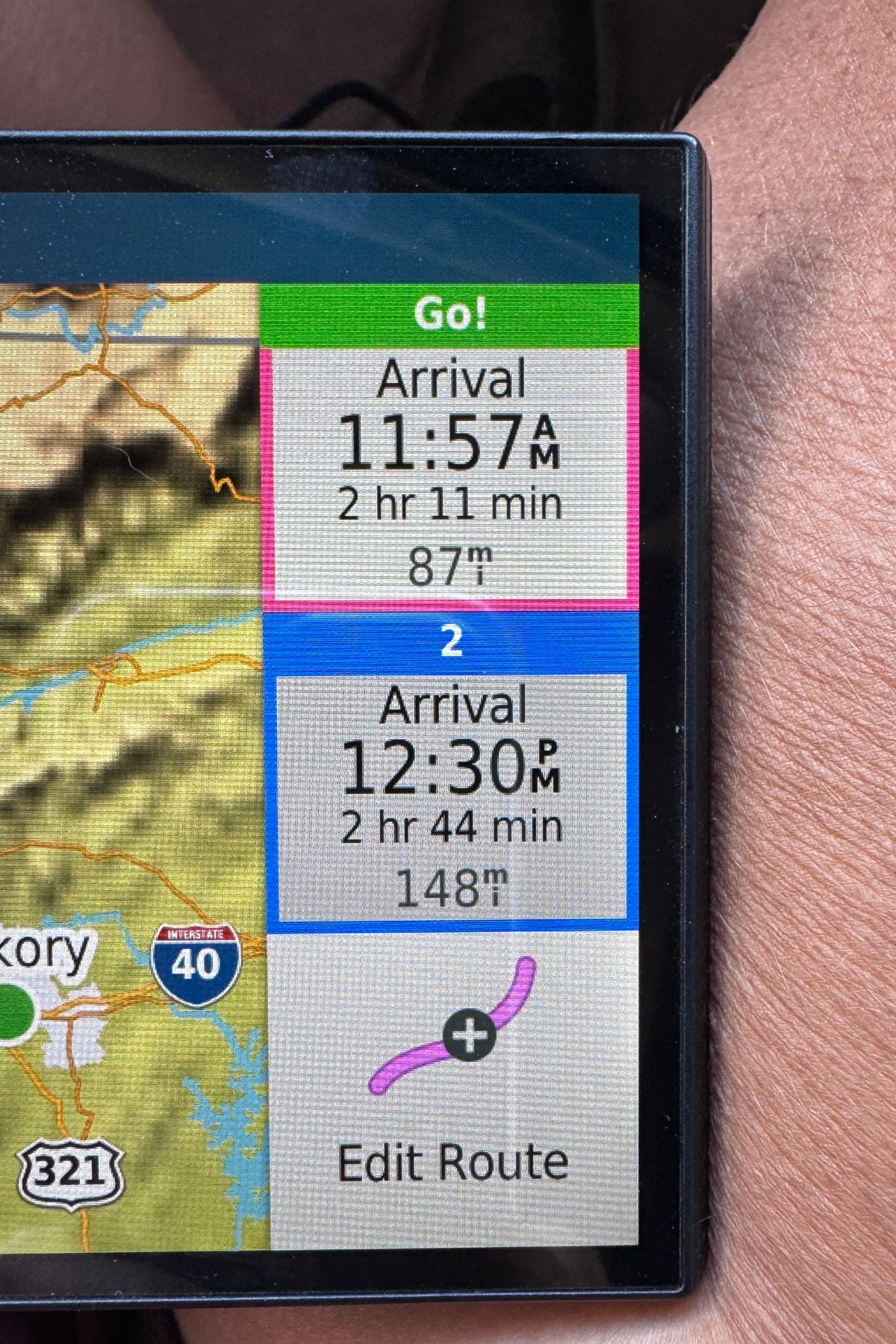
It also makes the drive less stressful, which is something you really start to appreciate on longer travel days.
Slowing Down and Changing How We Travel
Over time, we’ve also adjusted how we travel overall. Driving a little slower might not feel like a big deal, but it does improve fuel efficiency, especially in a larger rig. It also reduces how often we need to stop for fuel and makes the entire day feel more relaxed.
Beyond that, we’ve shifted away from constantly moving long distances. Instead, we travel shorter distances and stay longer in each location. Fewer travel days mean fewer fill-ups, and sometimes staying one extra night costs less than the fuel it would take to get to the next stop.
That shift alone has made a noticeable difference in how much we spend.
RV Life Is Still Worth It
At 7 miles per gallon, fuel is never going to be cheap. That’s just part of the reality of this lifestyle. But that doesn’t mean RV life is out of reach; it just means you approach it with a little more intention.
When you understand your costs, stack your savings, and make smarter decisions about how and when you travel, you can still enjoy this lifestyle without feeling like fuel prices are controlling everything. It’s not about ignoring the numbers; it’s about working with them. Are RV Fuel Costs Changing Your Plans?
This is something a lot of people are thinking about right now, whether they say it out loud or not. Are RV fuel costs changing your plans at all?
Maybe you’re traveling shorter distances, staying longer in one place, or adjusting your routes to make things more efficient. Or maybe you’ve decided you’re going anyway and just finding ways to make it work.
There’s no right answer here. Everyone’s situation is different, and the goal isn’t perfection; it’s finding what works for you.
Let’s Compare Notes
Fuel prices are all over the place right now, and it’s always interesting to see how different they are depending on where you are.
What are you seeing where you are right now? And what’s been working for you when it comes to saving on fuel?
Drop a comment and share, because if there’s one thing RVers are really good at, it’s helping each other figure this out as we go.
Key Takeaways: Saving Money on RV Fuel
If you’re feeling overwhelmed by gas prices, start here. These are the simple shifts that make the biggest difference over time.
- Think in cost per mile, not price per gallon. This helps you make smarter travel decisions.
- Stack fuel savings whenever possible. Small discounts add up fast on larger tanks.
- Always check multiple apps before fueling. Prices can vary more than you expect.
- Be strategic even at truck stops. A small change in location can mean noticeable savings.
- Avoid traffic and unnecessary idling. Sitting still is one of the easiest ways to waste fuel.
- Plan routes for steady driving. Fewer stop-and-go means better fuel efficiency.
- Slow down when you can. It improves MPG and reduces stress.
- Travel shorter distances and stay longer. Fewer travel days = fewer fill-ups.
You don’t need to do everything perfectly. Even applying a few of these can make RV fuel costs feel a lot more manageable.
Thinking About RV Life?
Don’t let fuel prices scare you out of a dream. Learn the real numbers, make a smart plan, and start where you are.
Grab our free RV Starter Checklist here.

❓ FAQs
Use multiple strategies: compare prices, stack discounts, plan routes, and reduce unnecessary miles.
For many people, yes. It often comes down to how often you move and how intentionally you travel.
Save This Post for Later