How to RV Full-Time for Beginners (Step-by-Step Overview)
Wondering how to RV full-time? Learn what it’s really like, how to plan, and how to start without waiting for someday.
How to RV Full Time: The Realistic Roadmap for Living in an RV Full-Time
You know that feeling when you’re scrolling through photos of RVs parked beside a mountain lake and something inside you whispers, “Yes. That.”
If you’re here, you’re probably past the “is this crazy?” stage and into the “okay, but how do I actually do this?” stage. That’s exactly where you’re supposed to be.
I’m Mary, and I’ve been living in an RV full-time since 2017 — almost nine years — traveling in our Jayco Seneca Super C with my husband Tim and our German Shepherd Harley. We’ve made mistakes, learned things the hard way, and figured out what actually matters when your RV isn’t a weekend getaway. It’s home.
This guide is the honest, step-by-step roadmap I wish I’d had when we started. It covers every major piece of the transition so you can see the whole picture clearly — and decide how to move forward without feeling buried in it.
What You’ll Learn in This Guide
- What full-time RV life actually looks and feels like — not the Instagram version
- How long does it realistically take to transition, and how to pace yourself
- What it costs and how to bring those numbers down
- How to choose the right RV for how you actually live
- The unsexy logistics: domicile, mail, and money
- Where you’ll stay and how to find your rhythm
- Income, internet, pets, maintenance, and the hard days
- What your first month on the road really looks like
KEY TAKEAWAYS:
- RV life isn’t easier than traditional life; it’s just different, and for many people, it feels more right.
- Full-time RV living is real life, not a permanent vacation, and that’s what makes it work for the right people.
- There’s no single “right” timeline. Most people take anywhere from a few months to a year to transition.
- Costs vary widely, but many full-timers live comfortably by slowing down, cooking more, and mixing in low-cost camping.
- The best RV is the one that fits how you live, not what looks good online.
- Downsizing is emotional, but it often becomes one of the most freeing parts of the process.
- You still need a legal home base for mail, taxes, insurance, and registration.
- Where you stay will be a mix of campgrounds, boondocking, memberships, and occasional overnight stops.
- You don’t need to know every RV system before you start, but learning the basics early saves stress.
- Many full-time RVers work remotely, freelance, or take seasonal jobs; reliable internet matters.
- The first month is messy, overwhelming, and completely normal. It gets easier.

What It Really Means to Live in an RV Full-Time
When you live in an RV full-time, your rig stops being a vacation vehicle and becomes your entire world. Your kitchen, your bedroom, your office, your storage, and your quiet space all exist within a few hundred square feet.
There’s no house waiting for you when the trip ends. There’s no “RV season.” This is your life, complete with grocery runs, work deadlines, dishes in the sink, and laundry that still has to get done.
Some days feel genuinely magical. You wake up somewhere new, drink coffee outside while the sun comes up, and think: this is exactly what I wanted. Other days, you’re dealing with a mechanical issue in the rain, or feeling cramped because you’ve been parked in the same spot for a week waiting out the weather.
Both are real. Both are part of the deal.
Full-time RV living doesn’t replace your life — it magnifies it. If you value flexibility over square footage, experiences over stuff, and can adapt when plans fall apart, this lifestyle tends to fit. If you’re hoping it’ll eliminate stress or feel like a permanent vacation, the adjustment is going to be harder than you expect.
Knowing that going in already puts you ahead of most people who start.
Is Full-Time RV Living Right for You?
This lifestyle isn’t about being fearless. It’s about being honest.
Some people jump in because it looks incredible online, only to realize a few months later that they miss space, routine, or proximity to family more than they expected. Others are terrified to start but find, within weeks, that they’ve never felt more at home.
The difference usually isn’t the RV. It’s the expectations going in.
Before you commit, ask yourself these questions honestly:
- Can you handle not having a permanent address?
- Are you okay when plans fall apart with no warning?
- Do you find more peace in flexibility or in routine and predictability?
- Can the people traveling with you, partner, kids, and pets, genuinely handle close quarters?
- Do you have, or can you build, a reliable income that isn’t tied to a physical location?
There are no wrong answers. They just tell you whether you’re ready to actually love this life, or whether you’re in love with the idea of it.
How Long Does It Take to Go Full-Time?
There’s no right timeline. Some people are on the road within a couple of months because they already own an RV, don’t have much to downsize, and have income in place. We did it in six weeks, and we spent the next couple of years learning things we could have figured out before we left.
Others take six months to a year to sell a home, downsize years of belongings, and get comfortable with the financial and emotional shifts involved. Both approaches can absolutely work.
Most people fall somewhere in the middle.
Your timeline isn’t about speed. It’s about sustainability. The goal isn’t to rush — it’s to start in a way that doesn’t leave you burned out or panicked before you’ve had a chance to enjoy the life you worked hard to build.
Rough Timeline Benchmarks
- Already own an RV + remote income in place: 4–8 weeks
- Need to sell a home + downsize + establish income: 6–12 months
- Renting, minimal belongings, flexible income: 2–3 months
The only timeline that matters is the one that gets you on the road without blowing up your finances or your sanity in the process.
How Much Does It Cost to Live in an RV Full-Time?
Most full-timers spend between $2,000 and $4,000 per month. That range is wide because your choices drive the number more than anything else.
Moving frequently, staying exclusively in full-hookup resort-style parks, and eating out regularly will push you toward the top of that range fast. Slowing down, staying in one spot for two to four weeks at a time, cooking most meals, and mixing in free or low-cost camping through boondocking or campground memberships can bring those numbers down considerably.
Our full guide to full-time RV living costs breaks down every category in detail. You can also plug in your own numbers with the RV Living Budget Estimator to get a realistic picture of what your specific situation looks like.
Estimated Monthly Budget Ranges
- Campground fees: $600–$1,500
- Fuel: $200–$800 (depends heavily on how often you move)
- Groceries: $400–$800
- RV maintenance and repairs: $200–$500 averaged monthly over the year
- Insurance (RV + health): $300–$600
- Internet and phone: $100–$250
- Miscellaneous: $100–$300
The single biggest lever on your monthly number: how often you move. Every travel day costs money in fuel. Stay longer, spend less.
Choosing the Right RV for Full-Time Living
There is no perfect RV for full-time living. There is only the right one for you.
The best full-time RV is the one that fits how you actually plan to live, not what looks impressive in a YouTube tour, and not what the person you follow online is driving. A solo traveler, a couple with a large dog, and a family with kids all need completely different things.
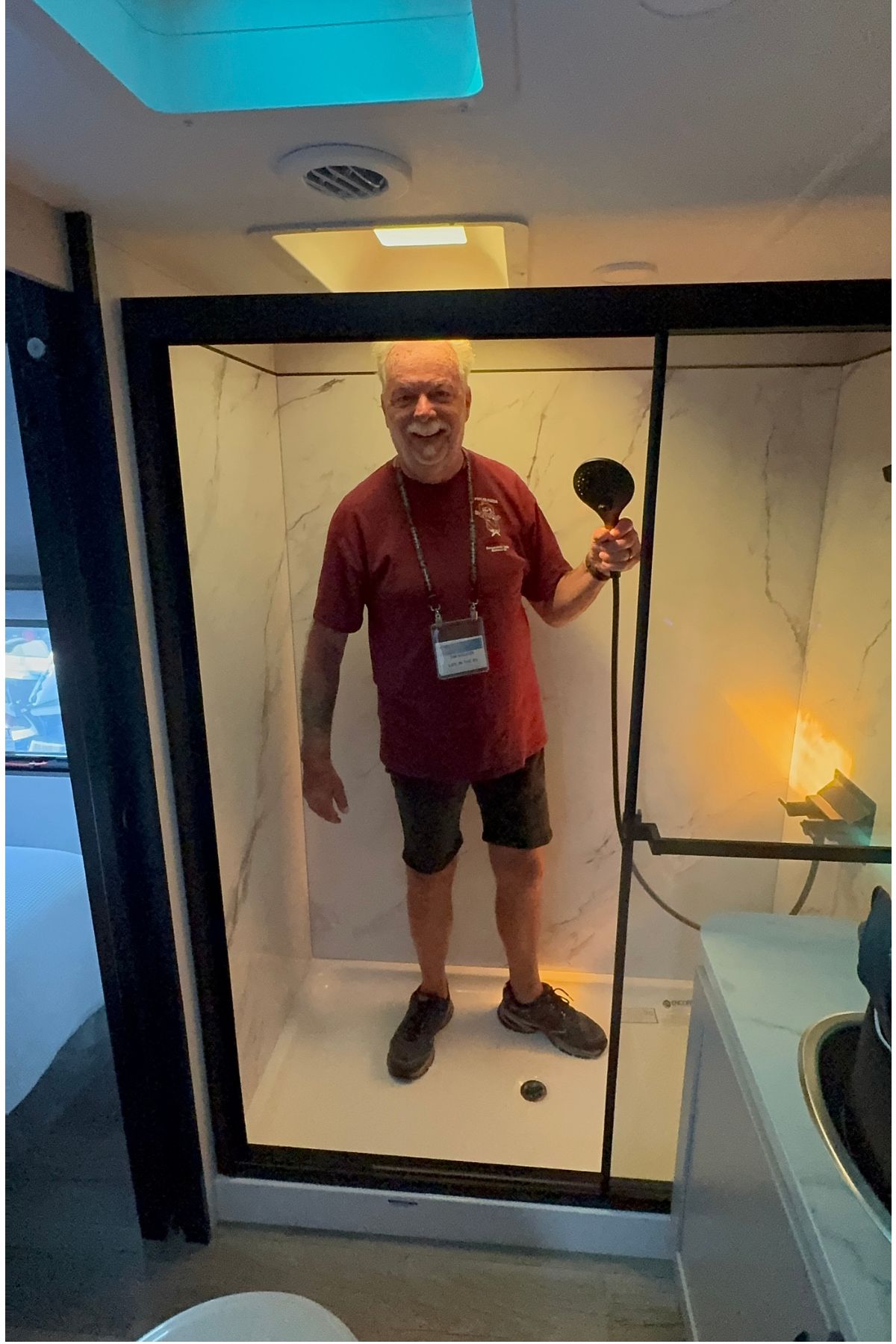
Before you buy anything, spend real time inside different rigs. Sit on the couch. Stand in the shower. Open every cabinet. Imagine yourself cooking dinner on a rainy Tuesday when you can’t be outside. A beautiful layout that doesn’t work in daily life will drive you crazy fast.
We’ve had four RVs in eight years — three of them in the first three years alone. Our full guide to choosing an RV for full-time living covers what we got wrong and what we’d do differently. If you’re weighing new versus used, the complete new vs. used breakdown walks through the real tradeoffs on both sides included in our Adventure Simplified Membership.
What matters more than brand name:
- A layout that works for how you’ll actually use the space every single day
- Storage that fits your real belongings, not a theoretical minimalist version of yourself
- Adequate climate control for the regions you plan to travel
- A pre-purchase inspection by a qualified RV inspector is non-negotiable, regardless of price, age, or how trustworthy the seller seems
Downsizing Without Losing Your Mind
Downsizing is where the dream starts to feel real, and where a lot of people stall out.
You can’t take everything with you. That fact hits differently when you’re standing in a house you’ve lived in for years, surrounded by belongings that have stories attached to them. Downsizing can feel like grief before it feels like freedom.
But here’s what I’ve heard from almost every long-term RVer who’s done it: the letting go becomes one of the most freeing parts of the whole process. You realize how much of what you owned was actually owning you.
Start earlier than you think you need to and do it in stages. Our full downsizing guide walks through how to approach it room by room — what to sell, donate, or store, and how to work through the things that are genuinely hard to let go of.
The most important mindset shift:
Downsizing isn’t about getting rid of what you love. It’s about choosing what supports the life you’re building now. Those are two very different questions — and asking the second one makes the whole process feel less like a loss.
Money, Mail, and Domicile (The Unsexy Stuff That Matters)
Even if you’re traveling full-time and never sleeping in the same spot twice, you still need a legal home base. Your domicile state affects your taxes, vehicle registration, driver’s license, voting rights, and insurance. Skipping this step creates real, compounding problems down the road.
Most full-time RVers choose one of three states: Texas, Florida, or South Dakota. Each has advantages in terms of income taxes, registration costs, and how easy the process is to complete without being physically present in the state.
Our guide to choosing a domicile state gives a side-by-side comparison of all three options and how to figure out which one fits your situation. It’s included in our Adventure Simplified Membership.
Beyond domicile, you’ll need a mail forwarding service, a physical address that receives your mail, and either scans it digitally or forwards it to wherever you are. Once it’s set up, it runs quietly in the background. But it’s essential for banking, medical records, legal documents, and anything else that requires a real address.
Our mail forwarding guide covers the best options and how to choose between them.
Where Will You Stay? Understanding Your Camping Options
One of the best parts of full-time RV life is the variety of places you can park and call home, sometimes for a night, sometimes for a month. Most full-timers use a mix of options rather than relying on any single type of campground.
Full-hookup RV parks and campgrounds
Electric, water, and sewer at your site. These are the most convenient and usually run $30–$80 per night, or $600–$1,200 per month if you negotiate a monthly rate. Great for getting settled, catching up on work, or riding out bad weather, but not ideal as your only option if cost matters.
State and national parks
Usually more scenic and more affordable than private parks, typically $20–$40 per night. Limited hookups in most cases, but one of the best ways to slow down somewhere beautiful without overpaying.
Boondocking
Free dispersed camping on public land, Bureau of Land Management, National Forest, and similar. This is where full-time RV life starts to get genuinely inexpensive. You’ll need to understand your battery capacity, water usage, and solar setup before relying on it heavily. We cover all of it in our boondocking guide for beginners.
Campground memberships
Harvest Hosts lets you stay overnight at wineries, farms, breweries, and unique small businesses across the country for a flat annual fee, and it’s one of our absolute favorites after nine years on the road. Programs like Thousand Trails, Passport America, and Escapees can also dramatically lower your per-night costs when used strategically. See our full campground membership breakdown to figure out which ones make sense for how you travel.
A good rhythm often looks like: a few nights of paid camping, a week boondocking somewhere remote, a night or two at a Harvest Hosts location, and a longer stretch at a monthly-rate park when you want to settle in and get things done.
RV Systems You Need to Understand
You don’t need to become a mechanic. But you do need to understand how your RV works at a functional level, and the sooner you learn the basics, the less stressful problems become when they happen.
The systems are worth understanding before you leave:
- Fresh water, gray, and black tanks — how they work, how to maintain them, and how to dump without it being a miserable experience every time
- Electrical — shore power, battery banks, inverter, and what’s drawing power when you’re not plugged in
- Propane — what it runs, how to spot a leak, and when to call someone instead of trying to fix it yourself
- Heating and cooling — how your furnace and AC operate and what to check when they don’t
- Slides — how to operate them manually if the motor fails
Most RV problems feel far less scary once you understand what’s actually happening. And most of the basics can be learned before you ever leave your driveway.
Working and Making Money on the Road
Unless you’re retired or financially independent, you need income, and you need it figured out before you leave, not after.
The most common paths full-timers use:
- Keep an existing remote job — the smoothest transition if you can make it happen
- Freelance work — writing, design, consulting, virtual assistance, bookkeeping
- Online businesses — blogging, course creation, affiliate marketing, e-commerce
- Seasonal and workamping positions — campground hosting, harvest work, Amazon warehouses, national park concessions
- Retirement income or investment distributions
Whatever path you choose, reliable internet is non-negotiable if you’re working remotely. Campground Wi-Fi is almost never dependable enough for actual work. Most working RVers rely on a combination of cellular hotspots, a cellular booster, and increasingly Starlink for coverage in remote areas.
Our guide to the best internet options for RV life covers the full landscape, cost comparisons, coverage realities, and what actually works in different parts of the country.
How to RV Full-Time on a Budget
Full-time RV life doesn’t have to be expensive. But it does require intention, especially in your first year when you’re still learning your patterns.
The biggest budget mistakes new full-timers consistently make:
- Moving too often: fuel is one of your largest variable expenses, and every travel day adds up faster than people expect
- Staying only in full-hookup resort parks because it’s easier than figuring out alternatives
- Eating out constantly because they’re still in vacation mode
- Buying a lot of gear in the beginning and realizing six months later what they actually use
Slowing down is the most powerful budget move available to you. Staying somewhere for two to four weeks instead of moving every few days changes your monthly number dramatically, in fuel alone, before you even factor in what longer-stay parks cost versus nightly rates.
Track your actual spending for the first three months at a minimum. Most people are genuinely surprised by where the money is going once they look at real numbers.
What About Pets in Full-Time RV Life?
Traveling full-time with pets is absolutely doable. Harley has been with us for nine years on the road, and she’s adapted to this life better than most humans do. Dogs especially tend to love it once they settle into the rhythm.
What to think through before you go:
- Temperature control when you’re away from the RV, a real safety concern on hot days, even with cracked windows
- Breed restrictions at some RV parks, particularly for larger dogs
- Finding pet-friendly campgrounds, most are, but policies vary more than you’d expect
- Vet access on the road: urgent care vet clinics exist in most areas; building a relationship with a telehealth vet option adds a useful backup
- Your pet’s temperament: high-anxiety animals can struggle with constant movement and new environments; know your pet honestly before you commit
Our guide to traveling full-time with pets covers all of it in detail, including what we’ve learned over nine years with Harley.
Maintenance and Repairs: The Reality Check
Things break. That’s not a pessimistic take on RV life; it’s just the reality of living in a vehicle that moves constantly and contains an entire home’s worth of systems in a compact space.
The full-timers who handle this well are the ones who plan for it financially and build basic troubleshooting skills over time. The ones who don’t plan for it get blindsided, and it derails both their budget and their peace of mind.
Set aside a maintenance and repair fund from the start, at a minimum of $200–$500 averaged monthly over the year, more if you’re in an older rig. You won’t spend it every month. But when a tire blows or the water heater goes out, you’ll be grateful it’s there.
Basic skills worth developing early: understanding your electrical system, knowing how to manually operate your slides, being able to diagnose a water leak, and knowing when something is a quick fix versus when to find a technician. Our RV maintenance basics guide walks through all of it.
The Real Challenges Nobody Talks About Enough
The social media version of RV life is sunsets and mountain views. The real version includes those things, and also days when everything feels hard.
There will be times when the space feels suffocating. Times when something breaks, and you can’t get it fixed quickly because you’re somewhere remote. Times when you miss your people, your space, or just the simple predictability of a home base.
Relationships get tested in close quarters. Loneliness can catch you off guard, especially in the early months before you’ve built community on the road. The novelty eventually wears off, and then you’re just living life in a smaller space, with more variables and fewer of your old anchors.
This isn’t a reason not to go. It’s a reason to go in with clear eyes instead of rose-colored ones.
What most long-term full-timers will tell you: the hard days pass, you adapt faster than you think, and the tradeoffs eventually stop feeling like tradeoffs at all. For an honest look at both sides, see the real pros and cons of full-time RV living.
Building Community on the Road
One of the most common fears going into full-time RV life is loneliness. And it can be real, especially during the transition before you’ve found your people.
But the RV community is one of the most welcoming I’ve ever been part of. People are helpful, generous with information, and genuinely look out for each other at campgrounds and on the side of the road.
The best ways to find it:
- Rallies and meetups, many organized around specific RV types, lifestyle interests, or communities like ours
- Workamping and volunteer host positions, where you spend a season alongside other full-timers
- Simply talking to your campground neighbors is obvious, but it works more than people expect
- Online communities, Facebook groups, and forums for full-timers
- YouTube channels and podcasts where you’ll start recognizing names and finding people at the same stage as you
Loneliness is a phase. The community is there; you just have to reach out to it.
The Emotional Journey of Full-Time RV Living
Beyond all the logistics, this is also an emotional journey, and that part doesn’t get talked about enough.
You’re letting go of the life you built. That includes things you’re relieved to leave behind, and things that genuinely hurt to release. You’re choosing a version of life that most people around you don’t fully understand, which can feel isolating before it starts to feel like freedom.
You’ll experience excitement, doubt, loneliness, joy, frustration, and freedom, sometimes all in the same week. That’s not a sign that something is wrong. That’s the transition.
Give yourself permission to feel whatever comes up without judging yourself for it. There’s no version of this that goes perfectly. There’s only your version, playing out in real time.
The people who thrive in this life long-term aren’t the ones who never struggled. They’re the ones who kept going when it was hard and figured out what they needed along the way.
Your First Month: What to Expect
The first month is almost always a mix of excitement and “what have I done?” Both feelings are completely normal. You’re learning a new way to live while simultaneously doing it for the first time; that’s going to feel clumsy for a while, and that’s okay.
Things will take longer than you expect. You’ll make decisions in hindsight that you’d make differently with more experience. You’ll probably question yourself at least once during those first few weeks.
That’s not a sign you made the wrong choice. It’s a sign you’re human, and you’re adjusting to something genuinely new.
And then, usually when you’re not expecting it, something will shift. You’ll be sitting outside somewhere beautiful, or parked in a quiet spot with the windows open, and it’ll just hit you: this is working. This is actually my life now.
Give yourself grace. The learning curve is real. It’s also temporary.
Want a Step-by-Step Path Through All of This?

Your Next Step
You don’t need to have everything figured out today.
If full-time RV life is calling you, your next step isn’t perfection; it’s clarity. Start with whichever piece feels most pressing right now. The RV decision. The cost question. The income puzzle. Pick one thread and pull it.
The path exists. Thousands of people have already walked it. The only version you can’t take is the one you never start.
Answering the “But What About…?” Questions
Every aspiring full-timer has specific concerns about full-time RV living.
- What about medical care? You’ll find it wherever you travel, and many RVers use telemedicine for routine issues.
- What about staying connected? Technology makes it easier than ever, from video calls to the best internet for RV life options.
- What about getting mail? Full-time RV mail service options handle this seamlessly.
Most “what abouts” have been solved by thousands of RVers who came before you. The path exists; you just need to find the solutions that work for you.
Frequently Asked Questions About Full-Time RV Living
Most full-timers spend between $2,000 and $4,000 per month. The biggest variables are how often you move, where you stay, and whether you mix in free camping options like boondocking. Staying longer in one place and cooking most meals can bring that number down significantly. See our full cost breakdown for a category-by-category look.
Timelines range from a few weeks to over a year. Most people take three to six months. We did it in six weeks and spent the next couple of years learning what we hadn’t planned for. The right timeline is the one that gets you on the road without burning out your finances or your energy in the process.
There’s no single answer — only the right one for how you plan to live. A solo traveler, a couple with a dog, and a family with kids need completely different rigs. Spend time physically inside different options before buying anything, and always get a pre-purchase inspection regardless of price or seller.
Yes, and hundreds of thousands of people do. Full-time RV living requires planning around income, domicile, mail, and maintenance. None of it is complicated once you break it into manageable steps and tackle them in order.
Yes. Even without a permanent home, you need a legal home base for taxes, vehicle registration, voting, and insurance. Most full-timers choose Texas, Florida, or South Dakota. Each has specific advantages depending on your financial situation.
Most keep remote jobs or freelance. Others build online businesses, take seasonal or workamping jobs, or live on retirement income. The key is having a reliable income in place before you leave, not planning to figure it out after you’re already on the road.
It can be during the early transition before you build community on the road. But the RV community is one of the most welcoming there is. Rallies, campground neighbors, online groups, and workamping positions are all reliable ways to build real connections. For most people, loneliness is a phase of the transition, not a permanent feature of the lifestyle.
Follow us on Pinterest and PIN any of these images for later!