Ultimate Guide to Celebrating Americas 250th Birthday by RV – Everything Beginners Need to Know
Want to celebrate Americas 250th birthday by RV? This guide covers everything you need to plan the road trip of a lifetime in 2026.
This Is the Best Way to Celebrate Americas 250th Birthday
America is turning 250. Two hundred and fifty years. And I don’t know about you, but when I heard that, my first thought was: there is no better way to mark this moment than to be on the road in an RV, moving through the very country that’s celebrating.
Before you dive into anniversary-specific events and routes, RV Travel Across the USA is the full guide if you’re mapping out a bigger multi-state trip beyond America’s 250th year.
I’ve been living full-time in an RV for nine years now. We have rolled through 40-plus states in our Jayco Seneca Super C with my husband, Tim, and our German Shepherd Harley.

I’ve watched the sun come up over the Blue Ridge Mountains, drank gas station coffee in small towns that don’t even have a stoplight, and pulled into campgrounds at 10 pm after a day that didn’t go according to plan at all. And I would do every single bit of it again.
What is America 250? America 250 is the idea of celebrating America’s 250th birthday, July 4, 2026, by getting out and exploring this country by RV. Whether you rent, borrow, or own, the point is to be on the road, moving through history, during the biggest birthday party this nation has ever thrown.
Before we get into any of the logistics:
You do not have to be a full-time RVer to do this trip. And you don’t have to own an RV. You don’t have to have it all figured out.
America’s 250th, the idea of celebrating Americas 250th birthday by hitting the road in an RV is something you can do even if you’ve never driven anything bigger than a minivan. This is your guide for doing exactly that.
Key Takeaways
- America’s 250th birthday is July 4, 2026, the biggest national celebration since the Bicentennial in 1976
- You don’t need to own an RV; renting is accessible, affordable, and the right move for a first trip
- Pick one anchor (an event, destination, or date) and plan everything else loosely around it. National Go RVing Day on June 13th is your lower-stakes warm-up before the July 4th main event
- Book anchor campgrounds now, DC, Philadelphia, and Black Hills sites are already filling up
- A 7-day trip for two people renting a Class C runs roughly $2,500–$3,800 all-in
- The 250th celebrations run all year, not just July 4th, so any 2026 trip counts
- This trip might be the thing that turns a vacation into a lifestyle

Why 2026 Is the Year to Finally Take the RV Trip You’ve Been Putting Off
Look, I talk to a lot of people who are “thinking about” RVing. They’ve been thinking about it for two years. Five years. Sometimes a decade. And every year, something comes up, the timing isn’t right, the budget isn’t there, the kids are in the middle of soccer season, whatever.
I get it. I really do. We spent months planning our transition to full-time RV life before we finally just did it in about six weeks. And the thing that pushed us over the edge wasn’t that everything was perfectly in place. It was then that we decided to stop waiting for perfection.
2026 gives you a real, tangible reason to stop waiting. Here’s why this year is different:
America is throwing the biggest party in its history
The official America250 organization, a nonpartisan effort established by Congress, has been planning this for years.
We’re talking about events in all 50 states, a massive July 4th celebration on the National Mall called Salute to America 250, Mount Rushmore fireworks on July 3rd, Philadelphia going all out as the birthplace of independence, and America’s Block Party on July 3rd and 4th happening in communities nationwide.
Every state has its own commission planning local events. The National Archives is running a special exhibition. DC250, Philly, and dozens of historic towns are all leaning in hard. This is not a normal Fourth of July; this is a once-in-250-years moment.
The most historic sites in the country will be at their best
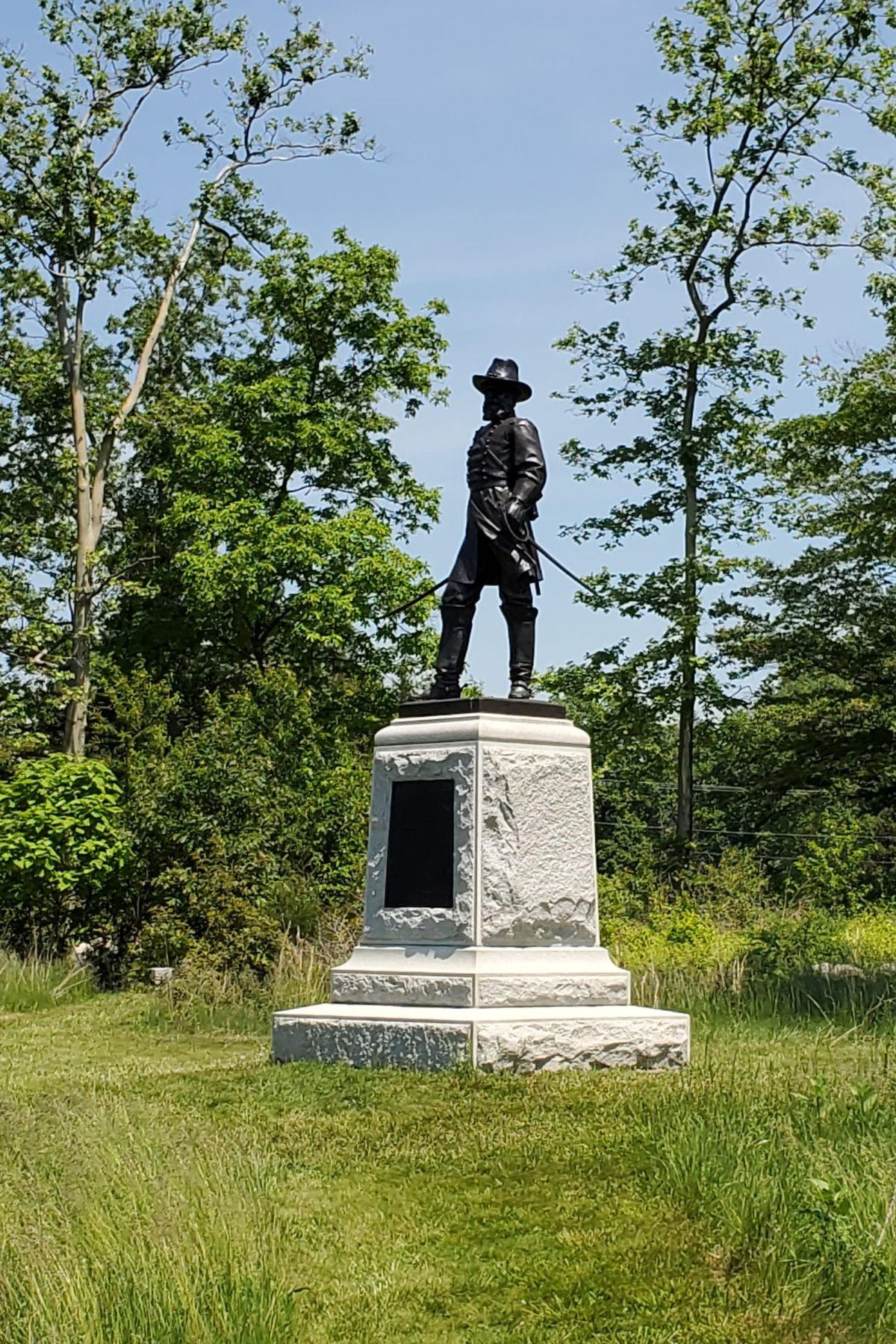
Independence Hall, the Liberty Bell, Monticello, Yorktown, Valley Forge, and Gettysburg, all of these places are ramping up for the 250th in ways they haven’t since the Bicentennial in 1976. If you’ve ever wanted to visit these places and actually feel what you’re looking at, this is the year to go.
You don’t have to go far to be part of it
This is the part I love most. Every state is celebrating. You don’t need a two-month cross-country odyssey to participate in America 250. A long weekend to a historic site two states over counts.
A week camping near a national park with Fourth of July programming counts. The mobility of RV travel means you can plug into this celebration at whatever level makes sense for your life right now.
National Go RVing Day is your warm-up
Here’s something a lot of people don’t know: before July 4th even gets here, there’s a built-in excuse to get out on the road. National Go RVing Day falls on the second Saturday in June every year, which in 2026 is June 13th.
It’s basically the RV world’s version of a practice run. Campgrounds get into it, RV clubs host events, and the whole community uses it as a reason to get out. If July 4th week feels like too much to plan for right now, June 13th is a lower-stakes way to get your first trip under your belt before the main event.
Do a long weekend. Try the rental. Figure out what you love and what you’d do differently. Then, hit the 250th celebration in July with a little experience already behind you.
Pro tip: National Go RVing Day (June 13, 2026) + America’s 250th (July 4, 2026) = two reasons to be on the road this summer. You don’t have to choose. Use June as your trial run and July as the real thing.
What Is the America 250 Celebration, Exactly?
Let me give you a quick lay of the land so you understand what you’re working with.
America250 is the official nonpartisan organization charged by Congress to coordinate the nation’s 250th anniversary. They’ve been building toward July 4, 2026, since 2016, yes, a decade of planning.
Alongside them, the White House launched its own Freedom 250 initiative, and every state has its own semiquincentennial commission running local events.
What this means practically: there is something happening near you. And there are major destination events worth planning a real trip around.
The biggest America 250 destination events
- Washington, DC – Salute to America 250 on July 4th: Military parade, fireworks, and cultural showcases on the National Mall. The main event.
- Philadelphia – All-year programming: As the birthplace of the Declaration of Independence, Philly is going bigger than any other city. Independence Hall, the Liberty Bell, special exhibitions, parades, and events throughout 2026.
- Mount Rushmore, South Dakota – July 3rd fireworks: One of the most iconic settings in the country for a 250th celebration. RV access is excellent, with great campgrounds in the Black Hills nearby.
- Vincennes, Indiana – Spirit of Vincennes Rendezvous (May 23–24): The Midwest’s premier Revolutionary War reenactment, with special significance for the 250th.
- America’s Block Party – July 3–4, nationwide: Community celebrations happening all over the country. Find one near your route at america250.org.
- National Archives, Washington DC – ‘Free and Independent’ Exhibition (through 2027): The original Declaration of Independence plus a special exhibition on 250 years of American history.
And that’s just the tip of the iceberg. Go to america250.org and use their events calendar to find what’s happening along whatever route you’re considering.
You Don’t Have to Own an RV to Do This
This is probably the biggest mental block I see, so I want to address it head-on.
If you don’t own an RV, you can rent one. Full stop.
RV rentals have gotten a lot more accessible in the last few years. You can rent directly from rental companies such as Outdoorsy or through peer-to-peer platforms where regular people rent out their own RVs, often at lower prices than traditional rental companies.
What type of RV should a first-timer rent?
My honest recommendation for a first-time renter: start smaller than you think you need.
- Class C motorhome (24–30 feet): The sweet spot for most first-timers. Easy to drive, usually has a kitchen, bathroom, and a sleeping area over the cab. Most campgrounds can accommodate these without issue.
- Travel trailer: If someone in your group already has a capable tow vehicle, a smaller travel trailer (under 26 feet) is very manageable. Just make sure your vehicle’s tow rating matches before you commit.
- Class B van camper: The easiest to drive, park, and navigate. Less living space, but for a short trip, it’s totally workable, and you can park in regular parking lots.
- Class A motorhome: I love our Super C, but I would not recommend a Class A as your first rental unless you’re doing a longer trip with time to get comfortable. They’re big.
What to look for in a rental
- Make sure the rental includes a kitchen and bathroom, especially if you’re parking near big 250th events, where bathroom lines will be brutal
- Check what’s included: linens, kitchen supplies, hookup cables
- Read the mileage policy carefully; some rentals charge per mile over a certain limit
- Ask about the generator policy if you plan to boondock
- Look at the campground size limits before you book both the RV and your sites
Pro tip: Book your rental early. Summer 2026 is going to be exceptionally high demand for RV rentals because of the 250th celebrations. If you’re planning a July 4th trip especially, don’t wait until spring to book.
How to Plan Your America’s 250th RV Trip Without Overwhelming Yourself
Here’s my All-or-Something take on RV trip planning: you don’t need a perfectly optimized route with every campground booked and every day accounted for. But you do need a few anchor points.
An anchor is a non-negotiable: a campground reservation, a specific event you want to attend, or a destination you’re orienting the trip around. Everything else can be flexible.
Step 1: Pick your anchor
What is the one thing you most want to do or see for the 250th? Start there. Is it watching July 4th fireworks in Washington, D.C.? Visiting Independence Hall in Philadelphia? Seeing Mount Rushmore on July 3rd? Pick your anchor first, then build around it.
And if July 4th feels like too much pressure to plan around right now, here’s a gentler option: make National Go RVing Day your anchor instead. It falls on June 13th in 2026, the second Saturday in June every year, and it’s the perfect low-stakes first trip.
Book a campground for a long weekend, try the rental, and see how it feels. Then you’ll have one trip under your belt before the bigger 250th celebrations kick in.
Not sure you’re ready for July 4th? National Go RVing Day on June 13th is your dress rehearsal. A long weekend trip in June gives you real experience before the main event – and takes all the pressure off having to get everything right the first time during the biggest travel weekend of the year.
Step 2: Decide on your window
How much time do you actually have? Be realistic. A long weekend (Thursday–Monday) is enough for a regional trip. One week gets you across several states. In two weeks, you can do a real route with multiple destinations.
Don’t plan a two-week trip if you have four days off. Plan the best possible four-day trip.
Step 3: Book campgrounds near your anchor first
This is where a lot of first-timers get tripped up. Campgrounds near major 250th events, especially anything within a reasonable distance of DC, Philadelphia, or Mount Rushmore, will fill up fast. Book your anchor campground as soon as you know your dates.
Great resources for finding and booking campgrounds:
- Recreation.gov – for national parks and federal lands
- Campspot – for private campgrounds
- The Dyrt – great reviews and lesser-known spot discovery
- Harvest Hosts – if you want unique stays at wineries, farms, and breweries along your route (more on this below)
Step 4: Plan your route loosely
Once your anchor campground is booked, look at what’s within reasonable driving distance. What historic sites are along the way? What events are happening that week? What’s a reasonable daily drive for your comfort level?
A good rule of thumb for first-time RV travelers: plan no more than 200–250 miles of driving per day. You’ll want time to actually stop, look around, and not feel like you’re just moving a house down the highway all day.
Step 5: Leave room for the unexpected
I cannot stress this enough. Some of my favorite moments from nine years of RV travel have been completely unplanned: a small-town parade we stumbled into, a lookout point that wasn’t on any list, a conversation with a camp host who pointed us toward something we never would have found on our own.
America’s 250th is happening all year, not just on July 4th. If your anchor plans fall through or a campground books up, there will be another event, another destination, another reason to be on the road.
The Best America 250 RV Route Ideas for Beginners
Let me give you a few starter routes based on different trip lengths and starting regions. These aren’t prescriptive, they’re jumping-off points.
Long weekend: Mid-Atlantic history loop
Starting point: Anywhere in the Northeast or mid-Atlantic
- Philadelphia: Independence Hall, Liberty Bell, historic district
- Valley Forge National Historical Park: Beautiful campgrounds right inside the park
- Gettysburg, PA: One of the most moving historic sites in the country, and the 2026 programming will be significant
This is a doable 3–4 day trip from anywhere in the Northeast, and it puts you at the absolute heart of the American founding story.
One week: Southern history route
Starting point: Southeast or mid-South
- Williamsburg, VA: Colonial Williamsburg goes all out for the 250th
- Yorktown, VA: Where the Revolution ended
- Washington, DC area: Stay at a campground in Maryland or Virginia and day-trip into the city
Campgrounds in this region fill up fast in summer. Book early and look at options in the suburbs rather than trying to find something in DC itself.
One week: Mountain West iconic route
Starting point: Denver or Salt Lake City area
- Mount Rushmore, SD: July 3rd fireworks are legendary
- Badlands National Park: Surreal landscape, great campgrounds
- Devil’s Tower, WY: A quick detour that’s absolutely worth it
This route is a bit longer, but the scenery is stunning, and the Black Hills area has excellent RV infrastructure.
Two weeks: Coast to coast (the big one)
If you have time and you’re ready to go all in, the two-week cross-country is the ultimate America’s 250th RV experience. Pick a start and end point, hit a few anchor events along the way, and let the road do the rest.
A few things to know: book your bookend campgrounds far in advance. Build in a buffer day or two. And accept that you will not see everything, and that’s completely okay.
Campground Tips for First-Timers Celebrating the 250th
Campground booking in summer 2026 is going to be competitive, especially near the 250th events. Here’s what I know after nine years of doing this:
Book popular spots months out
Recreation.gov opens national park campground reservations six months in advance, almost to the day. If you want a site at a national park for the July 4th weekend 2026, set a calendar reminder for January 4th and be ready to book the moment they open.
Use Harvest Hosts for unique stops along your route
Harvest Hosts is one of my favorite things about RV travel. For an annual membership fee, you get access to thousands of unique overnight spots, wineries, farms, breweries, museums, and even some historical sites, where you can park your self-contained RV for free.
For an America 250 RV route, this is fantastic. Imagine spending a night at a colonial-era farm in Virginia, or a winery in the Hudson Valley, or a living history museum along your route. These experiences are what RV travel is built for, and Harvest Hosts makes them accessible even when traditional campgrounds are full.
Consider staying outside the major event areas
Campgrounds within an hour of Washington DC or Philadelphia are going to be expensive and booked solid around the 4th. Look at options 60–90 minutes out and plan to drive in. Many people overlook this and miss out because they’re only searching within 20 miles of the city.
Have a backup option
Always have a Plan B campground in mind. Apps like iOverlander, Freecampsites.net, and The Dyrt show free camping and last-minute options on public land. It’s not your first choice, but knowing you have a fallback takes a lot of the stress off the road.
Budget Reality: What Does America’s 250th RV Trip Actually Cost?
Let’s talk money, because I don’t want you to go in with unrealistic expectations in either direction.
RV travel can be significantly cheaper than traditional travel, especially for families, or it can be comparable, depending on how you do it. Here’s a realistic breakdown:
If you’re renting an RV
- Rental cost: $150–$350/night depending on size, season, and company. The week of July 4th will be on the higher end.
- Generator fee or fuel surcharge: check your rental agreement
- Insurance: either through the rental company or your credit card, check before you book
Campgrounds
- National park campgrounds: $25–$45/night
- Private campgrounds with full hookups: $45–$85/night in popular areas
- Harvest Hosts: free with membership ($99–$149/year depending on tier)
- Public land boondocking: free, but you need to be self-sufficient
Fuel
This is the variable that surprises most first-timers. RVs are not fuel-efficient. A Class C motorhome typically gets 8–12 mpg. A bigger Class A or Super C like ours gets 7–10 mpg. Budget fuel costs carefully based on your actual route mileage.
Food and activities
One of the great joys of RV travel is cooking your own meals. Most RVs have a full kitchen, which means you can eat almost every meal in camp and save significantly compared to hotel travel. Budget restaurants for a few meals, groceries for the rest.
Most 250th anniversary events are free or low-cost. The National Mall celebration, America’s Block Party, and most state events are designed to be accessible to everyone.
Rough total for a 7-day trip for 2 people (renting a Class C): Rental: $1,400–$2,000 | Campgrounds: $350–$600 | Fuel (1,500 miles): $300–$400 | Food: $400–$600 | Activities: $100–$200 | Total estimate: $2,550–$3,800. Less than a week at a hotel near major events, and infinitely more flexible.
What Nobody Tells You About First-Time RVing (The Honest Version)
I’ve been doing this for nine years, so let me save you some of the learning curve:
- The first day is always the hardest. You will feel unsure about the size of the vehicle, the hookups, the leveling, all of it. That is completely normal. By day three, you’ll wonder why you waited so long.
- Things will go wrong. A hookup won’t work. A campground will be louder than expected. You’ll take a wrong turn that adds 45 minutes. This is RVing. It’s also half the fun.
- You will pack too much for your first trip. Bring less than you think you need. The RV kitchen has everything you need for simple meals. You do not need 14 outfit options.
- Backing up is a skill. If you’ve never backed a larger vehicle into a campsite, YouTube some tutorials before your trip. Ask your rental company to walk you through it. Most campground hosts are incredibly patient with first-timers.
- Dump stations are not scary. I know this sounds like a weird thing to put on a list, but the black tank is the thing that freaks most people out before they’ve done it. It takes about 10 minutes, it’s less gross than you think, and after your first time, you’ll wonder what the big deal was.
- Slow down. The point of RV travel is to actually be somewhere, not just move through it. The people who love RVing the most are the ones who pull over for the random historical marker, linger over coffee in the morning, and don’t treat the road like a race.
Making It Count: How to Actually Experience the 250th
Here’s the thing about a 250th anniversary: it’s meaningful if you let it be.
I’ve driven through a lot of historic places over nine years, and I’ll be honest, sometimes you’re just passing through. But America’s 250th is a chance to actually stop. To stand in the places where this country was built, to read the markers, to talk to the park rangers, to sit in your camp chair at night in a place that has a few hundred years of American history right around it.
A few things that make the 250th feel real rather than just logistical:
- Go to at least one reenactment or ranger-led program. These are free, they’re everywhere this year, and they will change how you see the places you’re visiting.
- Read a little before you go. You don’t need to become a history scholar, just know enough about the place you’re visiting to understand what you’re looking at. Even a 10-minute Wikipedia read changes the experience.
- Ask the locals. Camp hosts, rangers, small-town diner owners, these people know their region’s 250th programming better than any travel website does.
- Let the kids lead sometimes. If you’re traveling with kids, let them pick one stop each. Give them some ownership of the trip, and they’ll remember it differently than if it’s just a parent-organized sightseeing march.
Is This the Trip That Starts Something Bigger?
I want to end with this, because it’s the thing I think about most when I talk to aspiring RVers.
For a lot of people, the America 250 trip isn’t just a vacation. It’s a test drive.
It’s the trip where you find out whether the lifestyle fits, whether you can sleep in a smaller space and feel fine, whether you actually enjoy the flexibility of not having a hotel tied down, whether the road feels like freedom or like chaos.
And here’s what I know from nine years of doing this and from coaching hundreds of people through their own transitions: most people who take that first trip don’t want to go back to the way they were traveling before.
Not because RV life is perfect. It’s not. Things break. Plans change. Some campgrounds are great, and some are mediocre, and occasionally something goes sideways in a way that’s genuinely stressful.
But because the feeling of waking up somewhere beautiful, making your own coffee, and deciding the day yourself, that doesn’t get old.
The 250th is a once-in-a-lifetime reason to try this. But the lifestyle it opens the door to? That’s available to you every year after.
Ready to go deeper? If you’re thinking this America’s 250th trip might be the start of something bigger, come join us in the Full Time RV Roadmap community. It’s free, it’s full of people at exactly the same stage you’re at, and it’s where we help aspiring RVers stop planning and start moving. https://lifeintherv.com/skool
FAQs
America 250 (America250.org) is the congressionally established nonpartisan organization that has been coordinating the celebration since 2016. Freedom 250 is a separate White House initiative launched by the Trump administration to plan and promote additional events. Both are working toward the same July 4, 2026 milestone; you’ll see both names used in coverage of the 250th.
For a couple, it can go either way. For a family of four or more, RV travel almost always wins, you’re paying for one vehicle and one campsite instead of two hotel rooms and three restaurant meals a day. The bigger savings come from cooking your own food. A week of groceries costs a fraction of what you’d spend eating out. Factor in the rental cost honestly and do your own math for your family size.
Pick one region and stay in it. The mid-Atlantic, Philadelphia, Valley Forge, Gettysburg, Colonial Virginia, is the easiest first-timer route because the campground infrastructure is excellent, the driving distances between stops are manageable, and you’re at the absolute heart of the American founding story. If you’re in the Midwest or West, the Black Hills of South Dakota (Mount Rushmore, Badlands) give you a shorter, simpler route with stunning scenery and good campgrounds.
Yes, a lot of them, and honestly, some of the best ones aren’t on July 4th at all. The 250th is a full-year celebration with events running from January through December 2026 in every state. We put together a full guide to the ones worth planning an RV trip around, including some that will have significantly smaller crowds and lower campground prices than anything happening during the week of July 4th.
Save This Post, Celebrating Americas 250th Birthday by RV, for Later