Craving the RV Lifestyle? Is RV Life the Answer?
Thinking about the RV lifestyle but unsure where to start? Here’s an honest look at what RV travel is really like and how to know if it’s right for you.
When the Life You’re Living Isn’t the Life You Want
If you’ve found yourself lingering over RV videos, clicking campground photos at midnight, or bookmarking “someday” travel ideas and wondering how to RV full time, while still answering emails from your kitchen table, you’re not alone.
The curiosity about the RV lifestyle usually begins quietly. It’s not a bold declaration of “I’m selling everything tomorrow”; it’s more like a gentle tap on the shoulder that says, There might be another way to live.
For most aspiring RVers, the question isn’t actually whether traveling by RV would be fun. Of course it would be. The deeper question is more personal: Would this kind of life really work for me? Could I actually handle it? Would I like it once the novelty wore off?
Those questions deserve honest answers, because RV life isn’t some endless vacation loop. It’s a real lifestyle, with practical challenges, incredible joys, moments of uncertainty, and surprising growth.
🗺️ Key Takeaways
- The longing for RV life usually starts quietly — a recurring curiosity, not a sudden decision. That pull is worth paying attention to.
- RV life is genuinely wonderful and genuinely challenging. Expect real beauty alongside real problem-solving — that combination is the point.
- The biggest predictor of success isn’t being adventurous or mechanically gifted — it’s adaptability and a willingness to learn as you go.
- Living costs often stay the same or drop. Mobile housing replaces rent or mortgage, and smaller spaces naturally reduce consumption and impulse spending.
- RV living often strengthens relationships rather than straining them — but it does surface unresolved communication issues quickly.
- You don’t have to go all-in immediately. Renting a rig, trying extended trips, or doing a seasonal transition are all valid first steps.
- RV life isn’t a permanent contract — it’s an adjustable season. Many people do it for a year, pause, or pivot, and the freedom to choose is part of the lifestyle itself.
And for the people, it fits; it doesn’t just change where you live. It changes how you see time, priorities, space, and freedom.


The Quiet Pull of the RV Lifestyle
Most people don’t wake up one morning suddenly wanting to live in an RV. The idea usually grows slowly, shaped by exhaustion with busy schedules, rising housing costs, work burnout, family scattered across the country, or a longing to see more than the same view out the same window year after year.

There’s also something powerful about the promise of mobility. Not in a frantic or reckless way, but in the realization that you’re not tied to a single place. If family is calling, you can go to them.
If the weather turns sour, you can chase the sunshine. If a town doesn’t feel right, you don’t have to “stick it out” until your lease is up. You move on.
For many aspiring RVers, the lifestyle begins to represent more than travel. It symbolizes flexibility, agency, and the feeling that time becomes something you control again.
But with that pull always come doubts.
What about the bathroom situation? The finances? The safety? The work side of things? The reality of sharing 300 square feet with someone I love when I sometimes need my own space?
Those doubts don’t mean you’re not cut out for RV life. They mean you’re considering it honestly.
What RV Life Is Really Like
Romantic videos show sunset dinners by the campfire and windows opening onto national parks. Those moments are very real, and they’re incredible.
But RV life also includes emptying tanks, tracking weather systems, repairing slide motors, and doing laundry at strange hours in campground laundromats.
It’s a partnership with your home in a way that most stationary living never requires. You start noticing systems: water pressure, electrical loads, propane levels, and tire maintenance.
Your living space becomes both seatbelt-fastened transport and cozy shelter. It’s active homeownership, not passive comfort.
At the same time, your days slow down. Without appointments anchoring every week, travel days replace commutes. Grocery runs become intentional, low-effort outings instead of rushed tasks squeezed between meetings.

You stay longer in places because there’s no urgency to rush back “home”, you already brought home with you.
There’s a grounding quality to it. RVers tend to notice the land more, weather shifts, seasonal changes, and how altitude affects breathing and cooking times. It reconnects you with routine rhythms while removing the artificial ones that dominate modern life.
And for aspiring RVers worried they’d feel unsettled or restless? Most discover the opposite. The motion creates calm. You get used to being adaptable, and that skill transfers into confidence across all areas of life.
The Emotional Shift No One Talks About
The biggest surprise many new RVers encounter isn’t logistical, it’s emotional.
Living intentionally in a smaller space reshapes priorities fast. Stuff matters less. Experiences matter more. Conversations stretch longer because there’s nowhere to be afterward. Decisions become simpler because you physically can’t accumulate endlessly.
RV life pulls you out of autopilot living. There’s less numbing distraction, fewer arbitrary obligations. Without endless errands and home maintenance tasks, restful space appears in your week. You start to ask deeper questions about how you want to spend your days and what truly fulfills you.
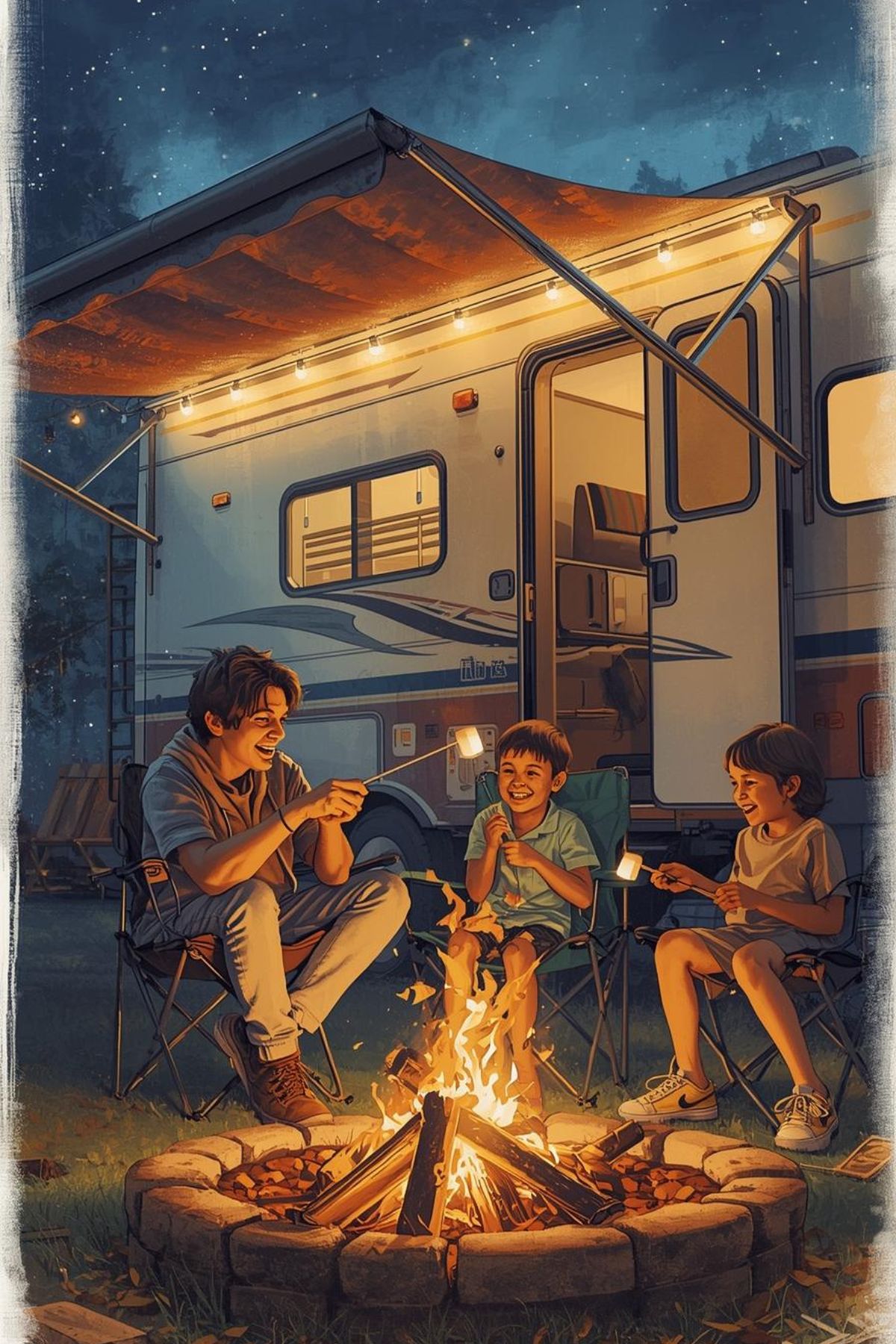
Not everyone likes this part, but for the right people, it becomes the greatest gift of RV living.
Does the RV Lifestyle Fit Your Personality?
Aspirants often frame the RV decision as personality-based: Am I adventurous enough? Organized enough? Handy enough?
Ironically, most successful RVers weren’t hardcore adventurers when they started. They were planners, dreamers, families trying something new, and professionals burned out on predictable routines.
The strongest predictor for RV success isn’t personality, it’s adaptability.
If you’re willing to learn as you go and meet challenges with curiosity rather than frustration, RV life can work beautifully for you. You don’t need mechanical expertise. You don’t need minimalist perfection. You don’t need influencer energy.
But you do need openness. RV life rewards problem-solvers who see setbacks as part of the story, not a failure of the lifestyle itself.
Ask yourself:
Do I enjoy learning by doing?
Do I value flexibility over strict routines?
Can I handle moments where plans shift unexpectedly?
Do I like simplifying rather than accumulating?
If most of those lean yes, this lifestyle may align naturally with who you already are.

The Relationship Reality
One of the top fears among aspiring RVers is about partnership strain. The idea of living in close quarters with your spouse, parent, children, or pet can sound like a recipe for tension.
Surprisingly, many couples report stronger relationships after transitioning to RV life.
Small spaces require communication. You negotiate schedules. You learn how to give someone breathing room even without extra rooms. And because you share more experiences instead of parallel lives, emotional closeness increases.
That said, RV living magnifies cracks that were already there. It doesn’t create relationship problems; it reveals unresolved ones. Healthy communication becomes more important, not less.

Families find rhythm, too; children adapt quickly, thriving on geography-based education and unstructured exploration. Pets love the daily presence of their humans. The RV becomes not a restrictive space, but a deeply shared home base.
The Financial Reality of RV Living
Money is the elephant in every RV dream conversation.
There’s no universal answer for the cost of RV living because the lifestyle scales dramatically based on choices: rig purchase, campground selections, travel pace, eating habits, and income strategy.
However, many aspiring RVers are surprised by two things:
First, living costs rarely skyrocket beyond what a stationary life already demands, and often, they drop. Housing expenses convert into payments that come with built-in mobility, eliminating rent or mortgage tethering plus utility bills.
With small living spaces, consumption slows naturally. Dining out decreases when your own kitchen becomes the easiest option.
Second, income doesn’t have to disappear. Thousands of full-time RVers work remotely, operate online businesses, freelance, consult, or maintain mobile trades.
The career shift feels intimidating at first, but after the leap, many discover they become more creatively resourceful than they ever were with fixed routines.
The greatest money shift isn’t in spreadsheets, it’s in mindset. RVers stop separating “life” from “vacation savings.” Every month can contain exploration instead of postponing joy for two annual vacation weeks.
The Fear of Commitment
Aspiring RVers don’t usually fear RV life; they fear choosing wrong.
What if I sell the house and regret it?
What if it’s harder than I expect?
What if everyone else seems to love it, and I quietly don’t?
Those fears are valid, but rarely reflect reality.
Most RVers don’t view the choice as irreversible. RV life is not a permanent contract; it’s an adjustable season of life. Some do it for a year and then settle down again, richer for the experience. Some pause after a family need changes. Some remain on the road for decades.
The ability to change direction at any time is baked into the RV lifestyle itself.
You don’t have to know exactly where this path leads to walk the first mile.
How to Tell if RV Life Is Calling You
Often, deep desires repeat themselves quietly before they get loud. If you’ve thought about RV life for months or years, not as a passing fantasy, but as a recurring curiosity, that matters.
You may find yourself imagining:
What my mornings might look like with mountain air instead of traffic sounds.
What my relationship with money might feel like without mortgage anxiety.
What would it be like to wake up curious about where the road leads next?

Those images don’t appear randomly. The same way people feel drawn to entrepreneurship, homesteading, or digital nomad life, RV living attracts individuals who crave blended freedom and rooted purpose.
The real question isn’t whether RV life would be perfect; it isn’t. No lifestyle is. The question is whether it feels more aligned than the structure you’re living in now.
Starting Slowly Is Still Starting
There’s immense pressure online to “sell everything and go full-time.” But the RV lifestyle doesn’t require dramatic leaps to begin.
Many start with:
Weekend rentals or borrowed rigs.
Two-week road trips that test living rhythms.
Seasonal transitions between home and RV travel.
The key is not the speed, it’s momentum. Every experience teaches you something tangible about your preferences, tolerance level, and joy triggers.
The people who move into full-time RV living most comfortably are rarely the ones who rushed hardest.
They’re the ones who allowed curiosity to guide learning rather than fear to block motion.
The Deeper Why
At its core, the RV lifestyle offers something that’s becoming increasingly rare: agency over time.
Instead of living life between obligations, road living opens space for deliberate days shaped by meaning rather than calendars. It replaces the constant chase for weekends with gradual satisfaction across the whole week.
For many aspiring RVers, the quiet longing isn’t just for new scenery, it’s for a new relationship with life itself.
FAQs
More ways than most people expect. Remote work and fully location-independent jobs are the most common, think project managers, writers, designers, coaches, and consultants. Many RVers also run online businesses (blogging, e-commerce, digital courses), freelance, or pick up seasonal work. The short answer: if your income can come through a laptop, it can come from a campsite.
It’s one of the biggest fears — and one of the biggest surprises. Most couples and families find that shared experiences and daily proximity strengthen their bond rather than strain it. That said, RV living does amplify whatever communication patterns already exist. Strong relationships tend to get stronger. Relationships with unresolved tension tend to surface it faster. Good communication habits matter more on the road than off it.
Probably not who you’d expect. You don’t need to be an outdoorsy adventurer or a mechanical wizard. The people who thrive most are the ones who are adaptable — willing to learn as they go, meet unexpected problems with curiosity, and value flexibility over rigid routine. Planners do well. Dreamers who take small steps do well. The common thread is openness, not boldness.
Maybe the Road Is Calling You
Thinking about RV living doesn’t mean you’ve already committed. It means you’re paying attention to an inner voice that recognizes a longing for something different.
Maybe RV life becomes your future.
Maybe it doesn’t.
But the simple act of exploring the possibility is itself an act of courage, one that honors curiosity instead of dismissing it.
You don’t need to have every answer before beginning your journey. You just need to remain open enough to ask the questions honestly.
Because the road doesn’t demand bold certainty, only willingness to begin.
And for many who did begin, it led someplace they never expected, straight into the life they were quietly craving all along.
📌 Save This Post, Is RV Life the Answer, for Later