Should You Buy an RV Now – Or Wait Until Fall?
Used RV values are up 11% while wholesale prices start to soften. Should you buy an RV now or wait until fall? Find out if you should wait.
Is Fall Really the Best Time to Buy an RV?
Quick Answer: Neither answer is automatically right. Used RV values are currently running about 11% above last year, and clean, well-kept rigs are still moving fast.
But dealer acquisition costs typically begin a seasonal softening in the fall, which can eventually give buyers more negotiating room.
You may also like: The Most Laid Back RV Rally in Tampa.
The smart move isn’t picking a season; it’s understanding what’s happening in the market right now and matching it to what you’re actually shopping for.
Key Takeaways
- Used RV values are currently running about 11% above last year
- Dealers are moving 700+ pre-owned units through wholesale auctions in August alone
- Wholesale (dealer acquisition) pricing is beginning its normal seasonal softening, separate from retail value
- Clean, well-maintained used rigs are still in strong demand and don’t sit long regardless of season
- The better strategy is shopping based on the specific unit and your flexibility, not timing a market prediction
Every year around this time, someone asks the same question: should I buy now, or wait for prices to drop?
Most answers to that question are guesses dressed up as predictions. Here’s what’s actually happening instead.

What’s really going on in the used RV market right now?
Used RV values are currently sitting about 11% higher than they were a year ago. That’s not a small bump; it reflects real demand for clean, well-maintained pre-owned rigs, and it’s part of why a nice used unit doesn’t sit on a lot very long right now.
At the same time, there’s a lot of inventory moving. Dealers are pushing more than 700 pre-owned units through wholesale auctions in August alone. That’s a meaningful volume, and it’s happening at the exact moment wholesale prices are beginning their normal seasonal adjustment downward.
Those two things sound like they contradict each other. They don’t. They’re just two different layers of the same market.
Why doesn’t rising value and softening wholesale pricing cancel out?
Because they’re measuring different things. Retail value, what a clean used rig is actually worth to a buyer, is holding up. Wholesale pricing, what dealers pay to acquire inventory, is what typically starts to soften as the season shifts.
That gap matters more than either number on its own. When dealer acquisition costs start coming down, but retail demand for good units stays strong, dealers eventually have a little more room to negotiate on the units that aren’t moving as fast.
That room doesn’t show up overnight, and it doesn’t apply evenly across every unit on the lot.
So should you buy now, or wait?
It depends on what you’re shopping for, not what the calendar says.
Buy now if: you’ve found a genuinely clean, well-maintained rig that fits what you need. Good units in solid condition are still moving quickly in this market, and waiting on a specific rig you’ve already found rarely works out in your favor when demand is this steady.
It may pay to wait if: you’re shopping for a general category rather than a specific unit, you have flexibility on timing, and you’re comfortable negotiating. As wholesale costs soften into fall, dealers carrying units that haven’t sold yet, especially ones sitting on lots longer than they’d like, tend to have more room to work with buyers willing to be patient.
Don’t wait if: you’re hoping for a market crash. That’s not what’s happening here. This is a normal seasonal adjustment layered under real, sustained demand for good used inventory, not a signal that prices are about to fall off a cliff.
What should buyers actually do with this information?
Shop the unit, not the season. If you find a clean rig at a fair price, the “wait and see” strategy usually costs you more than it saves; good units don’t sit around waiting for buyers to feel ready.
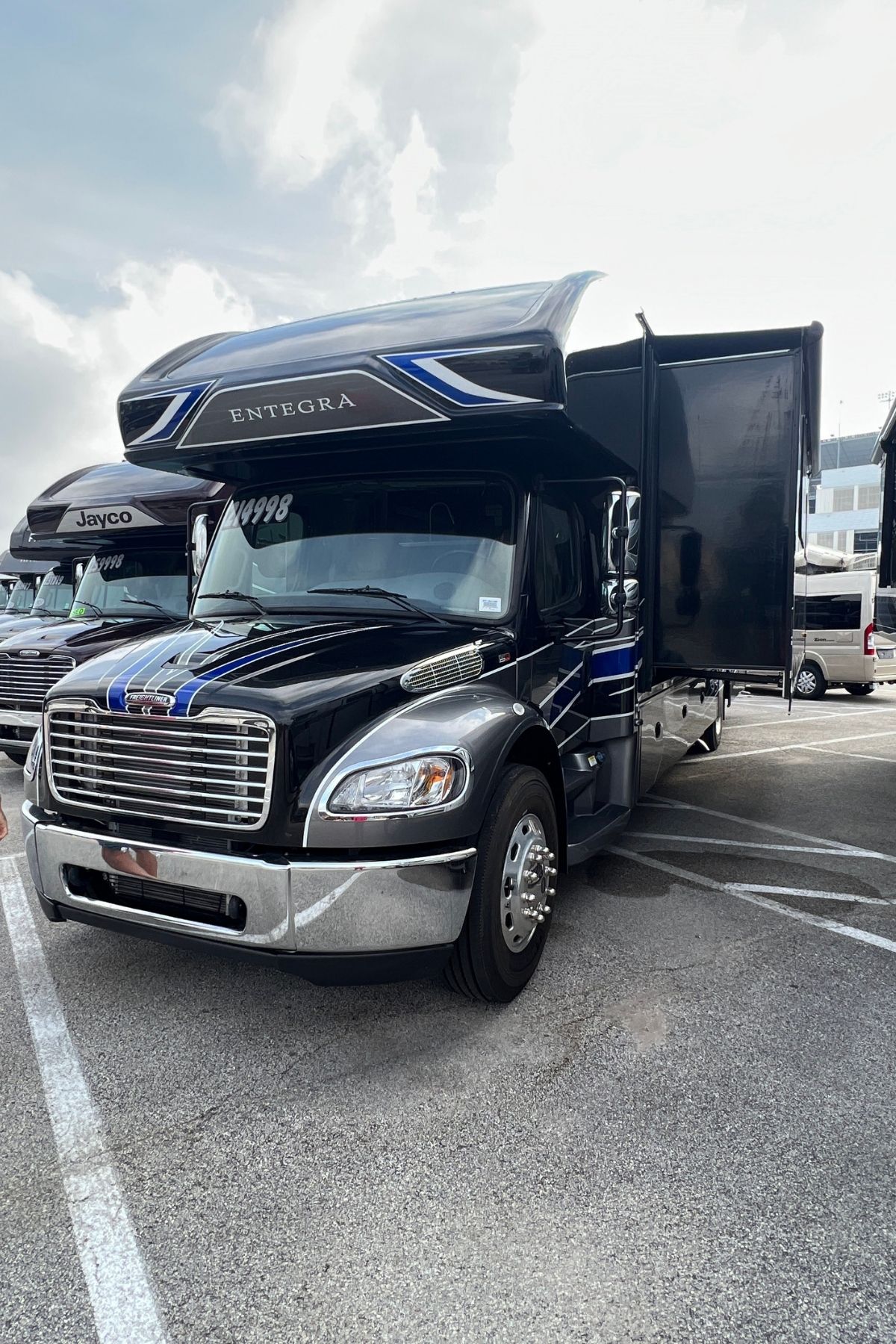
If nothing’s grabbed you yet and you’re not in a rush, fall gives you a little more leverage to work with, particularly on units that have been sitting.
Either way, the real answer isn’t “buy now” or “wait until fall.” It’s “understand what you’re looking at before you decide either way.”
Follow us on Pinterest and PIN any of these images for later!
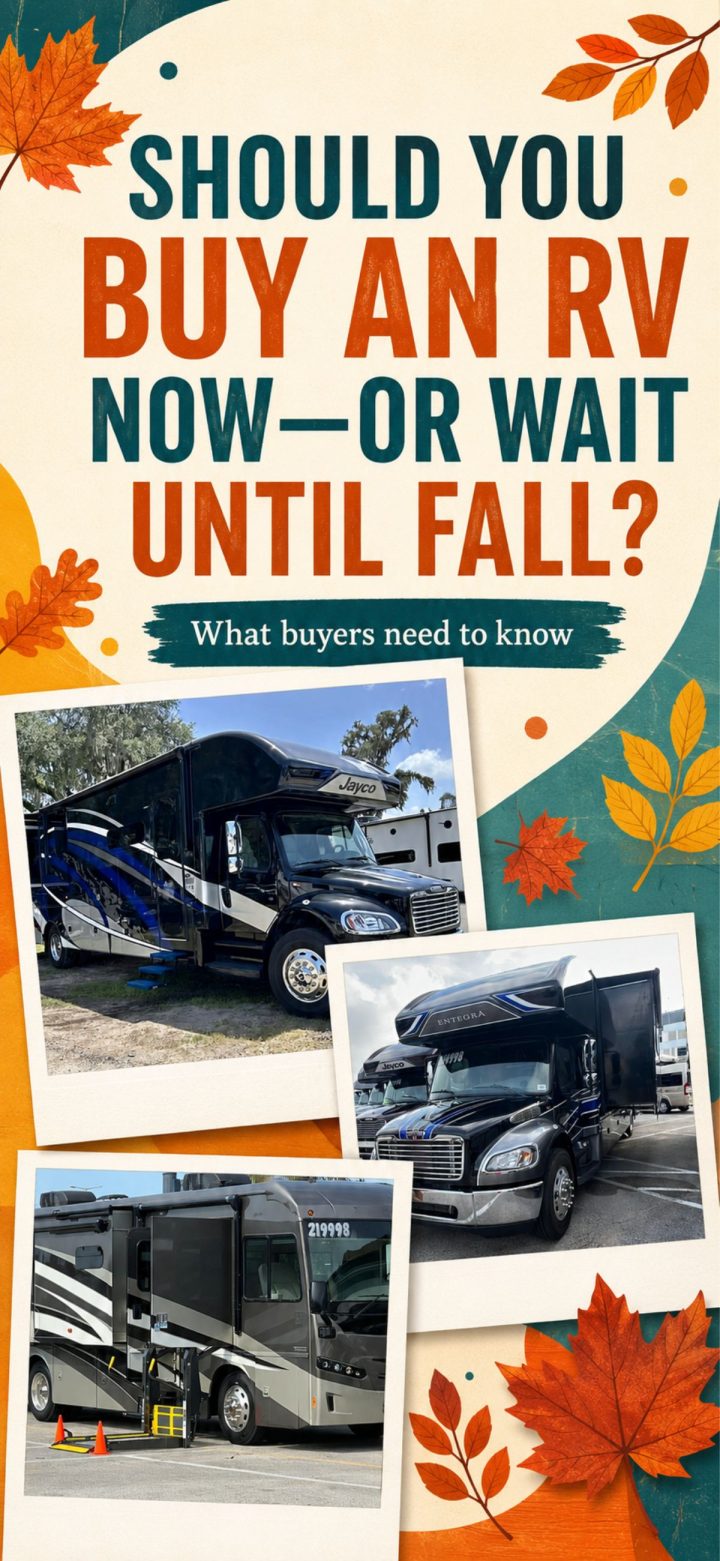
If you’re actively shopping, the rig in front of you matters more than the month on the calendar.
FAQs
It depends on the unit, not the season. If you’ve found a clean, well-maintained rig that fits your needs, buying now makes sense since good units move quickly. If you’re flexible and shopping broadly, fall’s seasonal softening in dealer acquisition costs may offer more negotiating room.
Used RV values are currently running about 11% above last year, driven by strong demand for clean, well-kept units. At the same time, wholesale (dealer acquisition) pricing is beginning its normal seasonal decline heading into fall.
Wholesale acquisition costs typically soften seasonally in the fall, which can eventually translate into more negotiating room on retail lots, but it’s a gradual shift, not a crash, and it doesn’t apply evenly to every unit.
No. Demand for well-maintained used rigs remains strong, and good units aren’t sitting on lots waiting for buyers. Waiting on a specific, high-quality unit you’ve already found rarely works in your favor.
Dealers are moving over 700 pre-owned units through wholesale auctions in August alone, indicating an active, well-supplied pre-owned market heading into fall.