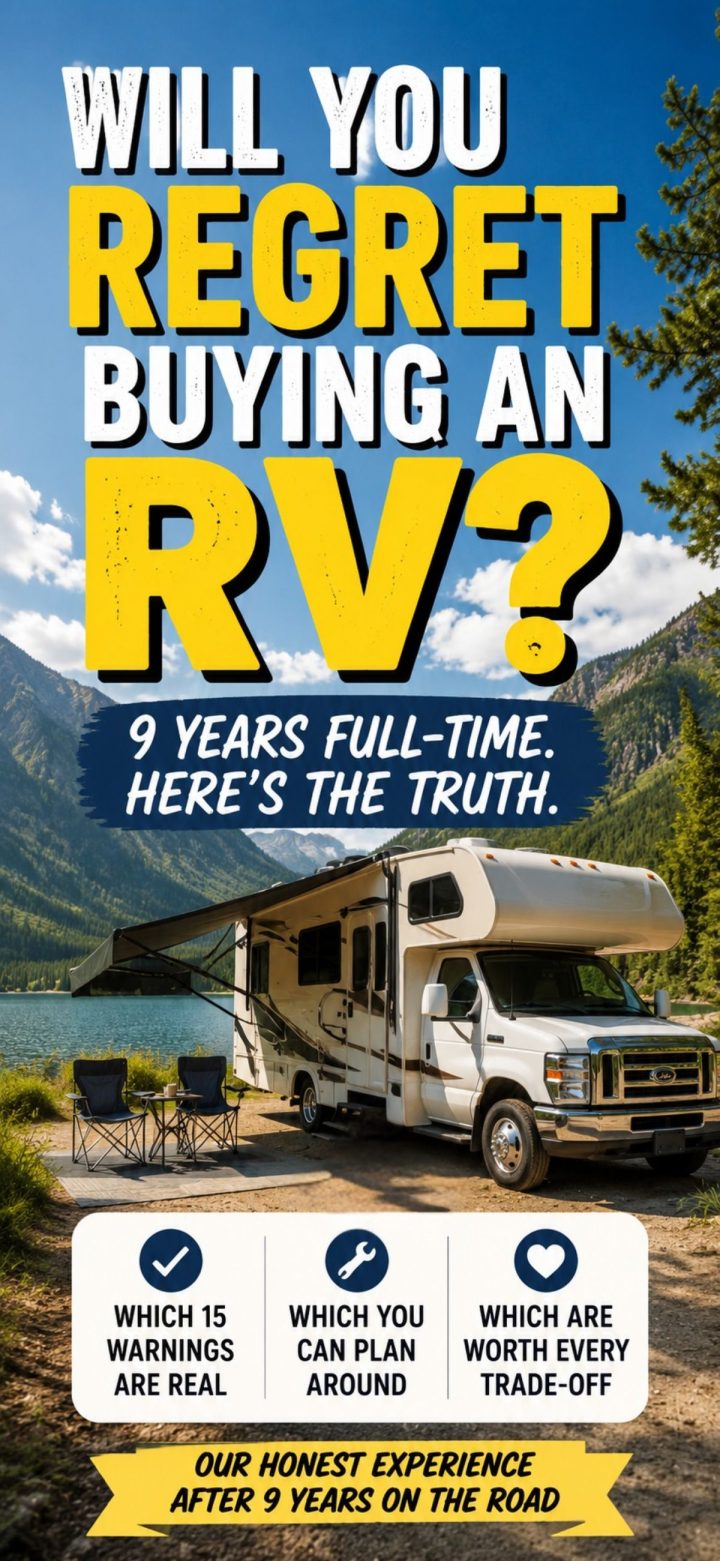
Will You Regret Buying an RV? What 15 ‘Retirement Regret’ Warnings Actually Get Right
Will you regret buying an RV? Nine years full-time, here’s which of the 15 warnings are real, avoidable, or worth it.
Some of those regrets are real. But most of Kiplinger’s 15 reasons aren’t reasons to skip RV life; they’re reasons to plan better before you start. The regret that actually ends people’s RV dreams almost never makes these lists: it’s selling the house before you’ve ever spent a night in the rig.
Still weighing whether full-time life is right for you? How to RV Full Time walks through everything to figure out before you buy.
15 Reasons You’ll Regret an RV in Retirement – What’s True and What’s Just Bad Planning
Kiplinger just published a list of 15 reasons you’ll regret buying an RV in retirement, and it’s the kind of headline that’s built to scare people out of a decision instead of helping them make a good one.
Some of those warnings are dead-on. Others are planning problems wearing an RV costume. And a few of them aren’t regrets at all; they’re just trade-offs, and trade-offs only sting if you didn’t actually want what you traded them for.
Key Takeaways
- Several warnings on the Kiplinger list are legitimate and deserve real consideration before you buy
- At least half the “regrets” are planning problems, not RV problems — and planning fixes them
- Some trade-offs (small spaces, no yard, giving up stuff) are only regrets if you didn’t want the lifestyle in the first place
- Renting before buying solves more of this list than any single piece of gear or budget line item
- The questions that matter most are the ones couples skip: money, mail, medical care, and how much togetherness is too much
Here’s how nine years and 40-plus states taught me to sort the real from the avoidable from the worth-it.
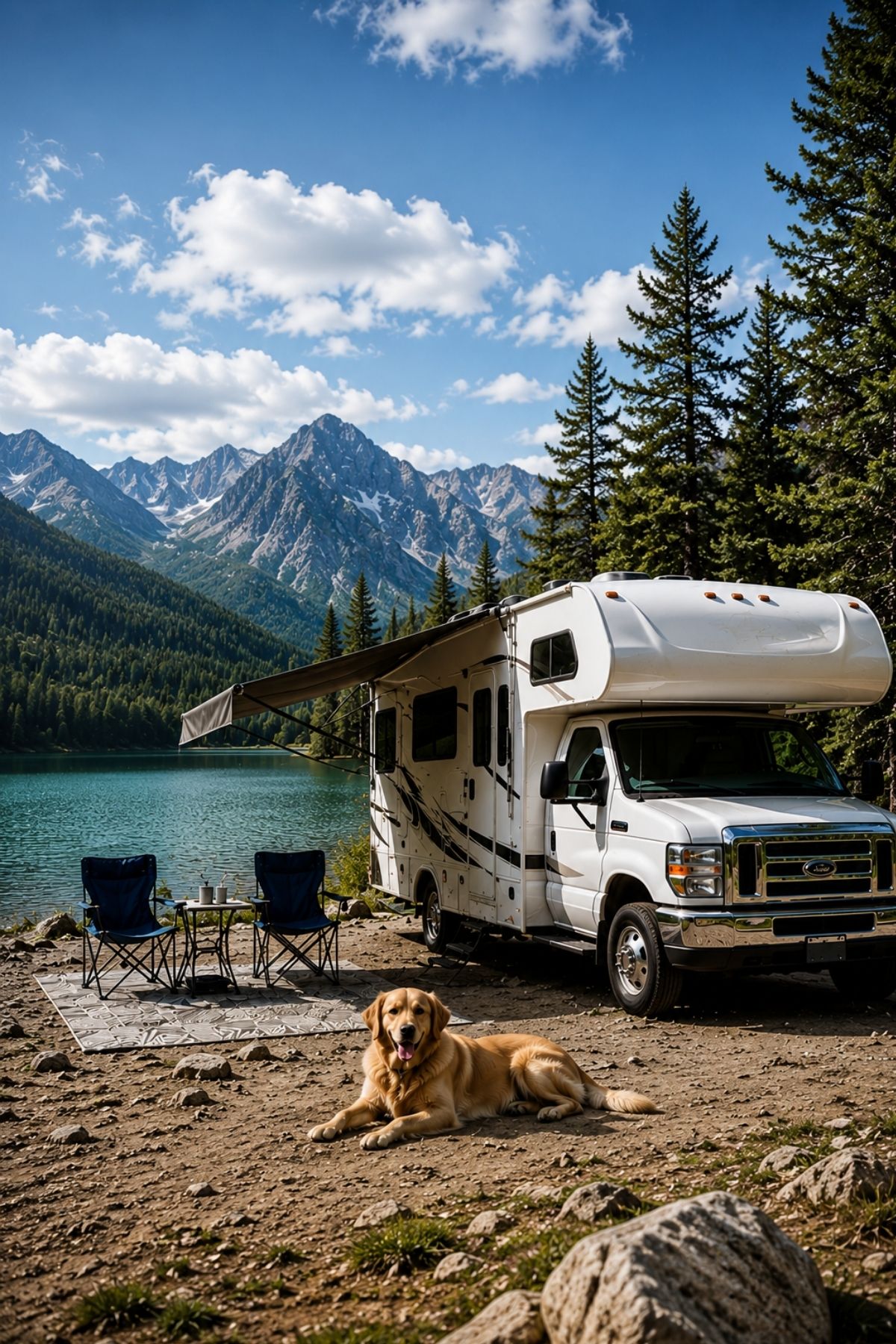

Why This List Resonated (And Where It Falls Short)
Tim and I went full-time nine years ago. Six weeks from decision to driving away, towing everything we owned behind a truck instead of parking it in a driveway. We didn’t have a trial run. We didn’t have a five-year plan.
We had a reason bigger than a spreadsheet: my sister passed away at 51 before she and her husband ever took the anniversary trip to Hawaii they’d been planning for years. That loss taught us something no retirement calculator ever could: waiting for the “right time” is its own risk.
So when I read a list titled “15 Reasons You’ll Regret an RV in Retirement,” I don’t read it as a warning to stay home. I read it as fifteen data points, some true, some avoidable, and a few that are only regrets if RV life was never really for you to begin with. Here’s how I’d sort them, after nine years and 40-plus states.
Which Kiplinger Warnings Are Actually True?
A few of these hold up no matter how much planning you do, and beginners should take them seriously rather than assume they’re the exception.
Cost is real, and it’s not linear. Kiplinger’s price ranges for Class A, B, and C motorhomes and trailers are wide for a reason; a Class A motorhome alone can run anywhere from around $50,000 to $600,000, with luxury models climbing into the millions.
That spread isn’t a typo. It’s the difference between buying what you need and buying what a dealership finance office talked you into. We’ve watched friends buy the biggest rig on the lot in month one and downsize twice in two years once they figured out what they actually used.
Fuel and insurance add up faster than people expect. Pushing a house down the highway at 60 mph takes real power, and diesel prices haven’t been kind lately. Retiree Nancy Fasoldt told Kiplinger she now winters closer to home and once flew first class rather than drive a truck camper cross-country because it was cheaper.
That’s not an exaggeration; we’ve made the same call more than once, choosing a shorter loop over a bucket-list drive because fuel prices made the math ugly that particular season.
Health insurance before Medicare is genuinely hard. This is the one warning on the list I’d put in bold and underline. If you’re retiring early and going full-time before 65, you are choosing a lifestyle that fights against how most U.S. health insurance is structured, state by state, network by network.

Once you’re on Medicare, it gets easier, but pre-Medicare full-timers need a real plan here, not an assumption that it’ll work itself out.
Loneliness is a legitimate risk, not a scare tactic. This is the warning I wish got more attention than the sewer tank jokes. You will drift from your hometown social calendar. Friends stop including you because you’re never there to include.
It’s not personal; it’s just what distance does. We’ve felt it. The RV community fills part of that gap, but it’s a different kind of connection, temporary, sphere-based, here-then-gone.
If you need deep, permanent, geographically close friendships to feel okay, that’s worth being honest with yourself about before you sell the house.
Which Problems Actually Come From Not Planning?
This is where I’d push back on the list the hardest. A big chunk of these “regrets” aren’t inherent to RV life; they’re what happens when people skip the planning step.
Driving a rig you never trained on. Kiplinger is right that RVs are a bear to drive, but the fix already exists: RV driving schools, backing lessons, and simply practicing in an empty parking lot before you’re merging onto an interstate.
Tim came from a trucking background, which gave us a head start, but even he’ll tell you our Jayco Seneca Prestige Super C towing a Chevy Colorado is a different animal than anything he drove professionally. You don’t skip the learning curve. You just shorten it with the right prep.
Not knowing where you’ll sleep at night. The list frames overnight parking as a constant scramble. It doesn’t have to be. Harvest Hosts, Thousand Trails, Elks Lodges, and apps like Campendium turn “where will we park” from a nightly crisis into a five-minute decision.
We’ve built entire routes around membership networks specifically, so we’re not white-knuckling it into a Walmart lot at 9 p.m.
Getting blindsided by repairs. Kiplinger’s advice to dedicate a savings account to RV upkeep is exactly right, and it’s the single easiest line item to plan for and the easiest one to skip.
An RV is a house and a vehicle at the same time, which means it breaks like both. Budget for it before you need it, not after.
Redecorating sticker shock. Several RVers in the article spent thousands re-covering furniture and re-siding units they bought used. That’s a buying problem, not an RV problem; walk through any used rig with your decor budget already built into your offer, not as a surprise afterward.
Which Trade-Offs Are Worth It For the Right Person?
Some items on this list aren’t regrets. They’re trade-offs, and trade-offs only feel like regrets when you didn’t actually want what you traded them for.
Small quarters. Yes, your travel partner is always within a few feet of you. For some couples that’s claustrophobic. For us, after nine years, it’s the whole point. Harley, our German Shepherd, is always in reach too, and that closeness is something we chose on purpose, not something we’re tolerating.
Emptying tanks and managing waste. Nobody loves this chore. But it’s a ten-minute inconvenience in exchange for waking up somewhere different whenever you want. Framed against what you get, it’s a trade most full-timers stop even thinking about after the first few months.
Downsizing your stuff. Giving up Meemaw’s hutch stings for some people and is a relief for others. We didn’t grieve much of what we let go of. What we gained, nine years and counting of shared experience instead of shared square footage, was worth more than the furniture.

Should You Rent Before You Buy?
Kiplinger buries its best advice in reason #15, and it deserves top billing, not last place: rent first. A real vacation in a rental rig is exactly the kind of trial run that can either confirm your plans or save you from a very expensive mistake.
Renting before you buy isn’t just for people who are unsure. It’s smart even for people who are sure, because it tells you which floor plan, which class, and which size actually fits how you and your travel partner live day to day.
Six weeks worked for us, but nine years ago, you have to remember that no one was trading a 3500 square foot house for an RV. A rental trip is the cheapest insurance policy against buying the wrong rig for the wrong reasons.
What Questions Should Couples Answer Before Going Full-Time?
Before you sell the house, sit down together and actually answer these, out loud, not just in your head:
- How will we handle health insurance until Medicare, and what’s our plan if one of us gets seriously sick on the road?
- What’s our real monthly budget, including fuel, insurance, campground fees, and a repair fund, not the optimistic version?
- How will we stay connected to family and friends, and are we both okay with drifting off some invite lists?
- Who drives, who backs up, and what happens if the primary driver can’t drive one day?
- How much togetherness is too much, and what’s our plan for solo time when we need it?
- Are we buying based on a rental trip and real research, or based on a dealership showroom and a feeling?
None of these questions have a wrong answer. They just need an honest one, ideally answered before the moving truck shows up, not somewhere in South Dakota six months in.
The Bottom Line
Kiplinger’s 15 Reasons You’ll Regret an RV in Retirement list isn’t wrong to exist. Some of it is a genuine service to people who are romanticizing the lifestyle without doing the homework. But a list of regrets written by people who mostly didn’t live the life full-time misses the difference between a warning and a trade-off.
Nine years in, the sewer tanks and the fuel prices are real. So is everything we gained by choosing “something” over waiting for “perfect.” That’s the whole idea behind All-or-Something: you don’t need the flawless plan. You need to take the next honest step.
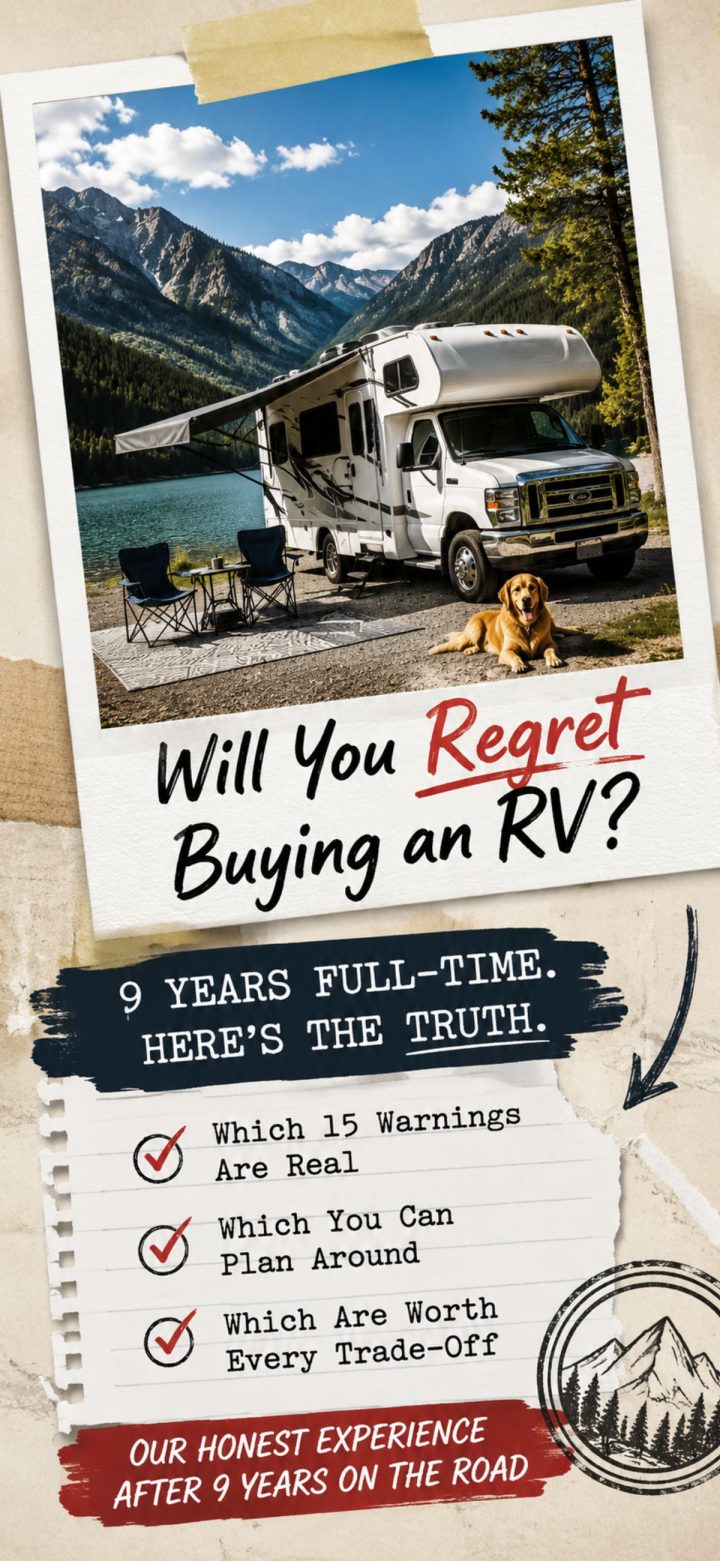
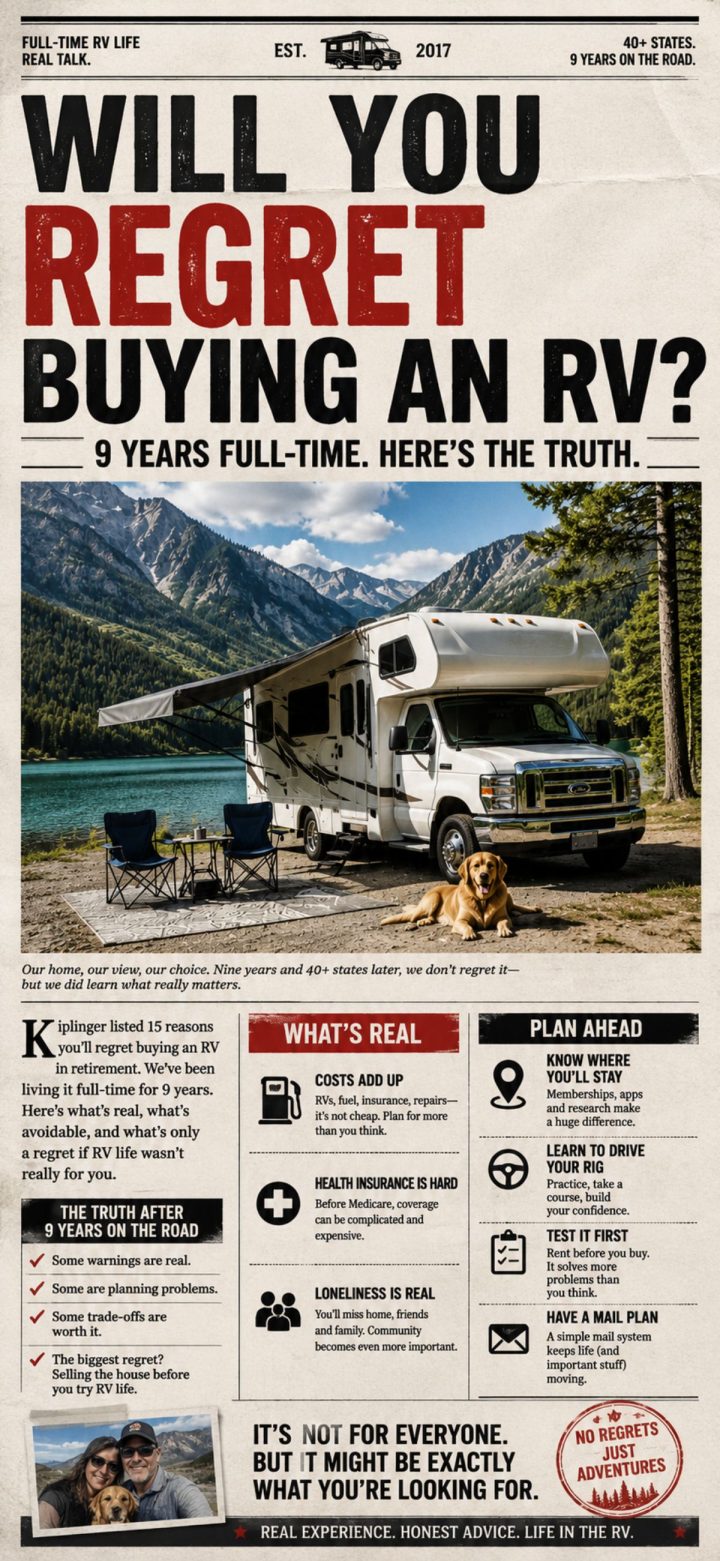
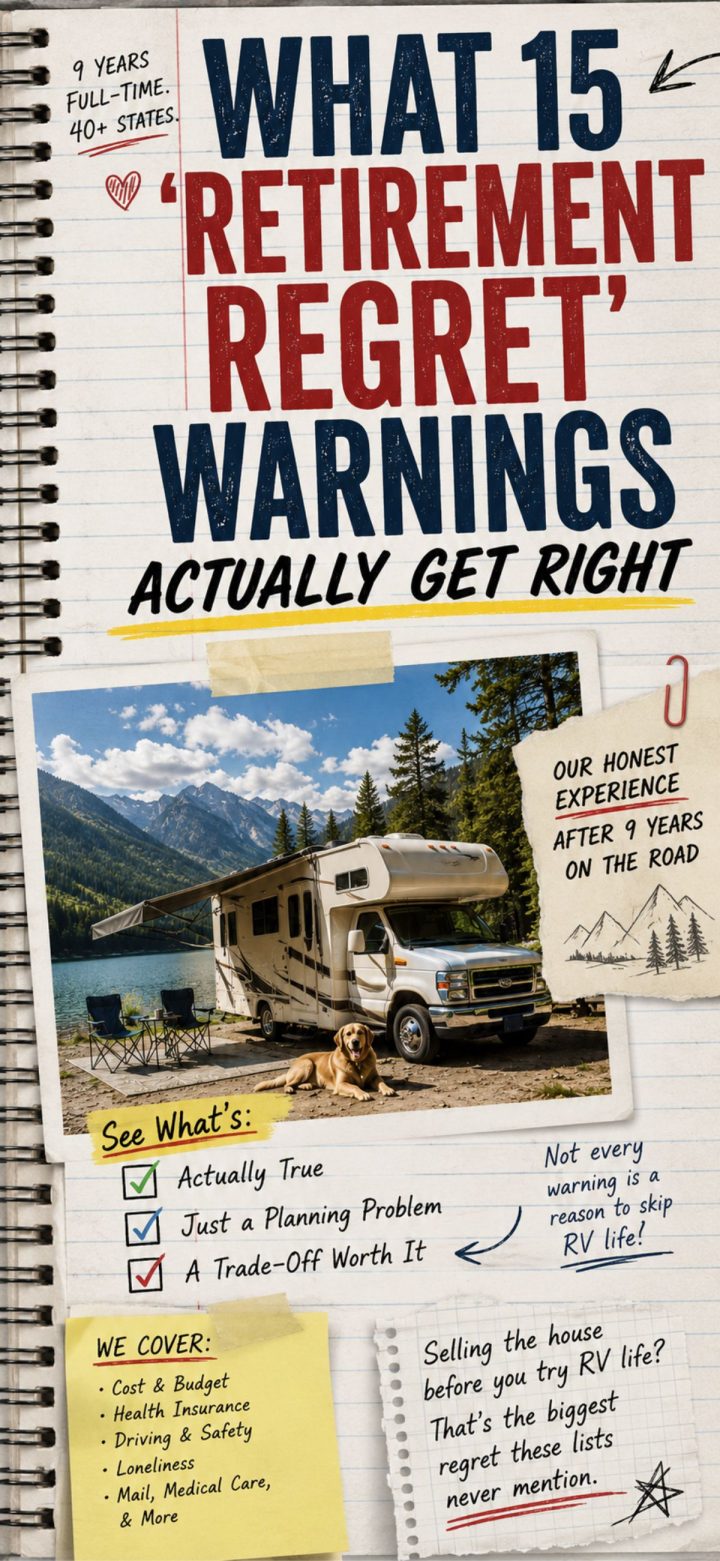
Follow us on Pinterest and PIN any of these images for later!
Frequently Asked Questions
Not automatically. RVs come with fuel, insurance, campground fees, and depreciation that can rival or exceed home ownership costs, especially for bigger rigs. It depends heavily on how you travel and what size RV you choose.
Buying before renting. Skipping a trial run is the single most common regret among people who bought an RV for retirement and later wished they’d tested the lifestyle first.
It can be. Full-time RVers often drift from hometown friend groups over time, though the RV community offers its own kind of connection. Whether that trade-off feels like a loss depends on the person.
Difficult before Medicare, easier after. Pre-Medicare full-timers face a patchwork of state-specific plans, while Medicare recipients generally have more flexibility to see providers nationwide.
Yes. A rental trip is the cheapest way to confirm the lifestyle, floor plan, and RV class actually fit before making a purchase that’s expensive to reverse.