Campgrounds are becoming America’s new ‘third place.’
Campgrounds are becoming America’s new ‘third place.’ Here’s why 3 in 4 campers say community is the real reason they keep coming back.
One Thing You Get at a Campground That You Don’t Get at a Hotel
Quick Answer: The thing you get at a campground that no hotel can offer is neighbors. Campgrounds function as a genuine “third place”, a space outside home and work where real community happens, and that social connection is one of the most overlooked benefits of RV and camping life.
You can stay at the nicest hotel in the world and not know a single person on your floor. Check in, close the door, check out. Nobody expects anything different.
Campgrounds don’t work that way.
Key Takeaways
- 43% of Gen Z campers stay in touch with people they meet while camping
- Roughly 75% of campers across generations describe campgrounds as a genuine “third place”
- Campgrounds are built for social connection in ways hotels simply aren’t; shared spaces, visibility, and proximity all encourage it
- This social pull is one of the most underrated reasons people fall in love with camping and RV life
- The connections made at campgrounds often turn into lasting friendships, not just polite small talk
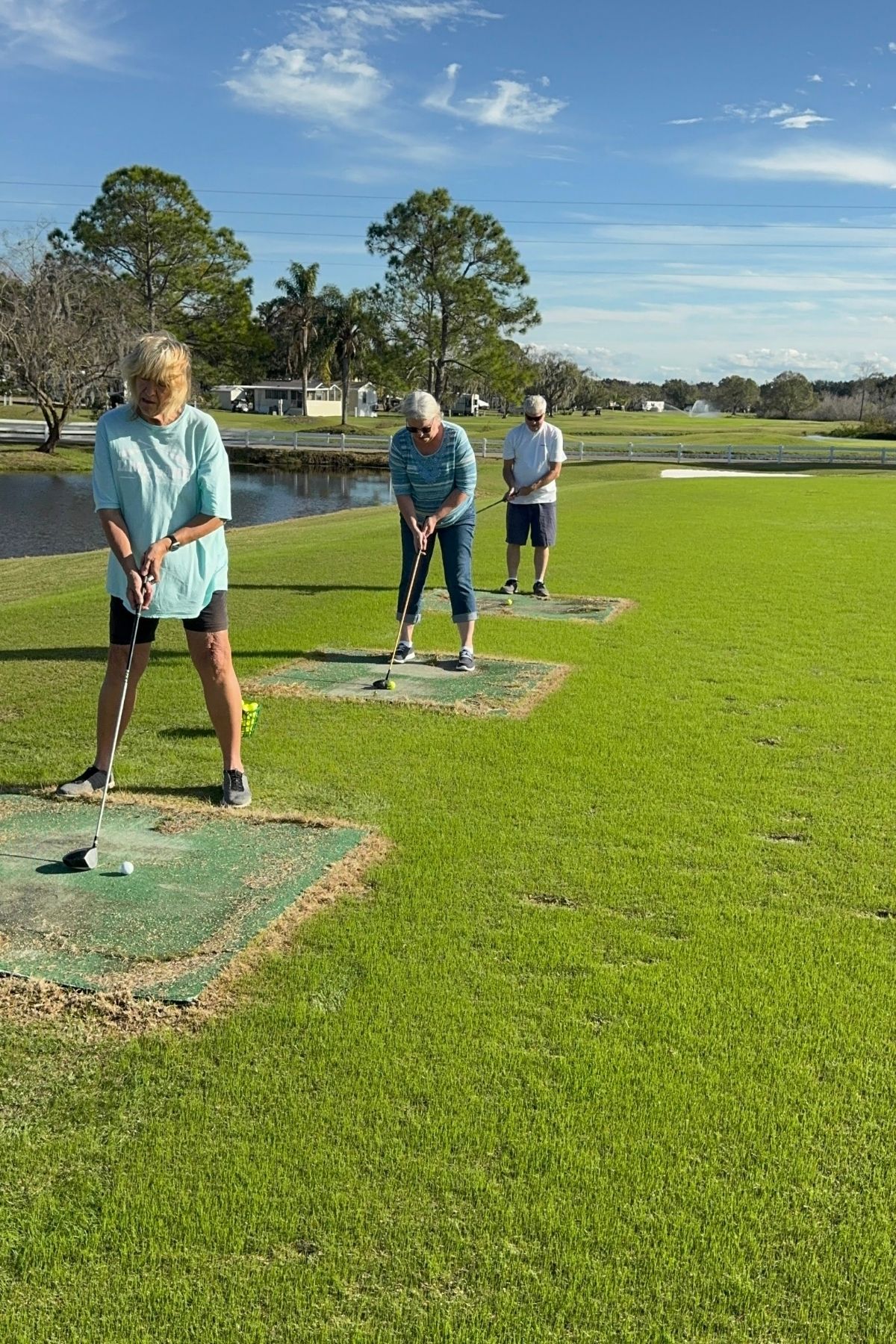
By night two, you know the family two sites down. You know who’s got the dog that keeps escaping, whose kids your grandkids have already adopted as playmates, who waved you into your site because your mirrors weren’t giving you enough room.
You may also like: Private Dog Pens at Nashville KOA.
Somebody’s already invited you over for coffee, or a fire, or to “just come by later.”
That’s not a coincidence. That’s the whole point of a campground.

What is a “third place,” and why does it matter?
“Third place” is a term from sociologist Ray Oldenburg, who used it to describe the spaces in your life that aren’t home (your “first place”) and aren’t work (your “second place”). It’s somewhere you go regularly where community forms informally, just from showing up, not because you have to be there.
Coffee shops, barbershops, pubs, front porches – these used to fill that role for a lot of people. Oldenburg’s argument was that as suburbs spread and car culture took over, a lot of those places quietly disappeared. No walkable town square. No regular hangout. No built-in group of people who know your name outside your house and your job.
That gap is exactly what campgrounds seem to be filling for a growing number of campers.
Why do campgrounds feel more social than hotels?
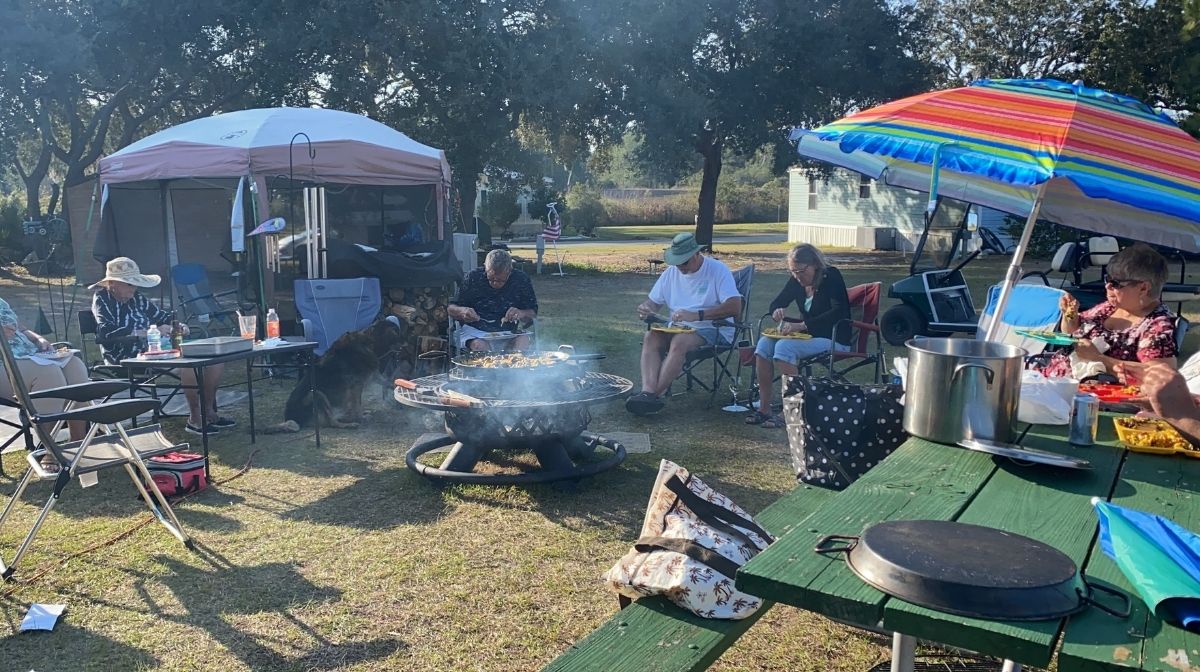
Because they’re built for it. Shared fire rings. Common bathhouses. Dogs that introduce themselves before their owners do. Nobody’s behind a closed hotel room door; everybody’s outside, which means everybody’s visible, and visible turns into “hey, come on over” faster than almost anywhere else.
Recent data on camper behavior backs this up in a way that surprised even me: nearly half of Gen Z campers say they stay in touch with people they meet while camping, and roughly three out of four campers across all generations describe campgrounds as a genuine “third place”, somewhere outside of home and work where they find real community.
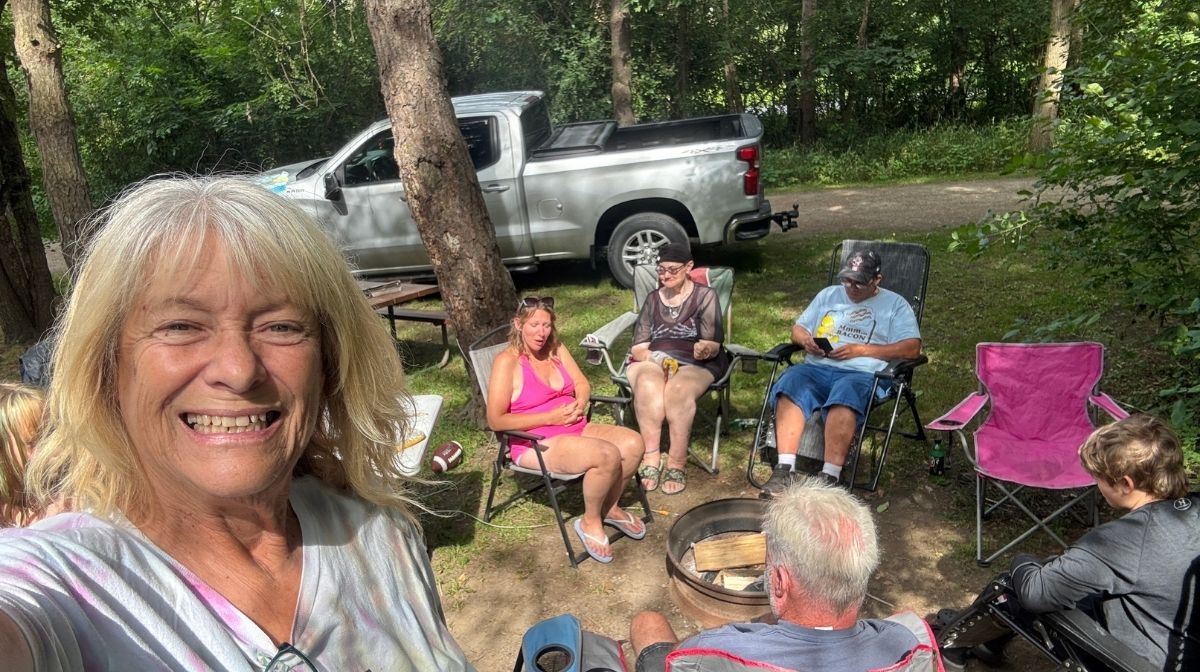
That’s not “young people like campgrounds.” That’s campgrounds quietly filling a social need that a lot of modern life doesn’t offer anymore. No office. No regular haunt. No built-in circle of neighbors who actually know your name.
For a lot of people, the campground has become the place where that still happens.
Why does it matter?
And once you notice it, you can’t unsee it. It’s the couple who fixed our 7-pin plug without being asked. It’s the family we met at Clerbrook in Florida and who we ran into again in South Dakota, like it was planned.
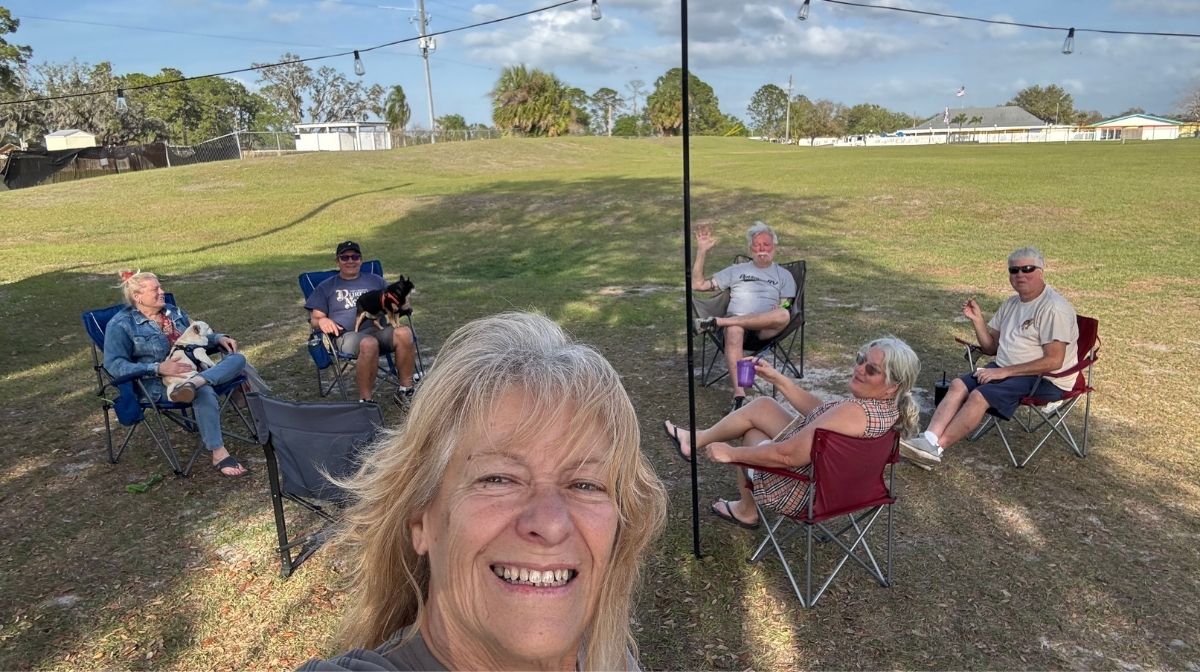
It’s the neighbor who knocked on our door the first week we went full-time, just to say hi, because that’s what you do at a campground and nobody had to tell them to.
And also for us, it’s Dave and Linda.
We met them at a campground years ago, back when they were still RVing themselves; they’d been at it for over 30 years by the time we crossed paths. Eventually Linda’s health made it impossible for them to keep traveling, and they settled back home in Illinois.
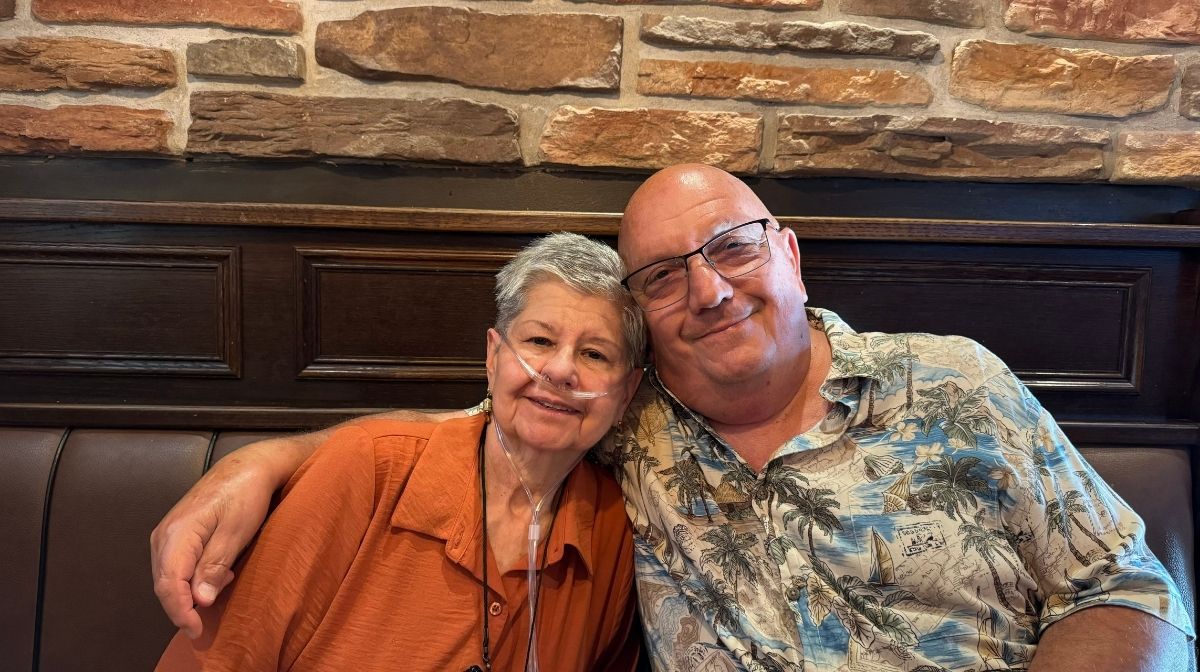
That could have easily been the end of it. A campground friendship, a few good memories, everyone moves on.
Instead, we started visiting them every year. Not because we had to, but because we wanted to see them. Linda passed away this year, and it’s been hard. But it hasn’t stopped us from visiting Dave. We still make the trip to Illinois, and we still talk on the phone regularly in between.
That’s the part nobody tells you about campground friendships. They’re not supposed to last past the trip. This one has lasted years, through one of them not being able to RV anymore, and now through losing her. A hotel doesn’t give you that. A campground gave us Dave and Linda.
Is this why RV living feels different than travel?
I think so. Nine years in, the moments that stick with me aren’t the views. They’re the people. The strangers who became the family we see every summer even though we’re not related to a single one of them. The kind of connection you don’t plan for and can’t really book.
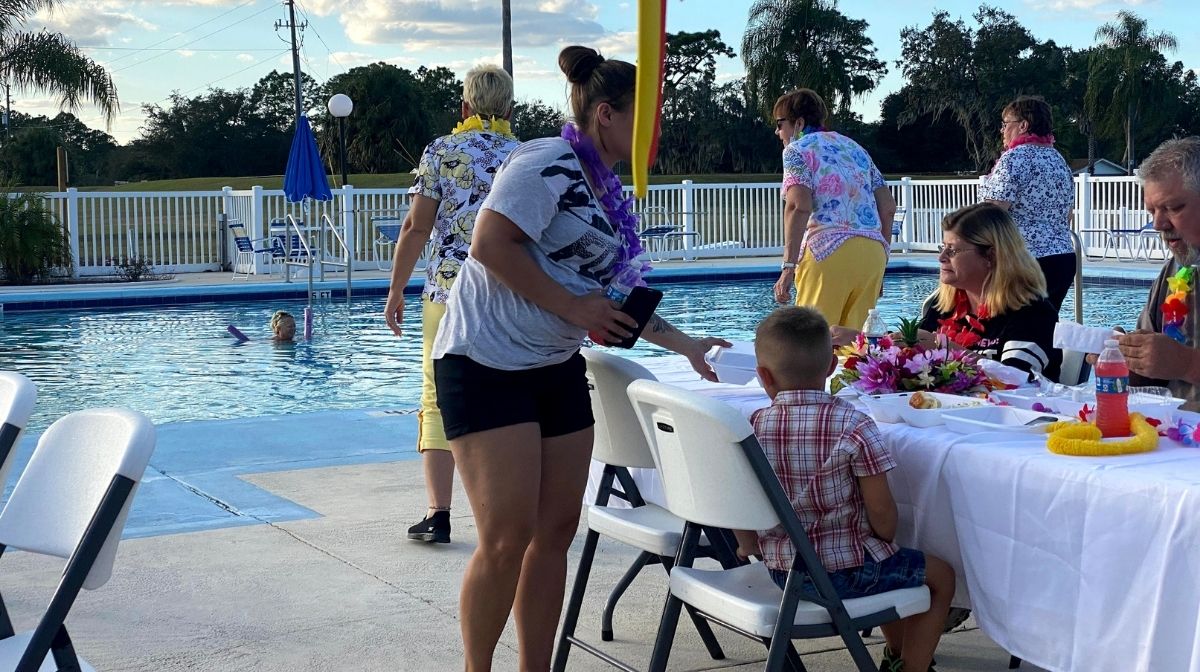
A hotel gives you a room. A campground gives you neighbors. And after almost a decade of full-time life, I’ll take the neighbors every time.
If you’ve ever met someone at a campground you’re still in touch with years later, you already know exactly what this post is about.
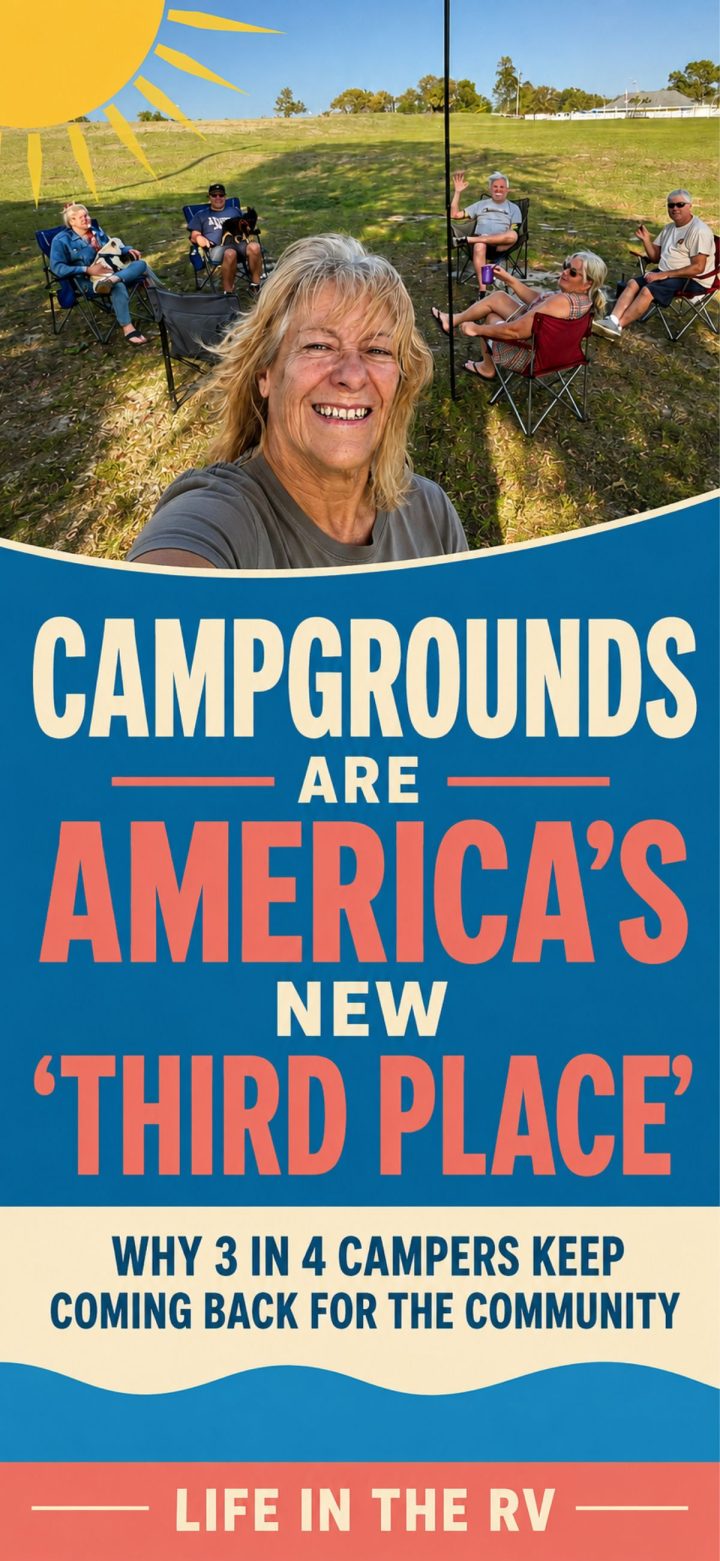
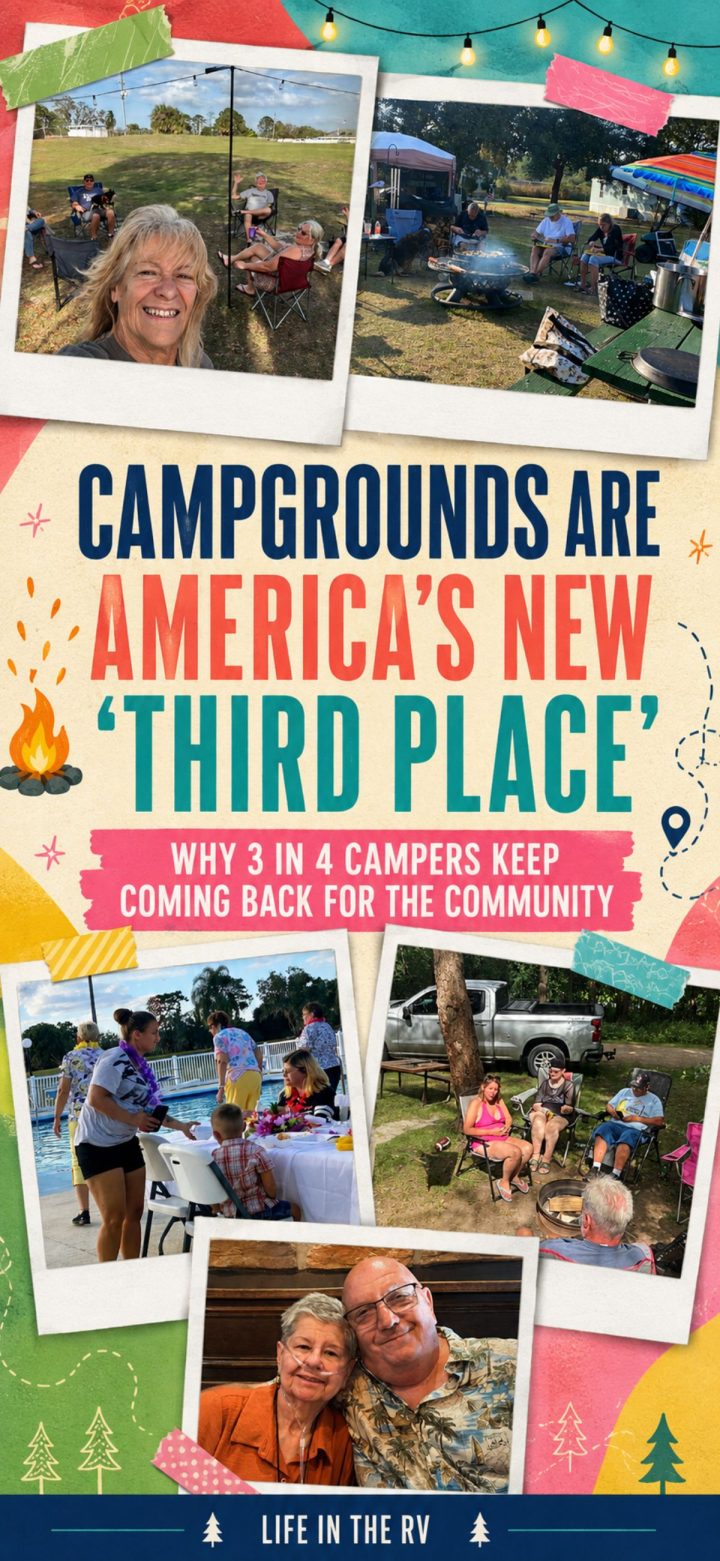
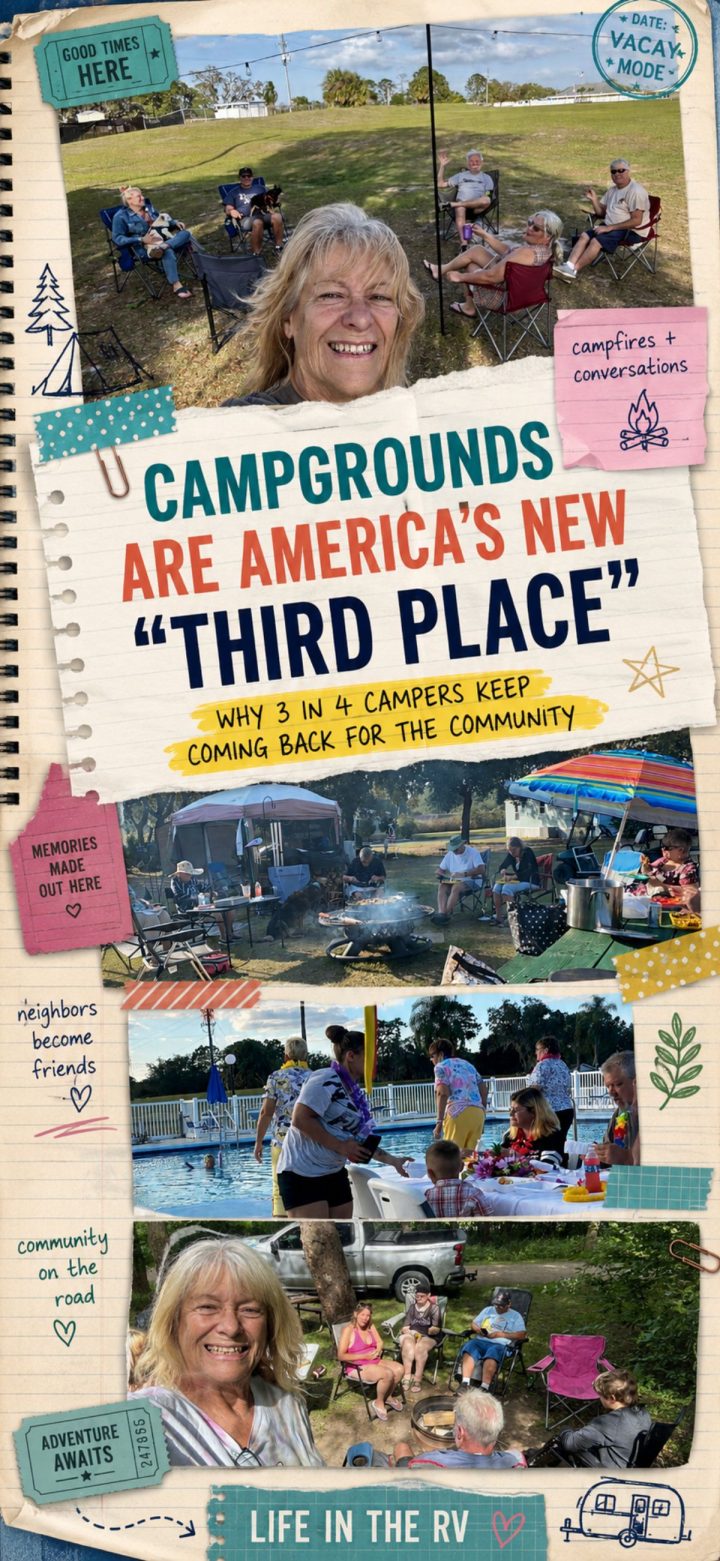
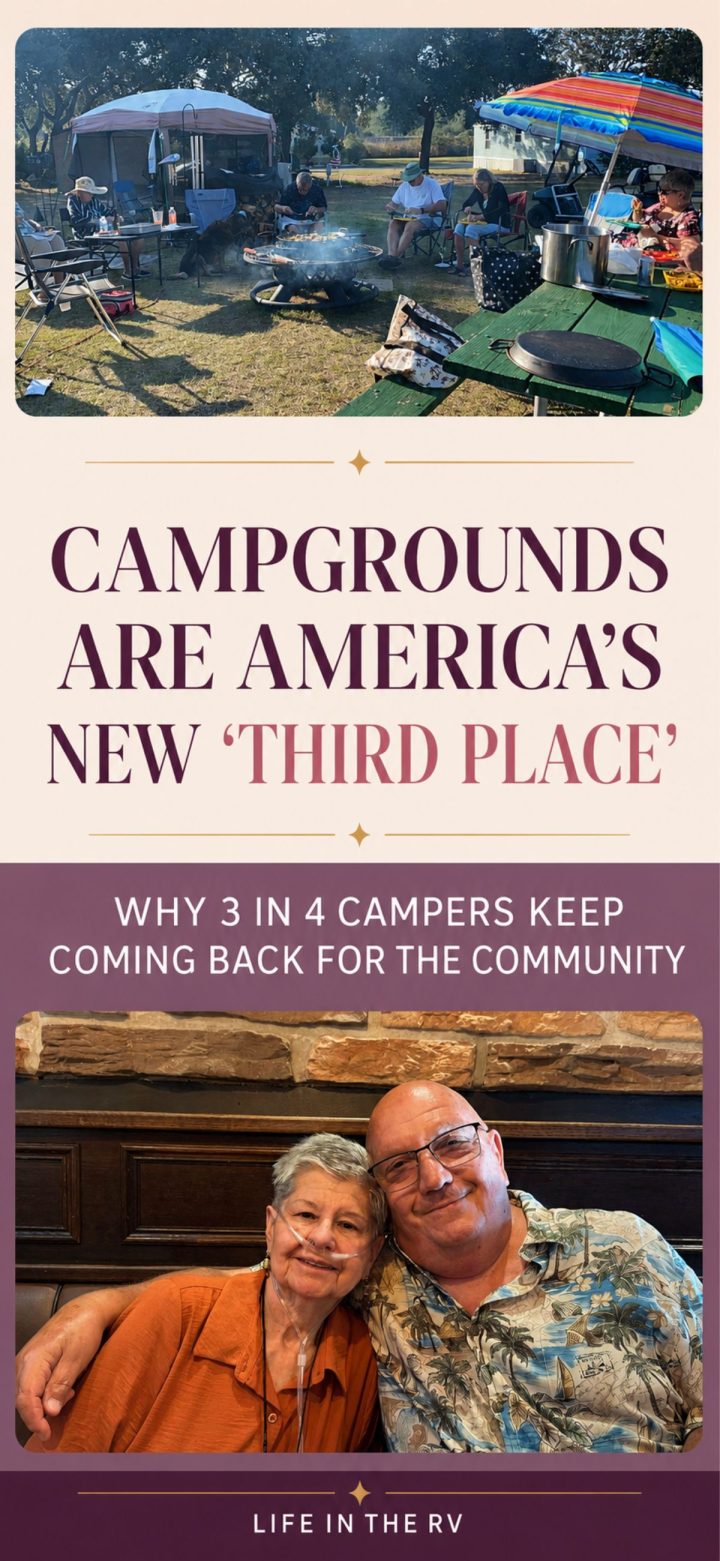
Follow us on Pinterest and PIN any of these images for later!
FAQs
A third place is a space outside home and work where community naturally forms. Campgrounds fit this because shared fire rings, common areas, and close proximity to neighbors make social connection almost automatic, something hotels aren’t designed for.
Yes. Roughly 43% of Gen Z campers say they stay in touch with people they meet while camping, and about three out of four campers across all generations describe campgrounds as a genuine community space.
Visibility and shared space. At a hotel, guests are behind closed doors. At a campground, people are outside, near each other, and doing the same things (cooking, walking dogs, sitting by a fire), which naturally opens the door to conversation.
Full-timers tend to build repeat, lasting relationships since they cross paths with the same camping community over time. Weekend campers often experience shorter, one-trip friendships, but both groups report the same sense of connection while it lasts.
For many people, yes. Because campgrounds function as an accessible “third place,” they offer built-in opportunities for social connection that everyday life, especially for retirees, remote workers, or full-timers, doesn’t always provide.