

Best RV Camping Meals for Real Life (Easy Ideas That Actually Work on the Road)
Nine years of full-time RV life taught us exactly which meals work and which ones don’t. Here are our best RV camping meals, easy, real, and road-tested.
What Do Full-Time RVers Actually Eat Every Day?
If you’re dreaming about full-time RV life, here’s one thing nobody talks about enough: dinner after a long travel day is a real problem.
You’ve been on the road for six, seven, maybe eight hours. Tim just parked a 40-foot Super C. Harley needs to go outside. You still have to connect hookups, level out, and figure out where the heck the camp host is. The last thing either of you wants to do is stand in a tiny kitchen and cook a real meal.
I’ve been living full-time in our Jayco Seneca for nine years. Nine years of figuring out what actually works in an RV kitchen, and what looks great on Pinterest but falls apart the second you’re tired, hungry, and running on campground WiFi. (If you’re still in the planning stage and wondering how to make this whole lifestyle work, start here first, then come back for the food part.)
This post is the real list. Not recipes designed for a test kitchen. Meals we actually make, in our actual RV, with our actual tiny oven and however much counter space I can clear off.
Best RV Camping Meals
The best RV camping meals are simple, flexible, and easy to clean up. Full-time RVers rely on no-cook meals for travel days, one-pan dinners for hookup nights, and campfire cooking when cooking outside. The key is prepping before you’re hungry, a short rotation of 8-10 reliable meals beats trying something new every night on the road.
The goal isn’t complicated recipes; it’s meals that fit how RV life actually works day to day.
🚐 Key Takeaways
- The best RV meals flex with your situation – no-cook for travel days, full cooking on hookup nights, campfire cooking when you want the experience
- Make food before you’re hungry – travel day prep is everything
- A short rotation of 8-10 reliable meals beats trying to cook something new every night
- Pantry staples like canned chicken, tortillas, and cream cheese can become a dozen different meals in a small RV kitchen
- Cook once, eat twice – one cooking session should always produce at least two meals
- A pie iron is one of the most underrated tools in RV cooking – get one

Why Is Cooking in an RV Different From Cooking at Home?
Before I give you the meals, let me clear something up.
A lot of RV cooking content is just regular cooking content with the word “camping” added. That’s not what you need.
When you’re full-timing, your cooking situation changes every single day. Some days you have full hookups, and you’re cooking like a normal person. Other days, you’re dry camping in a Harvest Hosts vineyard, and you’re watching your power usage like a hawk.
And then there are travel days, which are a whole different category entirely.
Your cooking setup adjusts with all of that. In our Seneca, depending on where we are and what we’re doing, we might use the full stovetop and convection oven, the Instant Pot or air fryer, cook over a campfire, or just not cook at all and pull out something we prepped ahead.
The best RV meals are the ones that flex with you. That’s what this list is built around.
What Is the Best Way to Prepare Meals for RV Travel Days?
After nine years, here’s the one thing I wish someone had told me before we hit the road: make food before you’re hungry. It’s kind of like don’t go food shopping when you are hungry.
Travel day hunger is a trap. You think you’ll figure out dinner when you get there. You won’t. You’ll get there later than planned, something will need attention on the RV, and suddenly it’s 7 p.m., and you’re eating gas station snacks in a campsite.
The solution isn’t complicated. It’s just make-ahead. Prep a few no-cook or already-cooked options before you leave in the morning, and travel day dinner becomes a non-event.
Which brings me to the first category on this list.
What Are the Best No-Cook Meals for RV Travel Days?
These are my ride-or-die travel day meals. No heat. No cleanup. Just open the fridge and eat.
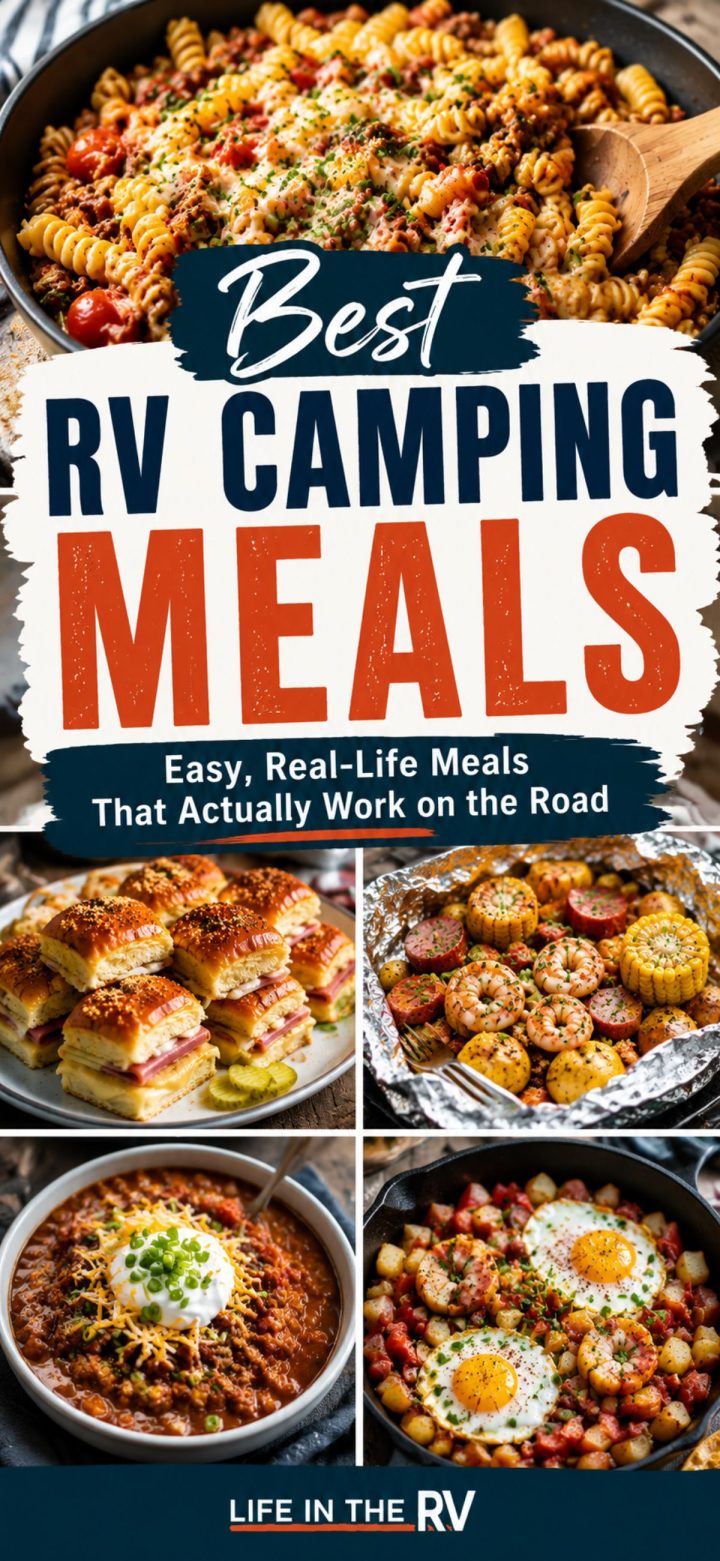
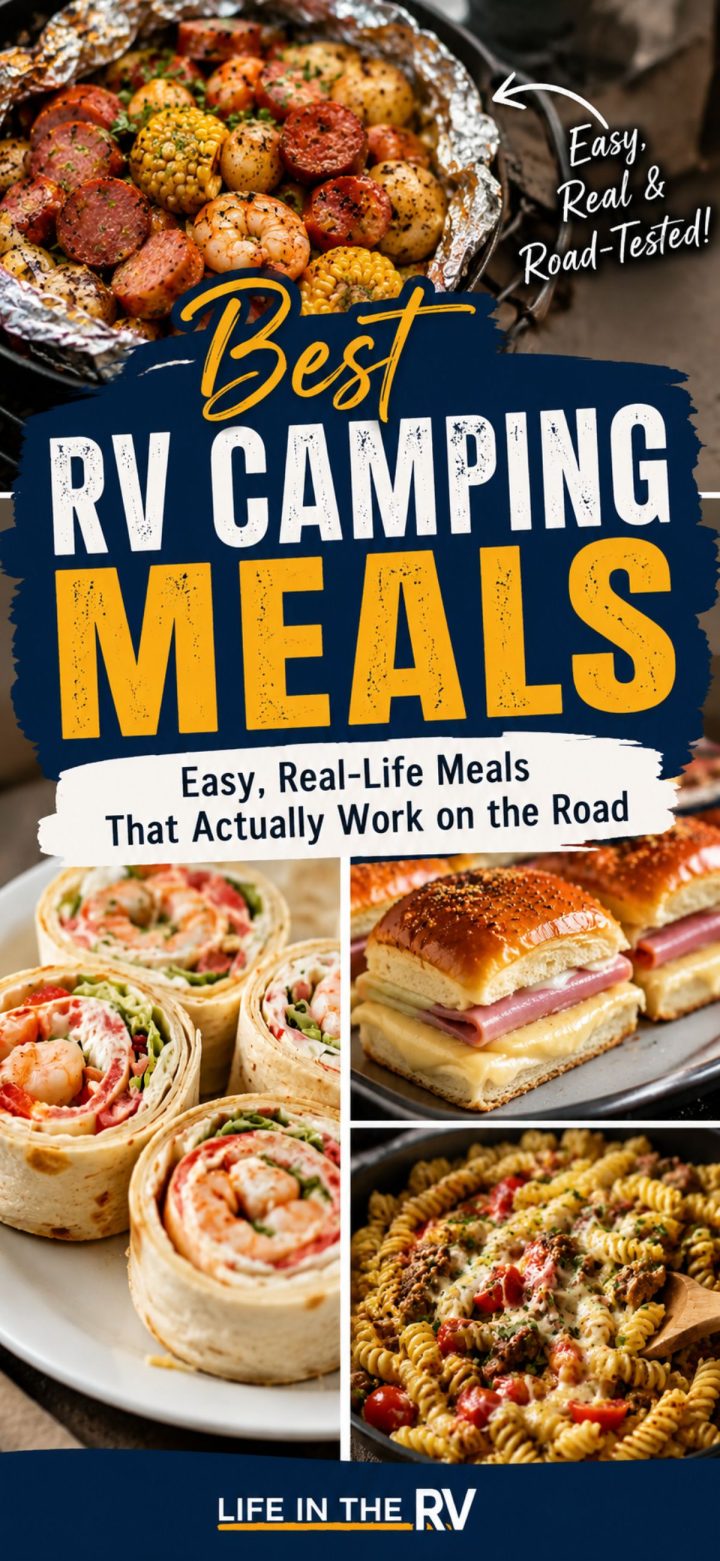
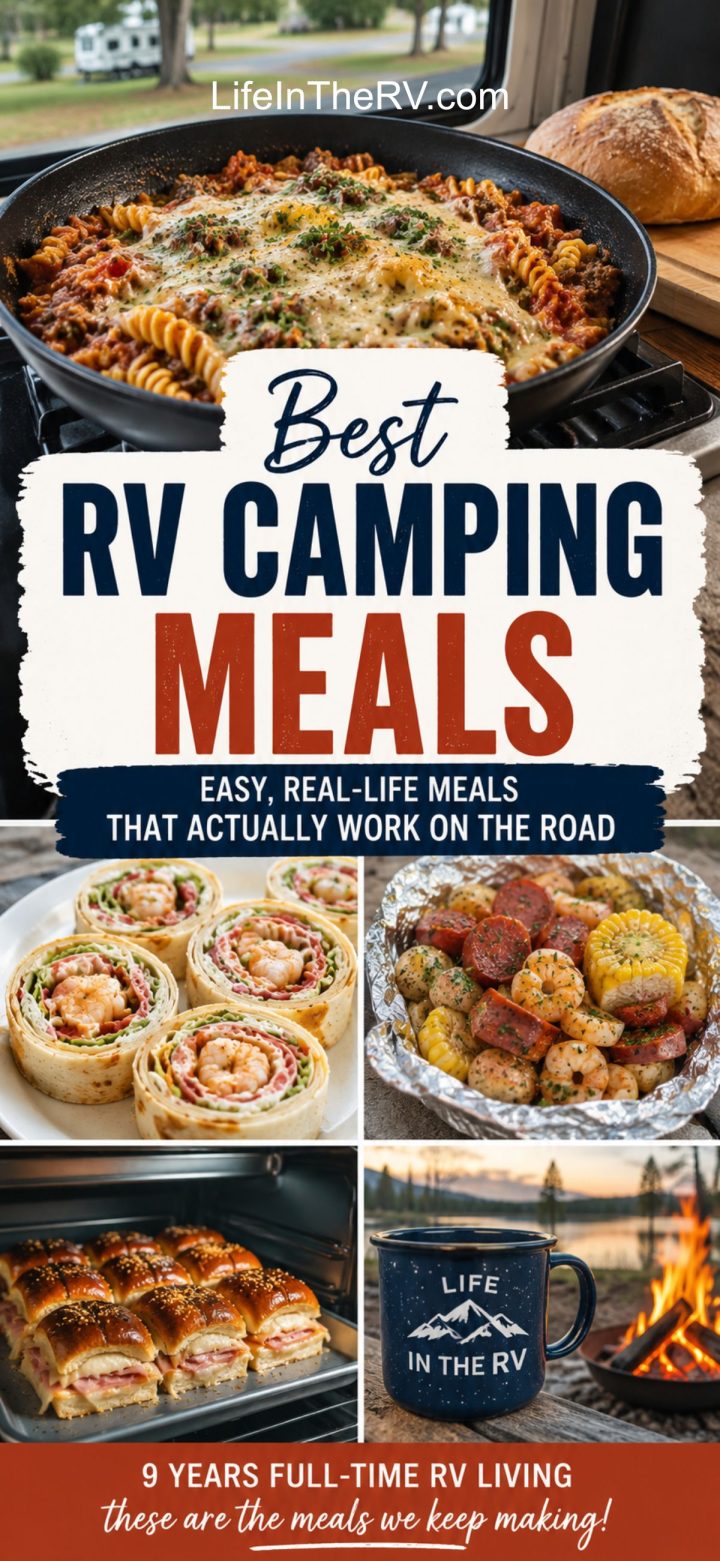
Seafood Pinwheels
This is genuinely one of my favorite things to pull out after a long drive. I make them the morning we leave, cream cheese, mayonnaise, cocktail sauce, canned crab meat, cocktail shrimp, mozzarella, and diced tomato, all rolled up in flour tortillas and chilled.
By the time we arrive at our campsite, they’ve been in the fridge for hours, and they’re perfect. No cooking, almost no cleanup, and they feel like more of a real meal than a bag of chips. I usually make 24 pinwheels, more than enough for both of us, plus a snack the next day.
👉 Get the full Seafood Pinwheel recipe here

Pro tip: Use a serrated knife to slice them cleanly. And eat them within a day, they get soggy if you try to keep them too long.
No-Cook Snack Boards
When we really don’t want to deal, I build what I call a “snack board dinner.” Deli meat, sliced cheese, crackers, grapes, olives, whatever’s in the fridge. It sounds lazy, but honestly, it’s satisfying and zero effort. Tim loves it. Harley is extremely interested in it.
Deli Wraps
Grab a rotisserie chicken the day before you travel, shred it, and store it in a container. On travel day: tortilla, chicken, whatever sauce and veggies you have, done. This is one of the fastest meals we make.
What Are the Best Quick RV Meals When You Have Full Hookups?
When we’re at a full-hookup site, and I have access to all my appliances, the cooking situation opens up considerably. These are the meals that come together fast without much thought.
King’s Hawaiian Ham and Cheese Sliders
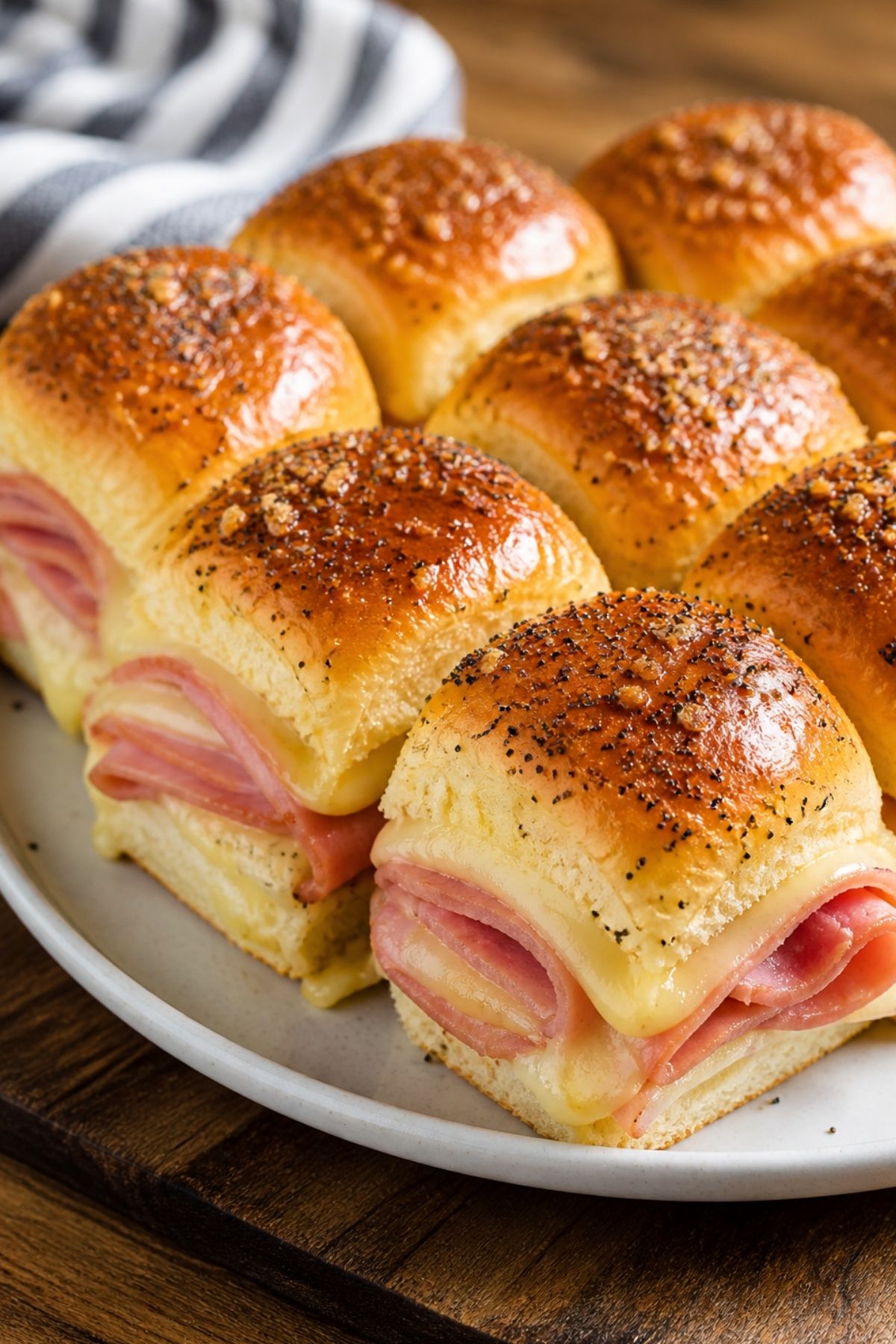
These are staples in our RV. King’s Hawaiian pretzel slider buns, thinly sliced Boar’s Head sweet ham, Swiss cheese, and a butter-Dijon mustard brush on top. Bake at 350°F for about 20 minutes until the cheese is melted and the buns are golden.
I make these ahead and keep them in the fridge. They reheat beautifully, and honestly? They’re just as good cold. Tim and I are from Buffalo, so I like to use Weber’s Horseradish Mustard when we can find it, but Dijon works great.
The trick to avoiding soggy bottoms: toast the inside of the bottom bun lightly before you assemble. Game changer.
👉 Get the full Ham and Cheese Slider recipe here
Foil Packet Meals
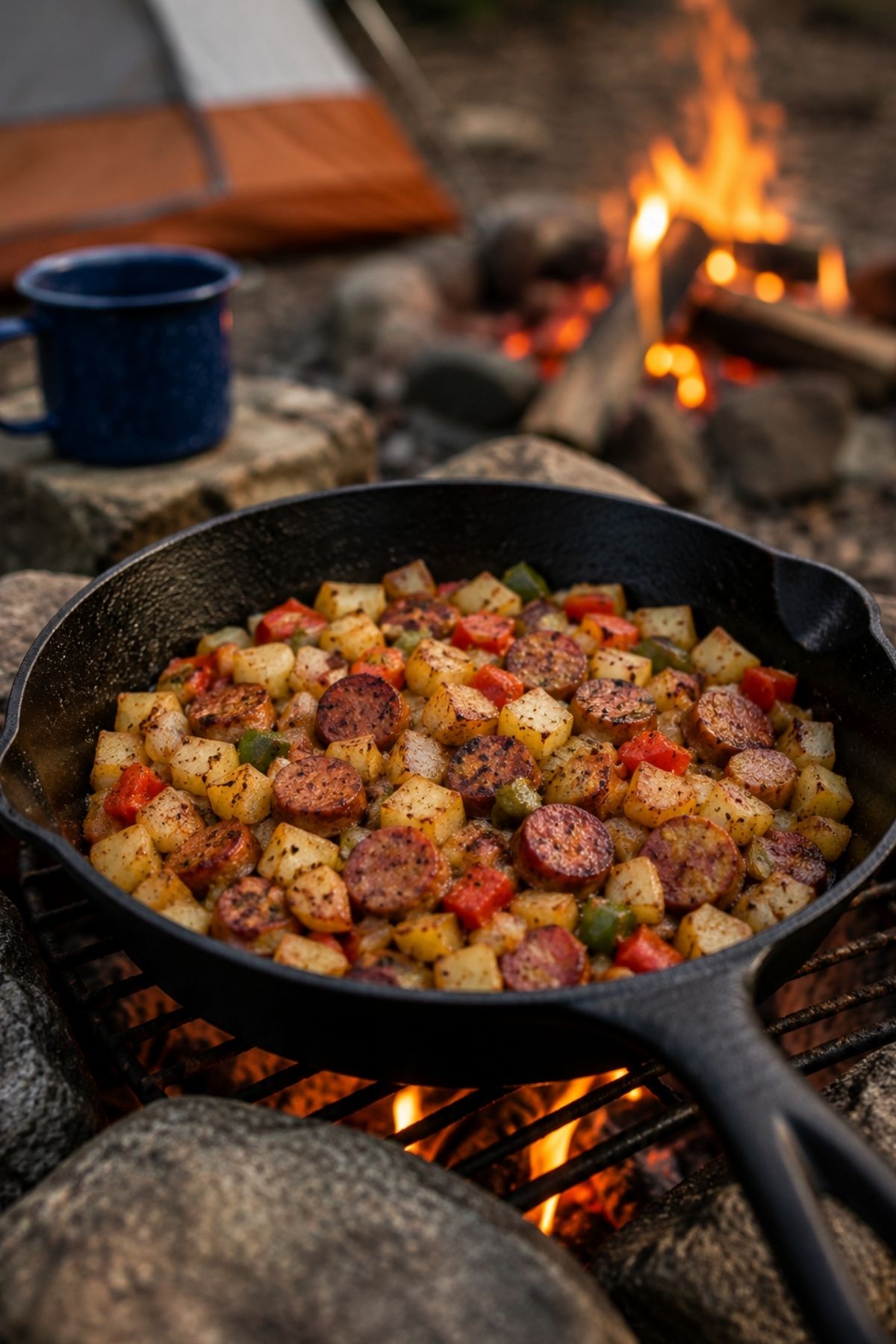
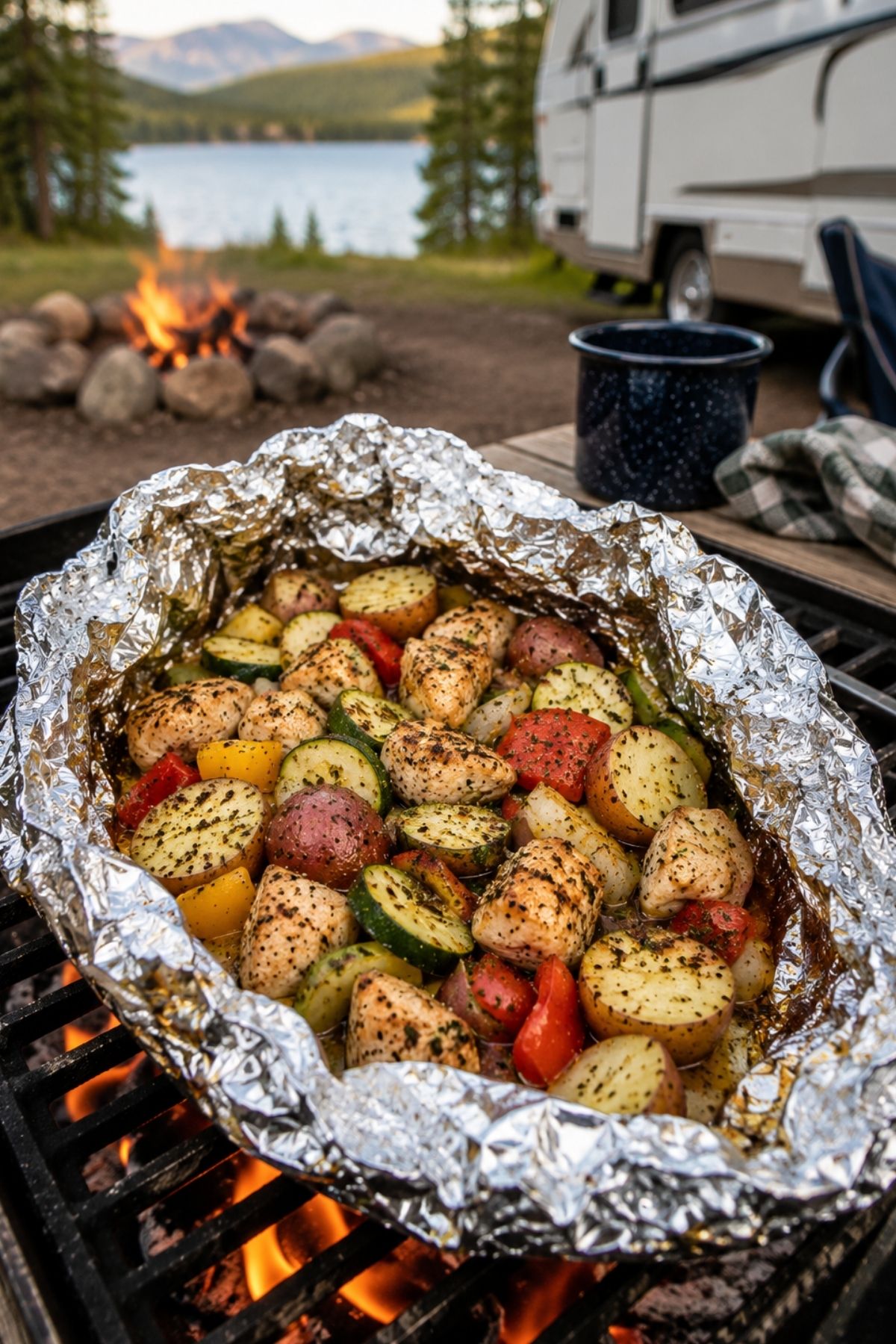
Foil packets are one of the most underrated meals in full-time RV life. Season your protein and veggies, wrap everything up tight in foil, and cook them on the grill, in the oven, or over a campfire. Minimal dishes. Easy to customize. Works for breakfast, lunch, or dinner.
One-Pan Pasta
Everything in one pan: pasta, broth, garlic, whatever protein, and veggies you’re working with. It all cooks together, and you end up with something that tastes like you actually cooked. I do this when I want real food without a real cleanup situation.
Instant Pot Chili
When we’re stationary for a few days, I’ll make a big batch of chili in the Instant Pot. Eat it for dinner, put it in the fridge, and have it again two days later over rice or a baked potato. One cooking session, multiple meals. That’s the kind of efficiency that makes full-time RV life feel manageable.
What Are the Best Campfire Meals for RV Camping?
Not every campsite has hookups, and not every night calls for cooking inside. Some of our best meals have happened outside around a fire.
Pie Iron Recipes
If you don’t have a pie iron yet, fix that immediately. It’s one of the most versatile tools in RV cooking. You can make savory sandwiches, breakfast wraps, pizza pockets, and desserts all over the campfire, with almost no cleanup.
Our most-made pie iron recipes:
- Spaghetti Mountain Pie – leftover spaghetti, garlic butter spread, bread. Messy but wildly good.
- Reuben Campfire Pie – corned beef, sauerkraut, Swiss, Thousand Island on rye. This one is Tim’s.
- Chicken Pot Pie Sandwiches – canned chicken, cream of chicken soup, frozen mixed veggies, crescent roll dough. We make the filling ahead of time at home.
- Apple Pound Cake Hobo Pies – apple pie filling, pound cake, cinnamon sugar. Add ice cream. You’re welcome.
We have over 125 pie iron recipes if you want to go deep on this.
👉 See all 125+ Camping Pie Iron Recipes here
The basic rules for pie iron success: spray the iron with butter spray before every use, flip every minute or so so it cooks evenly, and wear actual heat-resistant gloves, not the flimsy kind.
Campfire Grilling
A small portable grill is worth every inch of storage space. Burgers, chicken thighs, corn on the cob, and brats are straightforward campfire cooking that doesn’t require any special equipment or planning.
What Are Easy Campfire Desserts and Snacks for RV Campers?
Campfire nights aren’t just about dinner. Some of our favorite campsite memories involve something sweet after the meal or a fun snack for a holiday weekend.
For Fourth of July or Memorial Day weekends, I make this Patriotic Dunkaroo Dip, Greek yogurt, whipped topping, divided into red, white, and blue, piped onto a tray in the shape of a flag.
It takes about 25 minutes, uses a disposable dollar store tray (zero dishes), and every single time I bring it out at a campsite, people lose their minds over it. It travels perfectly in the fridge and works for any size gathering.
👉 Get the full Patriotic Dunkaroo Dip Flag recipe here
What Are Good Drinks for Campfire Nights in an RV?
Campfire nights also call for a good drink. One of our go-tos is Crown Royal Blackberry. It mixes well with almost anything you already have on hand, and it’s easy to keep a bottle in the RV without taking up much space. We’ve made everything from a simple blackberry lemonade mix to a full campfire cocktail situation, depending on how the evening is going.
👉 See 10 Crown Royal Blackberry Whisky Cocktail recipes here
What RV Kitchen Tips Actually Make a Difference?
Nine years of lessons learned, condensed:
Keep a “diy travel day kit” in your fridge. Every time we know we have a driving day coming up, I put together a small section of the fridge with no-cook, grab-and-go stuff. Pinwheels, sliced cheese, deli meat, grapes, drinks. That section is off limits for snacking the day before.
Plan for how tired you’ll actually be, not how motivated you think you’ll be. Monday-you thinks Tuesday-after-a-seven-hour-drive-you will want to make soup from scratch. You won’t.
Storage is everything. In a small RV kitchen, the meals that work best are the ones that use pantry staples you already have. Canned chicken, canned beans, pasta, tortillas, cream cheese, these things can become a dozen different meals, and they don’t take up much space.
Cook once, eat twice. Any time I’m making dinner, I try to make enough for at least one more meal. Chili becomes chili bowls, and then chili wraps. Shredded chicken goes into wraps and then onto a baked potato night. It sounds obvious until you’re tired and you open the fridge and there’s already something ready to eat.
The Instant Pot changed our lives. I know everyone says this. It’s still true. Soups, chili, rice, pulled meat, all of it happens faster, uses less power than running the oven for an hour, and makes the whole RV smell incredible.
What RV Camping Meals Actually Work After 9 Years Full-Time?
After nine years of full-time RV living, we’ve learned that RV meals don’t need to be complicated; they just need to be repeatable.
The meals that last are the ones that:
- Can be made quickly after a long travel day
- Use ingredients you already have on hand
- Don’t create a pile of dishes in a small kitchen
- Can be reused or turned into leftovers
That’s what real RV cooking looks like, not perfect meals, just practical ones that fit the lifestyle.
The Bottom Line
RV cooking gets a lot easier once you stop trying to cook the way you did in a house and start cooking for the life you’re actually living.
Travel days need no-cook meals prepped ahead. Campsite nights with full hookups are for real dinners. Campfire nights are for pie irons and sliders and whatever feels good over a fire.
Build a short rotation of meals you know work. Keep the pantry stocked with flexible staples. Make food before you’re hungry.
Nine years in, those three things are still the entire system.
What are your go-to RV camping meals? Drop them in the comments. I’m always adding to our rotation.
Save This Post for Later – Pin it to Your RV Camping Meals board on Pinterest!
Frequently Asked Questions About RV Cooking
The easiest RV camping meals are no-cook options like seafood pinwheels, deli wraps, and snack boards for travel days, and one-pan pasta, foil packet meals, and King’s Hawaiian sliders for nights when you have hookups. The goal is meals that come together fast with minimal cleanup in a small kitchen.
The most effective RV meal planning system is simple — keep a rotation of 8-10 meals you know work, stock pantry staples that can become multiple different meals, and always prep something ahead before a travel day. Make-ahead meals like chili, shredded chicken, and pinwheels eliminate the travel day dinner scramble entirely.
Seafood pinwheels, deli wraps with rotisserie chicken, snack boards, and pre-made sliders all travel well in the fridge and require zero cooking after a long drive. Make them the morning you leave so they’re chilled and ready when you arrive at your campsite.
After nine years full-time, our most-used equipment is the Instant Pot, a pie iron, a small portable grill, and an air fryer. The Instant Pot handles soups, chili, rice, and pulled meat faster than the oven and uses less power. The pie iron is the most underrated tool in RV cooking, get one before your first campfire night.
Foil packet meals, one-pan pasta, and pie iron recipes are the lowest-cleanup options in an RV kitchen. The key is planning meals that use as few dishes as possible — in a small RV sink, a five-dish cleanup feels like twenty.
King’s Hawaiian sliders, foil packet meals, one-pan pasta, and Instant Pot chili all scale easily for families. Pie iron recipes are especially good with kids, everyone can build their own and cook it themselves over the campfire, which keeps them entertained and cuts your work in half.
Seafood pinwheels, snack boards, deli wraps with rotisserie chicken, and pre-made cold sandwiches are our go-to no-cook options. Keep a dedicated section of your fridge stocked with no-cook grab-and-go options before every travel day, treat it as off-limits for snacking the night before.
The most versatile RV pantry staples are canned chicken, canned beans, pasta, tortillas, cream cheese, and a good hot sauce. These can become wraps, pasta dishes, dips, campfire meals, and quick dinners without needing a grocery run. Stock what you can actually use across multiple meals, not single-recipe ingredients that take up precious cabinet space.
Yes, without question. It cooks faster than a stovetop or oven, uses less power than running the oven for an hour, and handles everything from soups to pulled pork to rice. After nine years full-time, the Instant Pot is the one appliance we would not travel without.
A pie iron and a small portable grill cover most campfire cooking needs. Pie irons handle sandwiches, breakfast wraps, pizza pockets, and desserts with minimal cleanup. A portable grill handles burgers, chicken, brats, and corn. The key is keeping campfire cooking simple, the fire and the setting are the experience, not the complexity of the meal.


