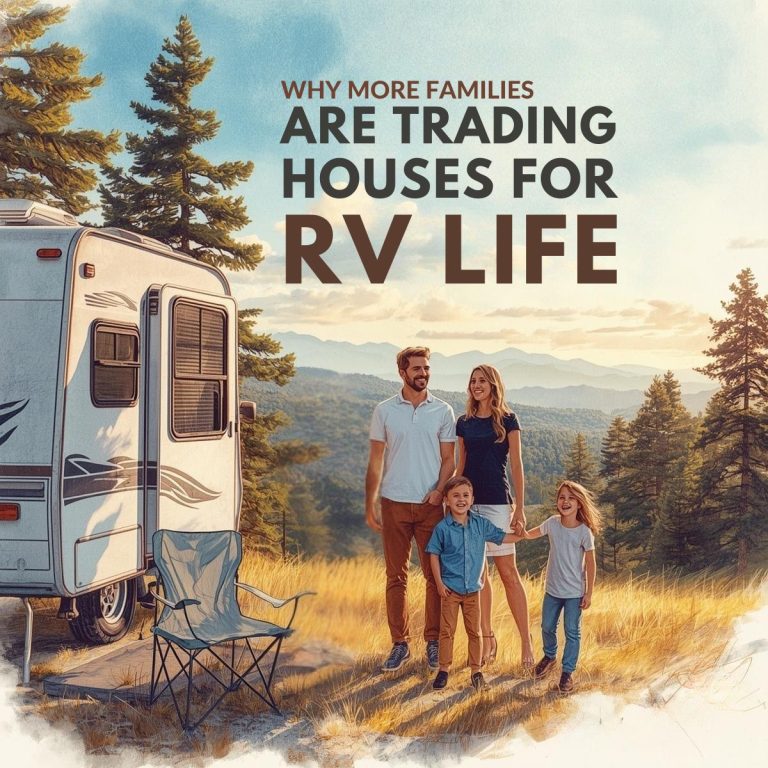
How to Know If You’ll Enjoy Long Term RV Living
Facing the RV life decision? Learn how to decide if long term RV living truly fits your lifestyle before you commit.
What It Really Means to Make the RV Life Decision
There’s a moment most aspiring RVers experience that nobody talks about when thinking about how to RV full time. It happens when you’re scrolling past sunset campfires and front-window coffee views. Everything looks calm and magical. And then the doubt creeps in.
Would I actually like living like this?
Not vacation RVing. Not a week-long escape. The real version, where this becomes your everyday home, and you still live a normal life, just within a few hundred square feet that move.
Feeling unsure doesn’t mean you aren’t meant for RV life. It means you’re approaching the decision intelligently instead of jumping headfirst into a fantasy. Almost no one starts this lifestyle fully certain.

Most move forward with excitement braided tightly with nerves, and that’s exactly how big life changes should feel.
The RV life decision isn’t about whether you’d enjoy travel photos or scenery. It’s about whether you’d enjoy a lifestyle rooted in mobility, flexibility, and simplicity.

Why Social Media Makes the RV Life Decision Harder Than It Should Be
Instagram shows the glamorous moments. What it doesn’t show are the ordinary parts of RV life: searching for cell service, navigating unfamiliar grocery stores, spending rainy days stuck inside, or waiting for repairs.
Real RV living looks far more like normal life than an endless vacation. You still:
- Cook meals at home
- Clean bathrooms and do laundry
- Pay bills
- Work or maintain responsibilities
- Solve everyday problems
The only difference is that the scenery outside your windows changes far more often.
If you’re only drawn to the scenery, RV life may disappoint you. If you’re drawn to a lifestyle built around experiences over possessions, mobility over rootedness, and simplicity over excess, you’re likely feeling a real pull, not just wanderlust.
The Deeper Choice Behind the RV Life Decision
Most people don’t want RV life for the rig itself. They want what it represents.
They’re searching for:
- Freedom from routines that don’t fit anymore
- More time with family or partners
- Fewer possessions and responsibilities
- A lifestyle that prioritizes memories over accumulation
- A way to travel without constantly packing and unpacking
RV life can absolutely support those desires, but it doesn’t magically solve life problems. Any emotional stress, relationship tension, or burnout you carry onto the road tends to follow you there.
RV life works best when it’s a designed lifestyle choice, not an escape plan.
Who Tends to Thrive With the RV Life Decision
RV living tends to suit people with certain emotional styles more than specific ages or skill levels.
People who thrive generally:
- Tolerate uncertainty well and adapt easily when plans change
- Enjoy learning to solve new challenges instead of being overwhelmed by them
- Don’t require huge personal space to feel comfortable
- Value experiences more than possessions
- Communicate calmly with their partner under pressure
The biggest challenge many new RVers encounter isn’t dumping tanks or driving a large vehicle; it’s navigating close quarters and nonstop togetherness.
The RV doesn’t create relationship problems. It amplifies existing ones. Healthy communication becomes more important than ever.
Letting go of possessions is another emotional hurdle. Downsizing can feel uncomfortable at first, but many RVers describe it later as unexpectedly freeing.
Having less “stuff” often creates immense mental lightness, fewer decisions, less maintenance, and less guilt about clutter that isn’t used or needed.
What Long Term RV Living Really Feels Like Day to Day
RV living delivers both emotional highs and lows, often in close succession.
The highs are real: waking up somewhere breathtaking, discovering hidden places, feeling excited by everyday reminders that your life is anything but ordinary.
But the lows are real too: long driving days, mechanical hassles, decision fatigue from constantly choosing where to go next and how long to stay, and moments when small living feels claustrophobic or tiring.
This blend creates the unique rhythm of RV life. Freedom comes wrapped with responsibility. Adventure lives alongside routine.
Many people who leave RV life do so not because anything went wrong, but because they simply discovered they prefer stability more than constant mobility. That realization isn’t failure. It’s self-awareness.
Why You Must Test the RV Life Decision First
The safest, smartest way to decide is to experience RV life before selling a single thing.
Renting or borrowing an RV teaches lessons no research ever can:
- How driving a rig feels
- Whether you sleep well in small spaces
- Your comfort level with sharing living quarters
- How campground life resonates emotionally
The most revealing test is parking somewhere for several weeks while working or maintaining everyday tasks. Travel mode feels temporary; stationary RV living shows the true lifestyle.
Your emotional response during real-life RV living tells you everything.
Common Fears During the Transition to Long Term RV Living
Most people worry they’ll miss their homes or belongings. Many do at first, and almost all quickly realize how little of it they truly need. Emotional freedom usually replaces nostalgia.
Another fear is constant movement. But RV life doesn’t require endless wandering. Many RVers slow travel, staying weeks or months in favorite areas. Others snowbird between two predictable locations.
Community concerns also surface. RVers build community differently, through recurring campground stays, rallies, online groups, and long-term friendships forged on the road. The connections are value-based rather than location-based, different, but equally real.
And no, age is not an obstacle. Many full-time RVers begin later in life when confidence, patience, and priorities are clearer than they were years earlier.
The Emotional Transformation RV Life Brings
One of the biggest surprises most RVers experience is confidence.
Each new challenge you overcome, navigation issues, mechanical learning curves, or setting up camp, reinforces your ability to figure things out. You slowly stop questioning your adaptability and start trusting it instead.
That confidence spills into every area of life. Big decisions feel less intimidating. Change stops feeling threatening. You realize you’re capable of far more than you believed.
RV life strengthens self-trust not through motivational sermons but through lived experience.

Answering the RV Life Decision Honestly
There’s no perfect formula or checklist that tells you if RV life is right for you. The answer arrives when you try it and ask yourself:
Do I feel more alive living like this, or more overwhelmed?
You don’t need a permanent answer. Many RVers move into, out of, and back into the lifestyle as seasons of life change.
Trying RV living doesn’t lock you into forever. It gives you clarity, and that alone is valuable.
Will I Actually Like Long Term RV Living? How to Know Before You Sell the House and Buy the Rig
You don’t need complete certainty to step forward.
You only need curiosity greater than fear and a willingness to learn through experience instead of endless planning.
Even if RV life ultimately becomes just one chapter rather than your entire book, the confidence, clarity, and memories it provides always stay with you.
And sometimes, stepping into the unknown becomes the decision that changes everything.
📌 Follow us on Pinterest and PIN any of these images for later!