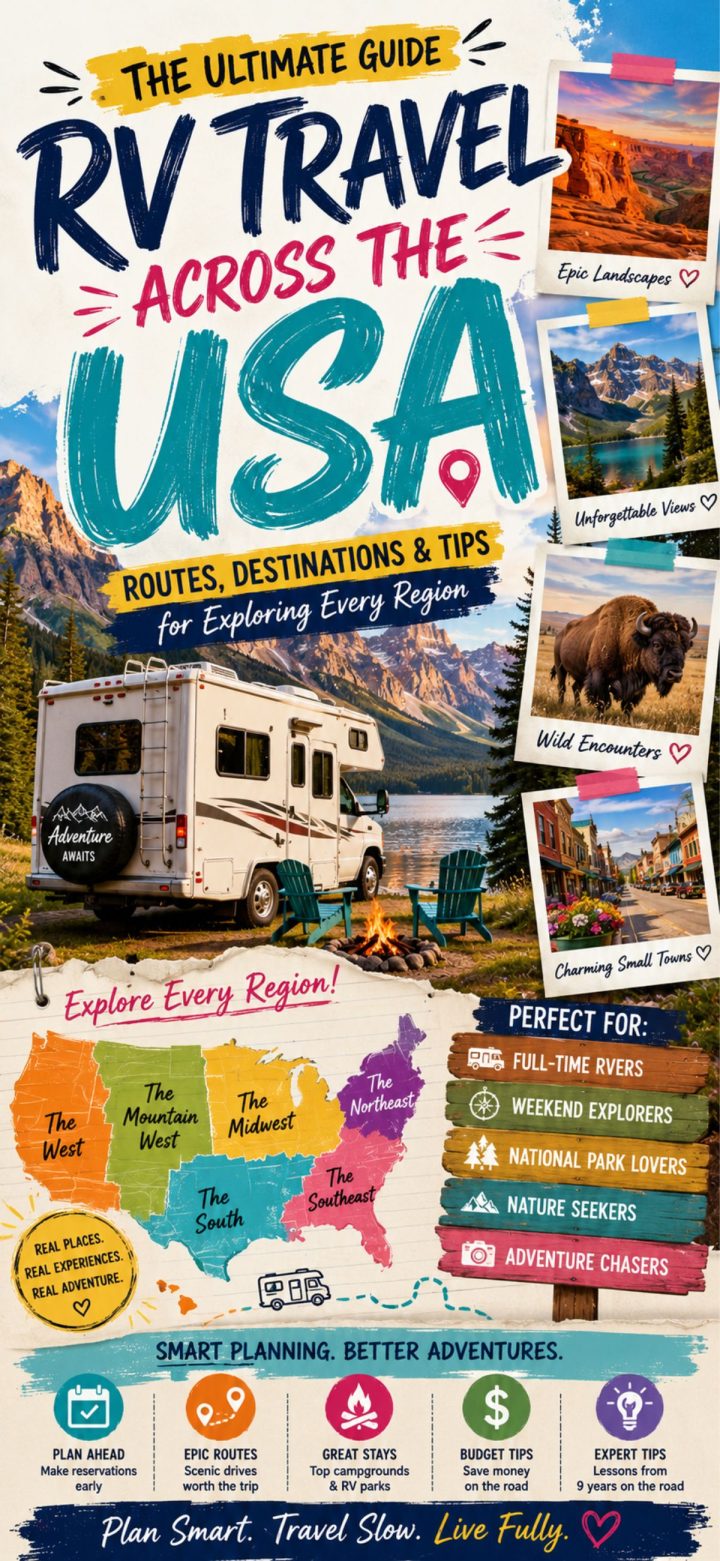
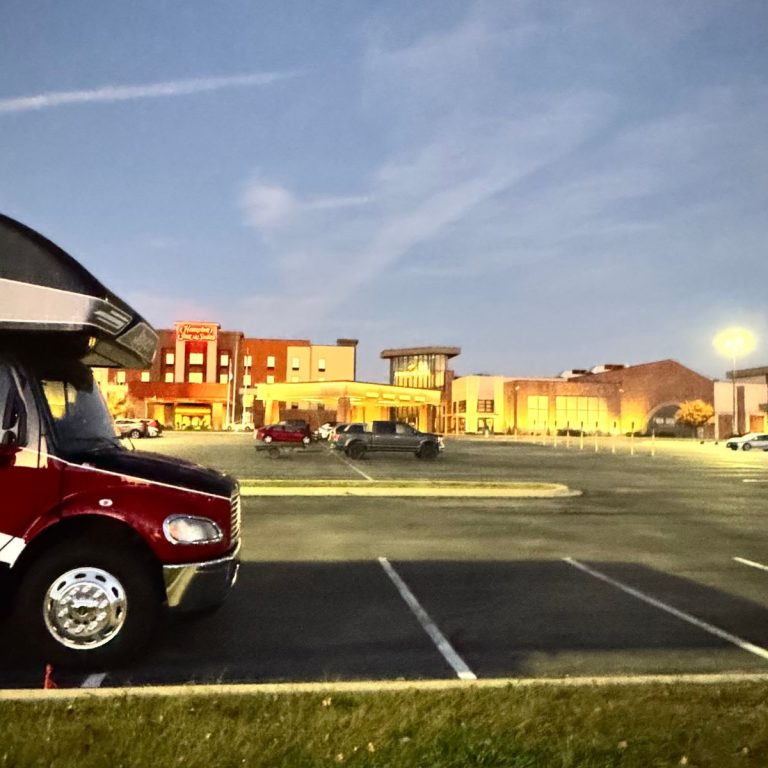
RV Travel Across the USA – The Ultimate Guide
Ready to hit the open road? Discover the best RV travel across the USA destinations, routes, and tips for exploring every region of the USA, from full-timers who have lived it.
How to Plan an RV Trip Across the USA (Region by Region)
Nine years ago, my husband Tim and I sold our house, packed up our lives, and drove away in an RV with no real plan except this: we wanted to see America. All of it. Not through a car window for a week at a time, but slowly, deeply, at our own pace.
What we discovered is that RV travel across the USA isn’t just a way to take a vacation. It’s a completely different relationship with this country.
You stop at the roadside diner you’d normally fly over. You watch the sunrise over canyon walls that no hotel room could ever show you.

Or you pull into a small Indiana town on a Tuesday afternoon and accidentally spend four days because it turned out to be one of the most charming places you’d ever been.
Key Takeaways: RV Travel Across the USA
- Think in regions, not cross-country sprints, pick 1–3 regions and do them deeply
- The 3-3-3 rule (300 miles/day, stop every 3 nights, park by 3 PM) is your best friend
- Reserve national park campgrounds 4–6 months in advance for peak season
- Spring and fall are the sweet-spot seasons, better weather, fewer crowds, lower prices
- Fuel is your highest variable cost; track it from day one
- You don’t need everything figured out before you start; the road teaches you
That’s the magic of hitting the road in an RV. And in this guide, I’m going to show you exactly what RV travel across the USA looks like, region by region, route by route, so you can start planning the adventure that’s been sitting on your bucket list.
🚐 From the Road: I’m Mary, and I’ve been living full-time in an RV for nine years with my husband Tim and our German Shepherd Harley. Everything in this guide comes from roads we’ve actually driven and places we’ve actually stayed. This isn’t generic travel content, it’s the real deal.

Why RV Travel Across the USA Is Unlike Anything Else
Before we get into the routes, let’s talk about why so many people are choosing to explore this country by RV, and why, once you do it, it becomes nearly impossible to go back to traditional travel.
Wake Up Inside the Destination
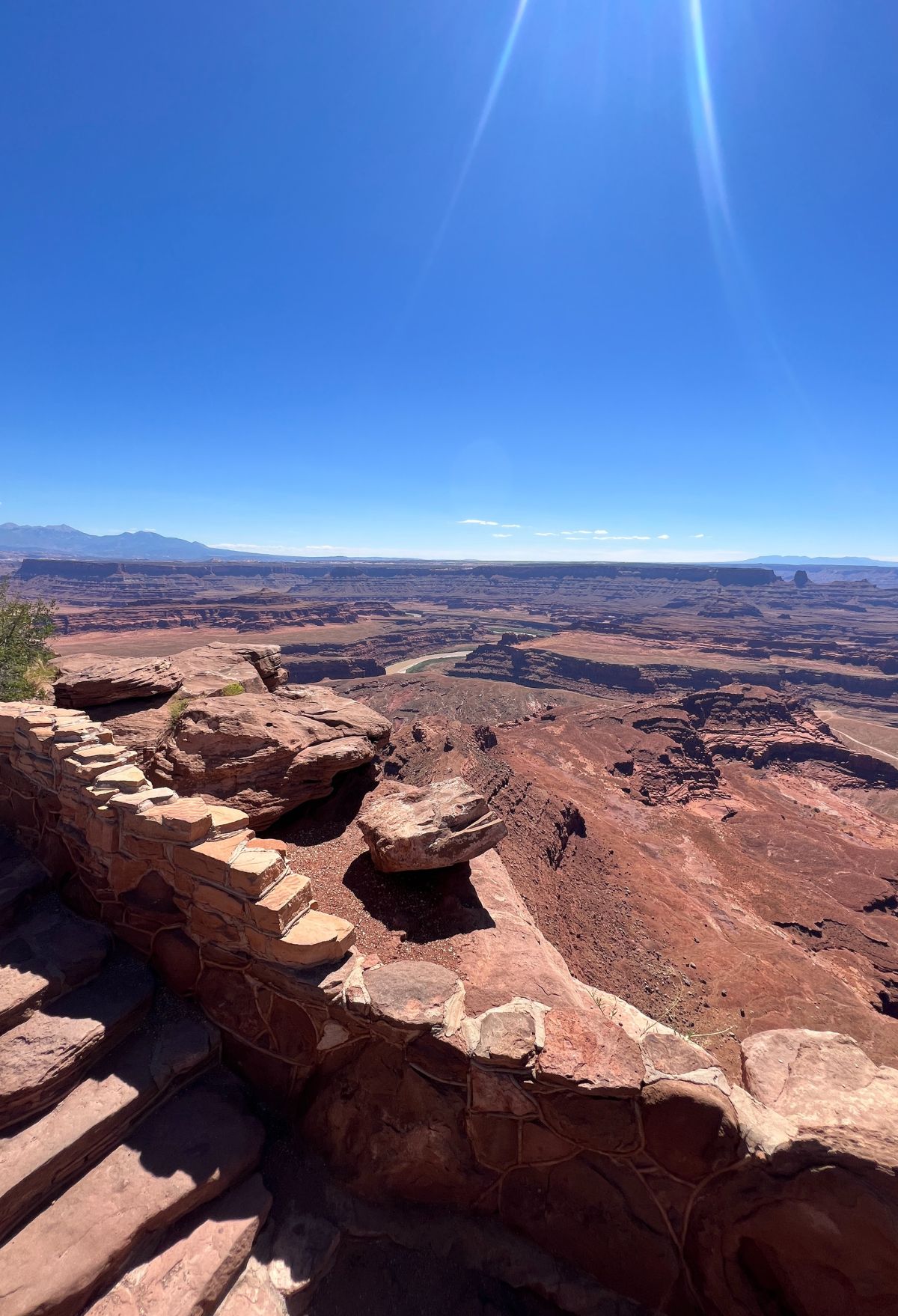
When you stay in a hotel, you visit a place. When you sleep in an RV, you live there, even if just for a night. There’s a massive difference between checking into a room near the Grand Canyon and waking up with canyon walls outside your window. The whole experience changes.
Your Pace Is Entirely Yours
No checkout times. No shuttle schedules. No scrambling to catch a flight. If you fall in love with a tiny mountain town in West Virginia, you stay longer. If a campground turns out to be a disappointment, you move on.
The flexibility of RV travel is something that, once you’ve tasted it, makes conventional travel feel like a straitjacket.
America Is Bigger and More Beautiful Than Most People Realize
Most Americans have seen only a small slice of this country. RV travel forces you to see the in-between, the vast open stretches of Nebraska, the rolling hills of Tennessee, the way the landscape shifts from desert to forest within an hour’s drive.
You start to understand the sheer scale and diversity of the United States in a way that’s simply impossible from 30,000 feet.
💡 Travel Tip: Most successful long-distance RV trips cover 200–300 miles per day, not 500. The sweet spot that keeps travel enjoyable is pace over distance. Build that into your planning from day one.
The Best Regions for RV Travel Across the USA
The Southwest: Red Rock Country, Canyon Lands, and Desert Magic
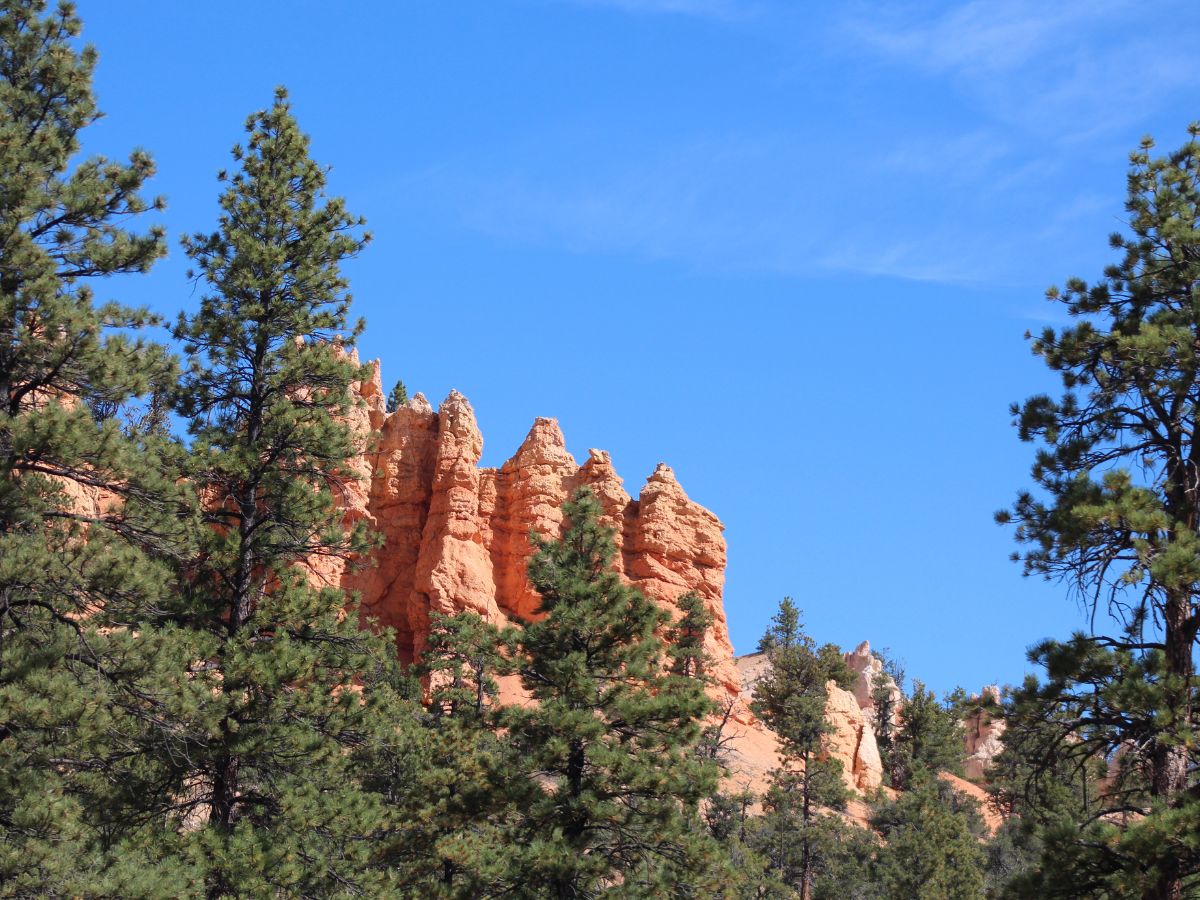
If there’s one region that converts aspiring RVers into full-timers, it’s the Southwest. The landscape here is otherworldly, towering red cliffs, hoodoos that glow pink at sunrise, arches that look like they belong on another planet.
Must-See Destinations
- Zion National Park, Utah, The Narrows hike, canyon overlooks, and some of the most dramatic scenery in the country. We have a complete 3-Day Zion National Park Itinerary to help you make the most of every hour.
- Bryce Canyon National Park, the hoodoos here are unlike anything else on earth. Check out our Bryce Canyon National Park Itinerary before you go.
- Arches National Park, Delicate Arch at sunset, is one of those moments that stays with you. Our 2-Day Arches National Park Itinerary covers the highlights without the overwhelm.
- Las Vegas as a Base: Vegas makes a surprisingly good RV base for day trips. Our Utah National Parks 5-Day Itinerary from Las Vegas is one of our most popular guides for good reason.
🗺️ Route Tip: Can’t decide between Arches and Zion? We’ve done both and written an honest comparison: check out 👉 Arches vs. Zion: Which Should You Visit? It might make your decision a lot easier.
Best Time to RV the Southwest
Spring (March–May) and fall (September–November) are ideal. Summers in the desert can be brutal, triple digits make hiking dangerous, and RV cooling systems work overtime. Winters are mild at lower elevations, but some park roads close.
The Mountain West & Rockies: Grand Tetons, Yellowstone, and the High Country
The Rocky Mountain corridor is one of the most jaw-dropping RV routes in the entire country. Wide open highways, wildlife around every bend, and a scale that makes you feel gloriously small.

Must-See Destinations
- Grand Teton National Park, Wyoming. The Chapel of the Transfiguration alone is worth the drive. Don’t miss it, and book your campsite months out.
- Yellowstone National Park. Book your campsite months in advance. It’s popular for good reason. The Fishing Bridge RV Park is one of the few full-hookup options inside the park.
- South Dakota: Mount Rushmore & Beyond. The Black Hills region is one of the most underrated RV destinations in the country. We have a full Road Trip to Mount Rushmore guide.
Best Time to RV the Mountain West
June through September for most high-elevation destinations. Many mountain passes and park roads are closed in winter. If you’re chasing fall foliage in the Rockies, late September is spectacular.
The Midwest: Hidden Gems, Amish Country, and Classic Americana
Here’s the truth that most travel guides don’t tell you: the Midwest is one of the most rewarding regions in America to RV. It’s affordable, friendly, and full of places that leave you wondering why you hadn’t come sooner.
Must-See Destinations
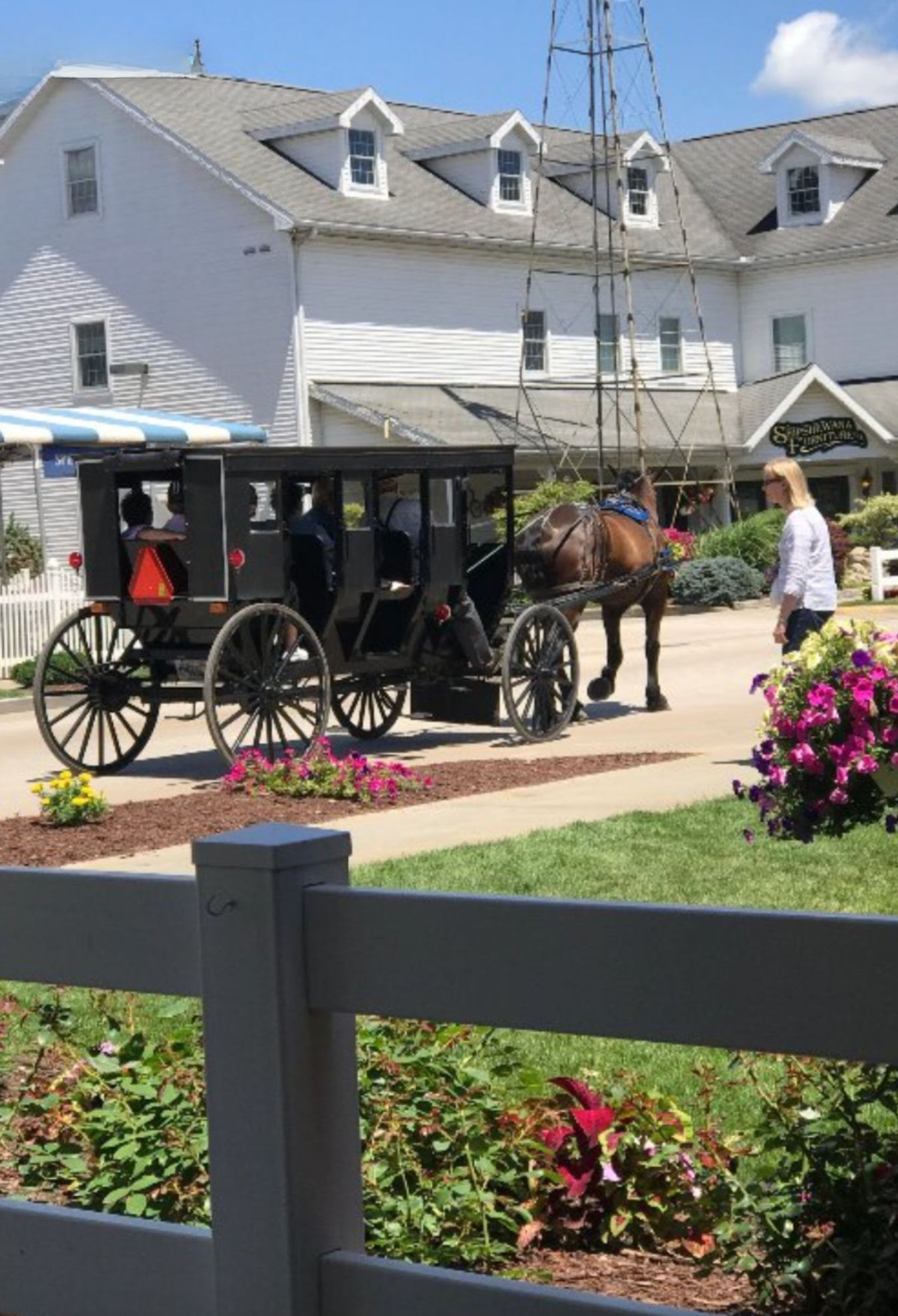
- Elkhart County, Indiana, the Amish heartland, is one of the most charming and photogenic areas of the Midwest. See our Guide to Visiting Shipshewana, Indiana, and our roundup of Things to Do in Elkhart County. Also worth knowing: Elkhart is the RV capital of the world, and we toured the RV Hall of Fame and loved it.
- Branson, Missouri, Country music, live shows, and a surprisingly fun Ozarks atmosphere. See our full Top Things to Do in Branson guide.
Best Time to RV the Midwest
Late spring through early fall (May–October). Winters in the Midwest are harsh, think frozen water lines and dangerous road conditions. Summer is peak season, but the shoulder months of May and September offer great weather with smaller crowds.
The Southeast: National Parks, Gulf Beaches, and Southern Charm
The Southeast is one of the most popular RV regions in the country, and for good reason. It’s got everything from the majestic Smokies to the turquoise Gulf Coast, plus some of the friendliest campgrounds and hospitality you’ll find anywhere in the USA.

Must-See Destinations
- Great Smoky Mountains, Tennessee, is the most-visited national park in the country, and it earns the title. Book campsites months in advance. While you’re in Tennessee, our 3-Day Nashville Itinerary is a great add-on.
- Blue Spring State Park, Florida, One of the best places in the USA to see wild manatees in their natural habitat. Our Manatees at Blue Spring State Park guide has everything you need to plan the visit.
- Gulf Coast & Florida Keys, The Overseas Highway to Key West is one of the great American drives. Florida in winter is one of the most popular RV destinations in the country.
Best Time to RV the Southeast
October through April is peak season for Florida and the Gulf Coast, with mild weather, while the rest of the country is cold. The Smokies are stunning in fall (September–October) and spring (April–May). Avoid the Southeast in July and August if you’re not a fan of humidity.
The Northeast: History, Fall Foliage, and Coastal Beauty
The Northeast gets a bad rap as an RV destination because of tight roads and limited campsite options. And yes, some of that is real. But if you plan carefully, the Northeast offers some of the most stunning scenery and rich history of any region in the country.
Must-See Destinations
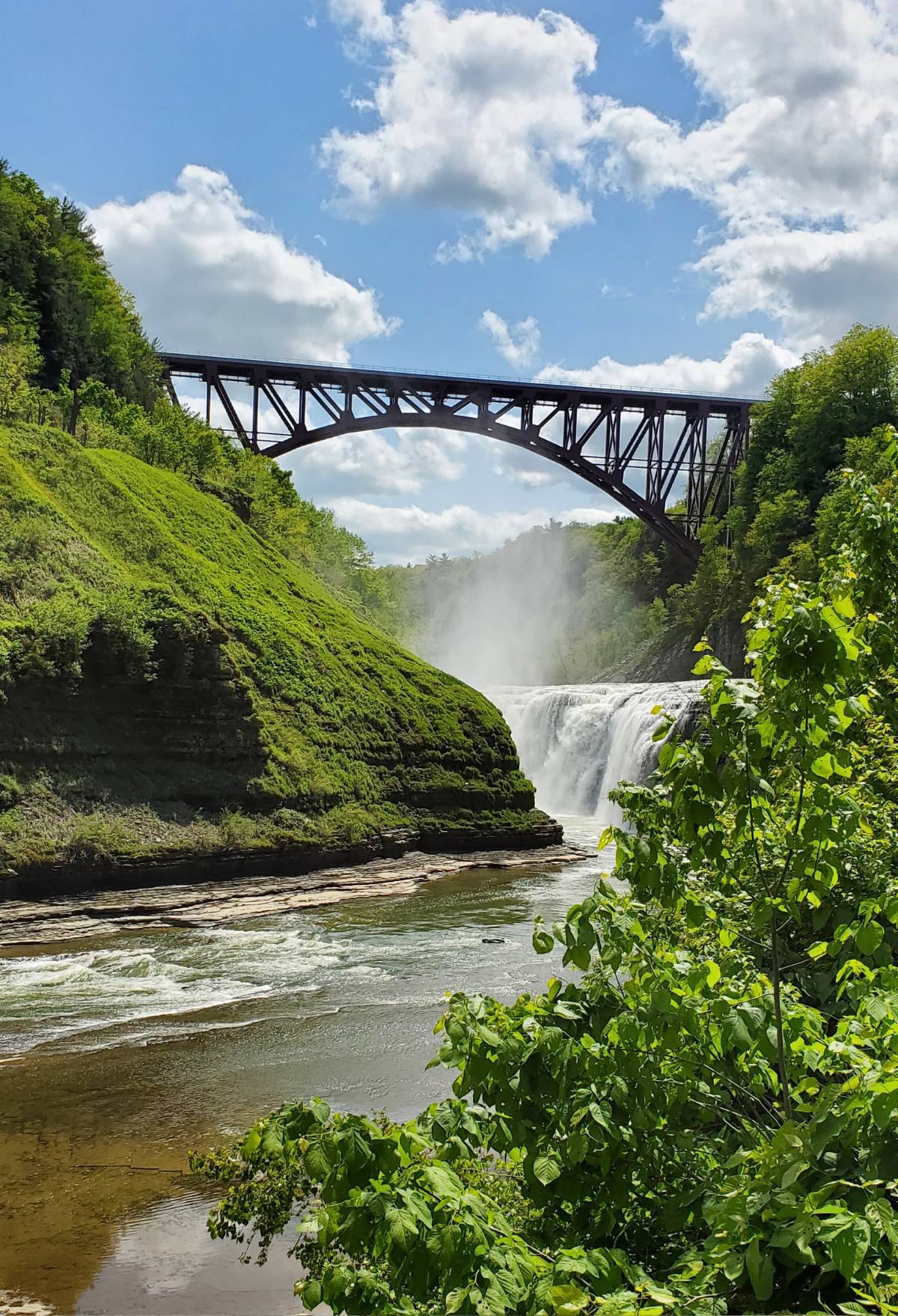
- Upstate New York, Letchworth State Park is often called the ‘Grand Canyon of the East’ and absolutely earns it. Our Letchworth State Park guide is a great starting point.
- The Acadia Region, Maine, Acadia National Park is one of the most beautiful places on the eastern seaboard. Book your campsite early; it’s extremely popular.
- Road Trip: Florida to New York, Thinking about driving the full East Coast? We have a detailed Road Trip from Florida to New York guide that maps out the whole route.
Best Time to RV the Northeast
September and October for fall foliage, and it’s genuinely one of the most beautiful things you’ll ever see from an RV windshield. Late spring (May–June) is also wonderful. Avoid winter unless you’re specifically set up for cold-weather camping.
The Southwest Desert & New Mexico: Hot Air Balloons and High Desert Culture
New Mexico doesn’t always make the top of RV travel lists, but after experiencing the Albuquerque Balloon Fiesta, it moved onto ours permanently.
Must-See Destinations
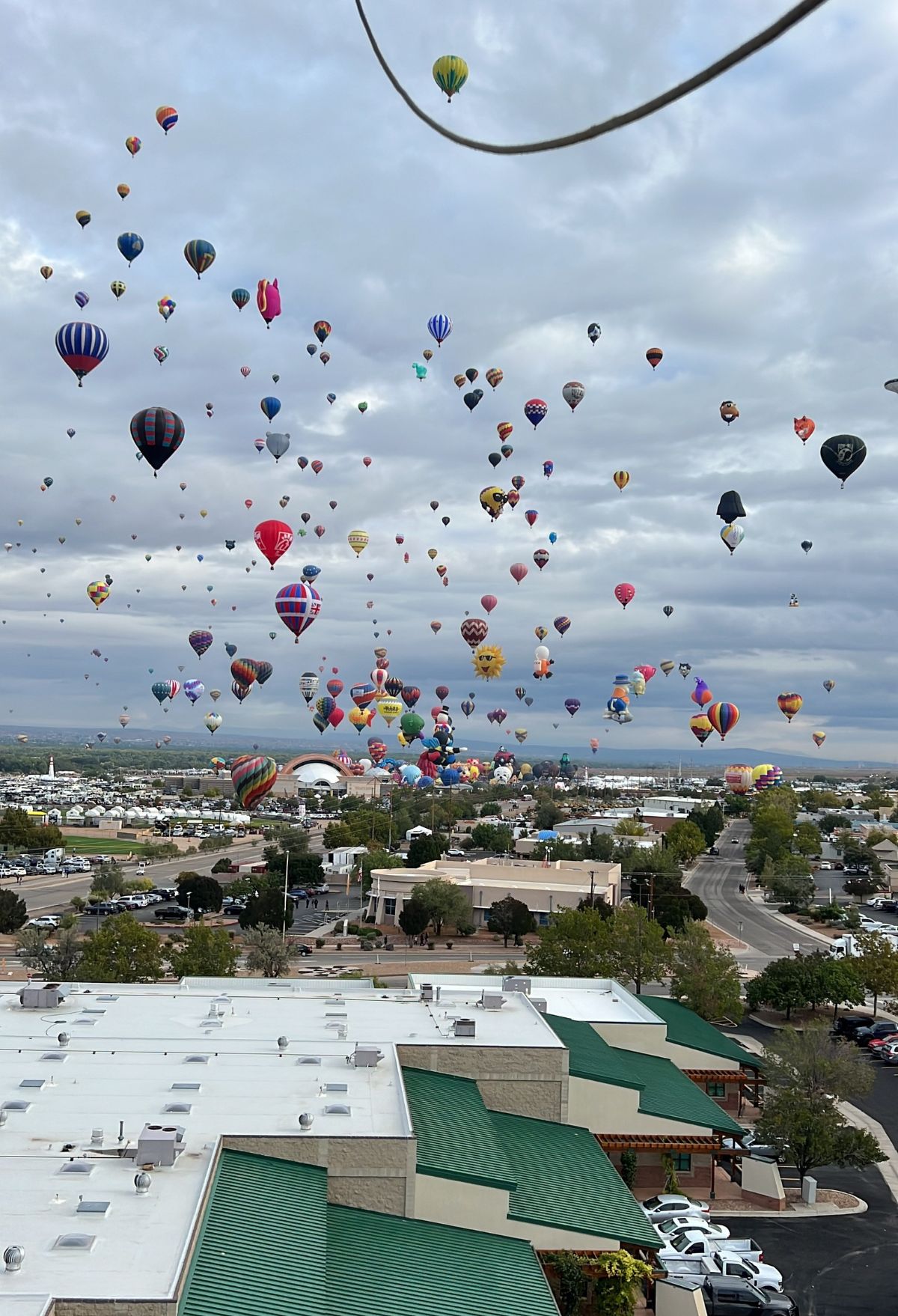
- Albuquerque International Balloon Fiesta, If you only do one event in an RV, make it this one. We have a complete Balloon Fiesta guide that covers everything from RV parking to riding in a balloon yourself.
The Pacific Coast: Highway 1, Redwoods, and the Pacific Northwest
Highway 1 along the California coast is one of the most iconic drives in the world. Pair it with the old-growth redwoods and the lush forests of Oregon and Washington, and you have an RV itinerary that belongs on every bucket list.
Must-See Destinations
- Pacific Coast Highway (PCH) – Big Sur, Monterey, Point Reyes, the Lost Coast. Plan your RV size carefully – some coastal pullouts and campgrounds are size-restricted.
- Redwood National & State Parks – Driving beneath trees that are 300+ feet tall and thousands of years old is genuinely humbling.
- Olympic National Park, Washington – Temperate rainforest, rugged coastline, and glacier-capped peaks – all in one park.
Best Time to RV the Pacific Coast
June through October for the Pacific Northwest. California’s central coast is mild year-round, though summer fog is common. Avoid coastal campgrounds on summer holiday weekends without a reservation locked in months in advance.
The Appalachians & Mid-Atlantic: Mountain Roads, River Gorges, and Hidden History
The Appalachian region is one of the most scenic and underrated RV corridors in the eastern USA. The roads wind through ancient mountains, past roaring rivers, and through towns with stories that go back to the founding of the country.

Must-See Destinations
- New River Gorge National Park, West Virginia – America’s newest national park (designated 2020) and one of its most dramatic. The Bridge Walk is an unforgettable experience.
- Blue Ridge Parkway – 469 miles of pure Appalachian beauty with no commercial trucks and no traffic lights. One of the finest RV drives in the entire country.
How to Plan RV Travel Across the USA: Practical Tips From the Road
Start With a Region, Not a Map of the Whole Country
The single best piece of advice I can give aspiring RV travelers: resist the urge to plan everything at once. Pick one region, Southwest, Southeast, or Midwest, and do it well. You’ll learn more about how you like to travel in two weeks on the road than in two months of planning.
Know Your RV’s Size Before You Plan Routes
This is not a small thing. A Class A motorhome has very different access than a Class B campervan. Some national park campgrounds have strict length limits (Zion’s Watchman Campground, for example, is tight for anything over 27 feet). Check size restrictions before you book, not after.
Use the 3-3-3 Rule as Your Default
A widely used guideline among experienced RVers: drive no more than 300 miles a day, stop for 3 nights, and be parked by 3 PM. It sounds conservative until your first week on the road teaches you that setup, grocery runs, and exploring a new town all take longer than you’d planned.
Reserve Campgrounds Early for Popular Destinations
National park campgrounds book out months in advance. If Yellowstone, Zion, the Smokies, or Acadia are on your list, start looking at reservations 6 months out. For popular rally-season events like the Albuquerque Balloon Fiesta, some RV parks sell out a full year in advance.
Build In Shoulder-Season Travel When You Can
Spring and fall travel means lower prices, fewer crowds, cooler temperatures, and, especially in the fall, some of the most beautiful scenery you’ll ever see.
Track Your Fuel Costs From Day One
Fuel is your biggest variable expense on any RV trip. We built a fuel tracking spreadsheet specifically for RV travel. It’s one of the most useful tools we use and something we share with our community. Join our Skool community to get RV checklists for free.
Consider a Membership Campground Network
For longer trips and full-timers, campground memberships like Harvest Hosts (for winery and brewery stays) can save significant money and unlock incredible overnight locations that non-members never find.

Seasonal RV Travel Across the USA: Where to Go and When
One of the greatest advantages of full-time or extended RV travel is the ability to follow the good weather. Here’s a simplified seasonal guide to help you think about timing.
Winter (December – February)
Head South and West. Florida, the Gulf Coast, Arizona, and Southern California are the sweet spots. The ‘snowbird’ migration is real; Florida campgrounds fill up fast, especially in January and February. Book early or arrive by October.
Spring (March – May)
This is when the whole country opens up. The desert Southwest is at its most beautiful. The Southeast warms up without the brutal humidity. Wildflowers bloom across Texas and California. It’s an incredible time to be on the road.
Summer (June – August)
Head North and to elevation. The Pacific Northwest, the Rockies, the Great Lakes, and New England are all spectacular in summer. This is also peak season for national parks, so plan accordingly.
Fall (September – November)
Possibly the best season of all for RV travel. The Northeast and Appalachian foliage is stunning. Crowds thin out at national parks. Temperatures drop to a comfortable level.
You Don’t Have to Have It All Figured Out Before You Start
Here’s the thing I wish someone had told me before Tim and I hit the road: you don’t need a perfect plan. You need a good enough one, a flexible mindset, and the willingness to figure it out as you go.
We left our old life behind in six weeks and didn’t have everything mapped out. We made mistakes and got lost (literally and figuratively). And nine years later, we’re still out here, because once you start, it’s very hard to stop.
RV travel across the USA is one of the most accessible big adventures a person can take.
- You don’t need to be rich.
- You don’t need to retire first.
- You don’t need to be an experienced camper or a diesel mechanic.
- You need a rig, a route, and the decision to start.
🚀 Ready to Take the Next Step? If you’re serious about making full-time RV life happen, the free Full Time RV Roadmap community is where we break it all down together. Come join us.
Frequently Asked Questions About RV Travel Across the USA
It depends entirely on your route and pace. A coast-to-coast trip at a comfortable pace (200–300 miles/day) typically takes 3–6 weeks minimum, but most experienced RVers will tell you that’s too fast. A full lap of the country, done well, is closer to 3–6 months. Full-timers like us never really stop; we just keep going.
There’s no single ‘best’ route; it depends on your interests, your starting point, and your timeframe. The most popular long-distance routes include the Pacific Coast Highway (north–south along the West Coast), a Southern Loop (Texas, Gulf Coast, Florida, Southeast), a Mountain West loop (Utah, Wyoming, Colorado, South Dakota), and the classic Northeast run during fall foliage season.
This varies enormously based on your rig, fuel prices, campground choices, and lifestyle. A rough range for full-time RVers is $2,500–$5,000/month for a couple, covering fuel, campgrounds, food, and maintenance. Many people do it for less by using free camping (BLM land, Harvest Hosts) and cooking most meals in the RV.
Absolutely. RVing is one of the safest ways to travel. You’re sleeping in your own vehicle, cooking your own food, and largely in control of your environment. Solo female RVers and older couples make up a large and growing segment of the full-time RV community.
For most RVs, a standard driver’s license is all you need. Larger commercial-style vehicles (some Class A diesel pushers and Super Cs above certain weight thresholds) may require a CDL in certain states; check your specific vehicle’s GVWR against your state’s requirements.
The most commonly used apps in the full-time RV community include The Dyrt and Campendium (campground reviews), GasBuddy (fuel prices), iOverlander and Freecampsites.net (free camping), and RV LIFE Trip Wizard (routing that accounts for RV size restrictions).
The Road Is Ready When You Are
RV travel across the USA is not a bucket list item you check off and move on from. It’s something that changes the way you see your country, your life, and what’s actually possible.
We’ve been out here for nine years, Harley riding shotgun, Tim navigating, me writing about every mile of it, and the road still surprises us. There are still states we want to linger in longer, towns we’ve driven past and promised ourselves we’d come back to, routes we haven’t taken yet.
The country is big enough that you’ll never run out of roads. And that, honestly, is one of the most exciting things I know.
- Start where you are.
- Start with one region.
- Start this year.
The open road will take care of the rest.
Save this post for later to your Pinterest road trip board.